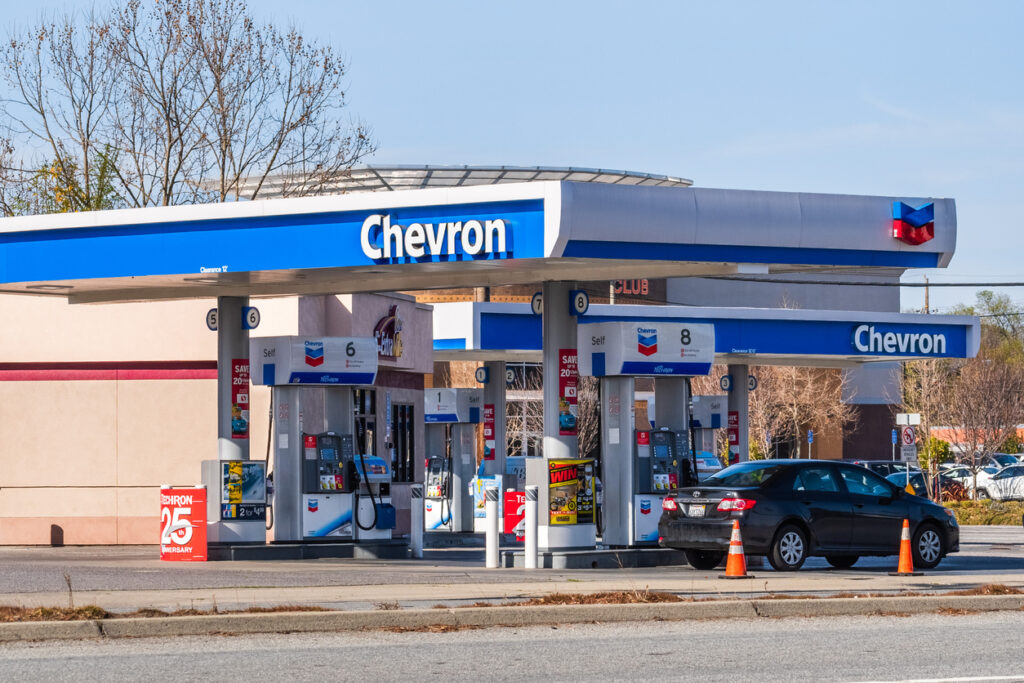
Chevron’s monumental $53 billion acquisition of Hess Corporation has officially concluded, marking a pivotal moment for the energy supermajor and reshaping the competitive landscape. After navigating a year-long arbitration with ExxonMobil concerning Hess’ coveted offshore Guyana assets, the deal’s finalization significantly enhances Chevron’s global portfolio, delivering a potent combination of high-growth, long-life assets. This strategic consolidation not only bolsters Chevron’s presence in critical energy markets but also sets the stage for substantial free cash flow generation and production growth well into the next decade, positioning the combined entity for sustained shareholder value creation. Investors are now closely watching how this expanded portfolio will perform amidst evolving market dynamics and what it means for Chevron’s long-term trajectory.
A Transformed Portfolio: Anchoring Growth in Guyana and the Bakken
The cornerstone of this acquisition lies in Hess’ world-class asset base, which now seamlessly integrates into Chevron’s already diversified global footprint. Foremost among these is the 30% operating interest in Guyana’s Stabroek Block, an extraordinary discovery boasting over 11 billion barrels of oil equivalent in discovered recoverable resources. This single asset alone provides Chevron with a multi-decade growth runway, characterized by low-cost, high-margin production potential. Complementing this deepwater jewel is Hess’ substantial 463,000 net acres of high-quality inventory in the U.S. Bakken shale, where Hess was a leading producer. This adds significant, flexible onshore production capabilities to Chevron’s existing leadership positions in the Permian Basin, Gulf of America (adding 31,000 boed), DJ Basin, Kazakhstan, Eastern Mediterranean, and Australia, alongside its natural gas assets in Southeast Asia (57,000 boed). The strategic rationale is clear: acquire and integrate premier, high-return assets that solidify Chevron’s position as an industry leader with a robust, high cash margin production profile built for the future.
Financial Synergies and Market Resilience in a Volatile Price Environment
Financially, the transaction is structured to deliver considerable benefits. Hess shareholders received 1.0250 shares of Chevron for each Hess share, resulting in the issuance of approximately 301 million new Chevron common shares. Management projects this accretive transaction will drive significant free cash flow and production growth well into the 2030s. Crucially, the combined company anticipates achieving $1 billion in annual run-rate cost synergies by the end of 2025, a testament to the operational efficiencies expected from the integration. This focus on cost control and high-margin assets is particularly pertinent in the current market climate. As of today, Brent crude trades at $94.56 per barrel, reflecting a marginal daily decline of 0.39%, within a day range of $94.56-$94.91. This contrasts with a broader 14-day trend where Brent has softened by 8.8%, moving from $102.22 on March 25th to $93.22 on April 14th. This short-term bearish sentiment underscores the importance of Chevron’s expanded portfolio, which is designed to generate robust returns even in periods of price volatility or moderate declines, reinforcing investor confidence in its long-term profitability amidst fluctuating energy prices.
Navigating Future Headwinds: Regulatory Milestones and Upcoming Market Catalysts
The path to completion involved overcoming significant hurdles, including the successful arbitration against ExxonMobil regarding the Guyana assets. Furthermore, the Federal Trade Commission (FTC) lifted its earlier restriction on July 17, 2025, clearing the way for former Hess CEO John Hess to join Chevron’s Board of Directors, pending Board approval. This regulatory clarity removes a layer of uncertainty and allows the combined entity to focus entirely on integration and operational execution. Looking ahead, investors should monitor a series of upcoming energy events that could influence the market environment Chevron will operate in. The next two weeks bring key data points, including the Baker Hughes Rig Count on April 17th and April 24th, which will provide insights into broader industry activity affecting basins like the Bakken. More critically, the OPEC+ JMMC meeting on April 18th and the Full Ministerial Meeting on April 20th could signal shifts in global production policy, directly impacting crude prices. Additionally, the API and EIA Weekly Crude Inventory reports on April 21st, 22nd, 28th, and 29th will offer fresh perspectives on U.S. supply and demand dynamics. Chevron’s expanded, resilient portfolio is well-positioned to leverage favorable market conditions or absorb potential shocks stemming from these events, solidifying its operational stability and financial outlook.
Addressing Investor Focus: Long-Term Value and Strategic Resilience
Our proprietary reader intent data reveals a keen interest among investors in understanding the outlook for crude prices, with questions frequently surfacing around “building a base-case Brent price forecast for next quarter” and “the consensus 2026 Brent forecast.” While predicting precise price movements is challenging, Chevron’s acquisition of Hess directly addresses the underlying investor need for stability and predictable returns in an often unpredictable market. By integrating long-life, high-margin assets like Guyana, Chevron is constructing a more resilient business model less susceptible to short-term price fluctuations. Management emphasizes that this strategic combination is expected to drive greater long-term value to shareholders through enhanced growth and strong free cash flow generation. The expectation of $1 billion in annual cost synergies by the end of 2025 further underscores a commitment to efficiency and profitability. This strategic move, backed by a diversified portfolio and strong financial discipline, positions Chevron to deliver robust shareholder returns, even if Brent prices oscillate around the current $94.56 or trend closer to the recent $93.22 low. The merger is designed to create a premier energy company, strategically positioned for the future, capable of delivering sustainable value regardless of market volatility.