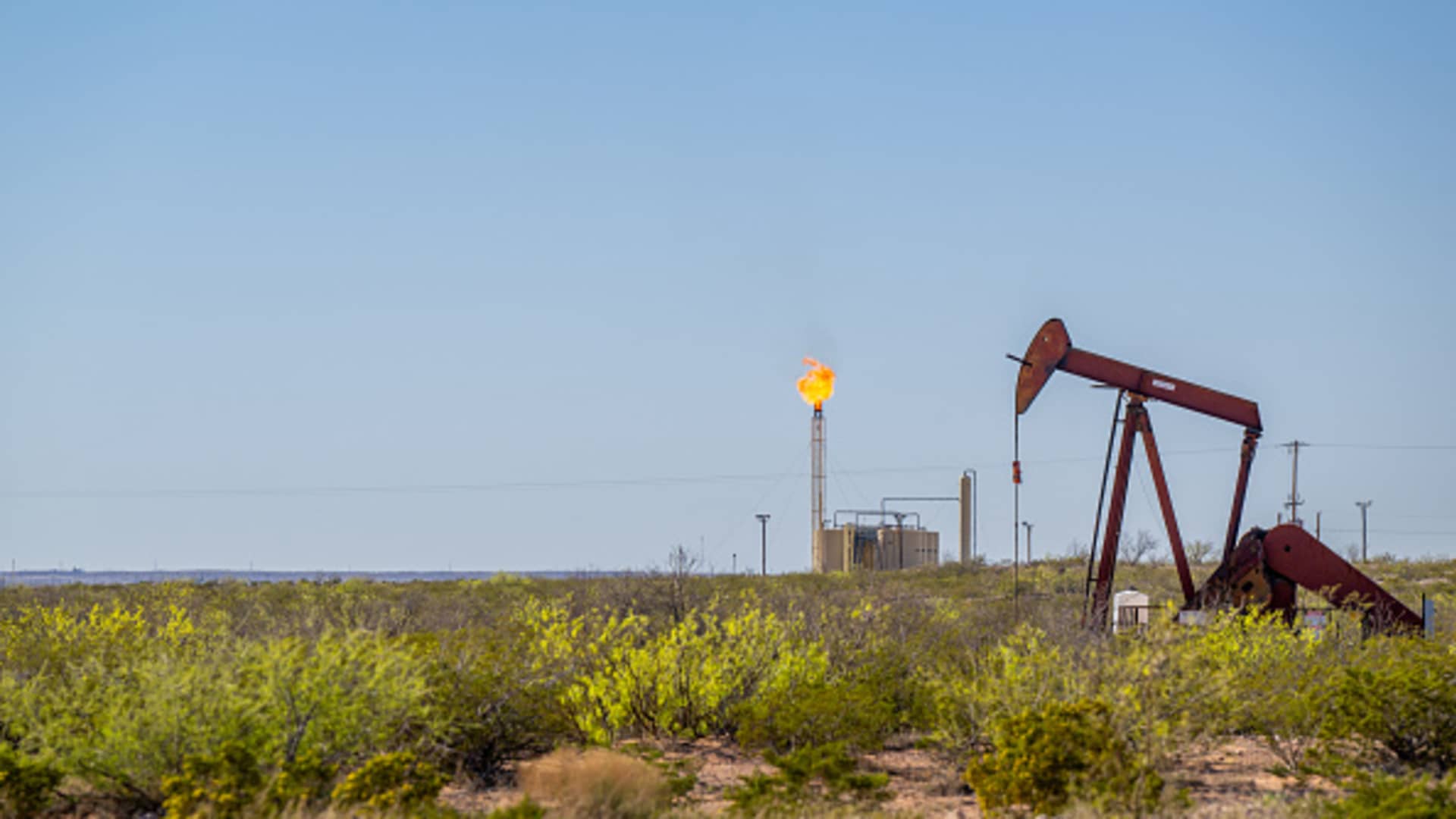
Coterra Energy (CTRA) recently experienced a significant investor sell-off, with shares plummeting 8.5% following its first-quarter earnings report. While the company’s financial metrics presented a mixed picture, the market’s reaction was largely driven by a strategic pivot towards increased natural gas production and concerns surrounding specific operational challenges within its Texas operations. For oil and gas investors, understanding these dynamics is crucial for evaluating CTRA’s near-term trajectory and long-term value proposition.
Q1 Performance: A Mixed Bag for Energy Investors
Digging into the financial highlights, Coterra reported first-quarter revenue of $1.9 billion. This figure, while representing a robust 33% year-over-year increase, fell short of the $1.97 billion consensus estimate. On the profitability front, adjusted earnings per share (EPS) came in at 80 cents, aligning precisely with market expectations. Notably, this marked a strong 56.9% increase in adjusted EPS on an annual basis. Perhaps the brightest spot for investors was Coterra’s impressive free cash flow (FCF), which reached $663 million, significantly surpassing analysts’ estimates of $596 million. This strong FCF generation underscores the company’s financial health, a critical metric for E&P companies in volatile commodity markets.
The discrepancy between revenue and EPS performance highlights the nuanced financial landscape for upstream energy companies. While revenue missed analyst targets, the company’s ability to meet adjusted EPS expectations and deliver exceptional free cash flow demonstrates effective cost management and operational efficiency. For investors focused on long-term value in the energy sector, FCF remains a paramount indicator, often signaling a company’s capacity to fund dividends, execute share buybacks, or reduce debt – all crucial for shareholder returns in a capital-intensive industry.
Navigating the Macro Landscape: Coterra’s Oil & Gas Strategy
A primary driver behind Coterra’s recent strategic adjustments is the challenging macro environment for crude oil. The company is actively reducing its oil drilling activities, redirecting capital expenditure towards natural gas production. This move signals a deliberate response to the steep decline in crude prices over the past month. West Texas Intermediate (WTI) crude, the U.S. benchmark, recently dipped below $58 a barrel, hitting four-year lows. This contrasts sharply with early April, when WTI was trading above $71 a barrel. The price erosion stems from intensified global trade tensions, fueling fears of an economic slowdown that would suppress oil demand, coupled with persistent supply considerations from major oil-producing nations.
This strategic pivot underscores Coterra’s agility within the dynamic oil and gas investment landscape. By reallocating resources, the company aims to optimize its production mix in response to prevailing market signals. For energy investors, such flexibility is a valuable characteristic, particularly for upstream operators navigating the inherent volatility of commodity markets. Coterra’s diversified asset base, encompassing both oil and natural gas, grants it crucial optionality to adapt to these inherently volatile commodity cycles. This capability allows the firm to lean into more favorable commodity pricing environments, seeking to maximize returns even when one segment of the market faces headwinds. The decision to prioritize natural gas, despite potentially lower immediate returns compared to peak oil prices, reflects a pragmatic approach to capital deployment in the current macro climate.
Operational Headwinds in Texas Acreage
Despite the strategic rationale, Coterra’s operational performance in a particular segment of its Texas acreage has garnered considerable attention and contributed significantly to the stock’s 8.5% decline. Management addressed these issues during the recent earnings call, emphasizing their belief that these are not systemic problems related to inventory quality and outlining plans for remediation. While executives offered reassurances, the market’s immediate reaction suggests that these operational challenges are a point of concern for investors monitoring the efficiency and reliability of Coterra’s production profile.
The specifics of these operational hurdles, though not fully detailed in the immediate public reports, often relate to well productivity, completion efficiencies, or infrastructure constraints. Such issues, even if localized, can impact production volumes and unit costs, directly affecting profitability. For energy stock investors, the ability of an E&P company to consistently execute its drilling and completion programs efficiently is paramount. Coterra’s management has committed to addressing these localized issues, and the market will be closely scrutinizing their progress in subsequent quarters. The successful resolution of these problems will be key to restoring full investor confidence in the company’s operational capabilities and its ability to consistently deliver on production targets across its diverse asset portfolio.
Investor Outlook: Navigating CTRA’s Future Trajectory
Coterra Energy’s recent quarter presents a complex picture for those evaluating oil and gas investment opportunities. On one hand, the company demonstrated robust free cash flow generation and a proactive strategic shift to mitigate the impact of falling crude prices. This financial discipline and adaptive strategy are strong positives for an upstream company operating in unpredictable commodity markets. The ability to generate $663 million in free cash flow, significantly above estimates, provides substantial financial flexibility, which is often a cornerstone for resilient energy stocks.
On the other hand, the revenue miss and the specific operational challenges in Texas introduce elements of uncertainty. While management has provided assurances regarding the non-systemic nature of the Texas issues, execution risk remains. Investors will be weighing the potential for these operational fixes to be implemented effectively against the ongoing volatility in crude markets and the competitive landscape for natural gas. The long-term appeal of Coterra Energy will depend heavily on its continued ability to optimize its diversified asset base, successfully resolve its localized operational setbacks, and maintain its impressive free cash flow generation. For those seeking exposure to the dynamic energy sector, Coterra offers a case study in navigating commodity price swings with strategic flexibility and financial prudence, albeit with immediate operational hurdles that require close observation.
As the global energy markets continue to evolve, Coterra’s strategic direction towards natural gas, coupled with its strong financial position, could position it favorably, provided it can effectively address its production challenges. Savvy energy investors will monitor not only commodity price movements but also the company’s operational updates and capital allocation decisions to assess its evolving risk-reward profile.