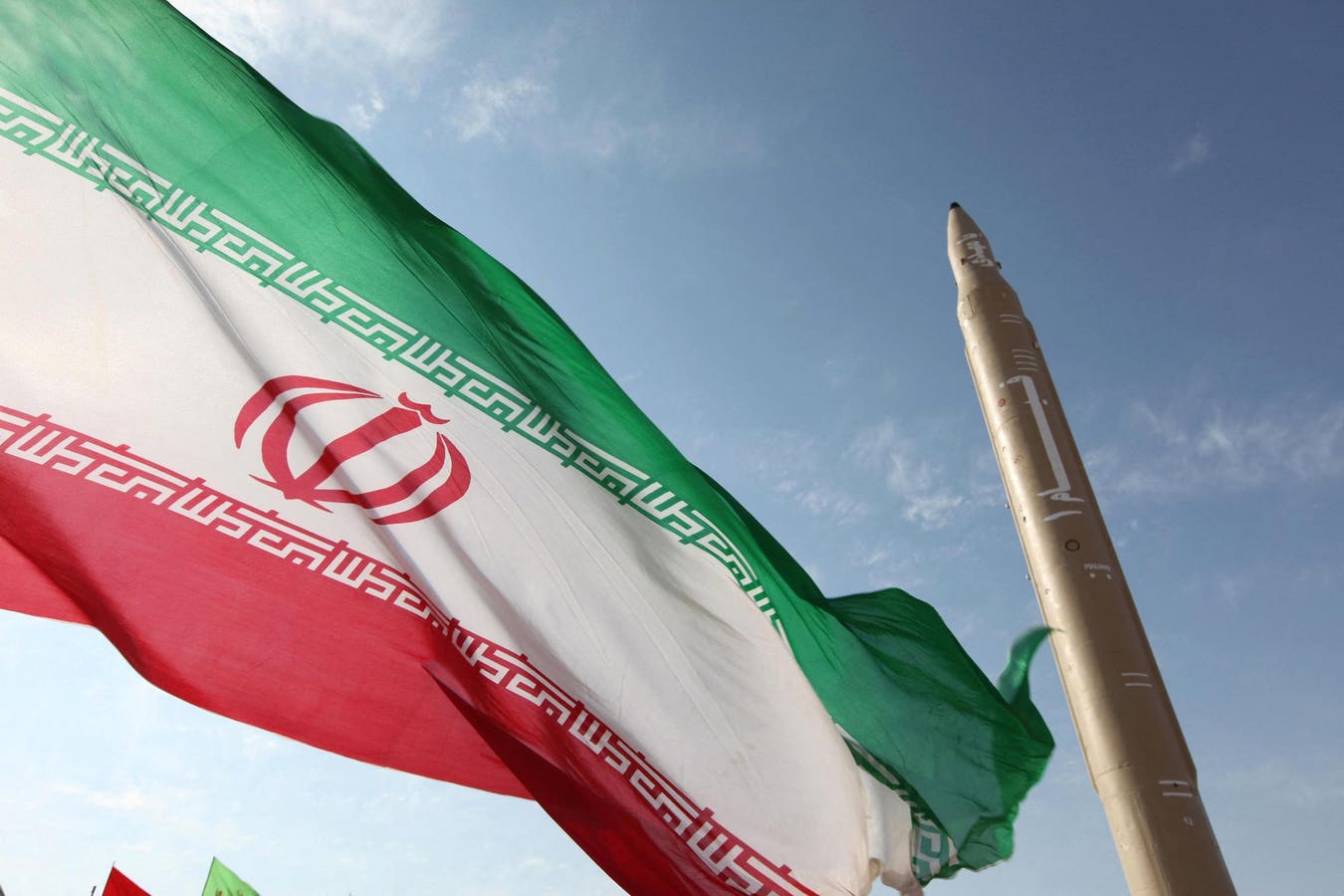
The global crude market continues its dance with volatility, a testament to the intricate web of supply-demand fundamentals and geopolitical undercurrents. While daily price movements often reflect immediate inventory shifts or short-term economic sentiment, a persistent and foundational layer of risk emanates from regions like the Middle East. Among these, Iran’s nuclear program remains a significant, though often latent, factor capable of rapidly re-shaping the investment landscape. Understanding the historical context and potential future implications of this long-standing issue is crucial for investors navigating the energy sector.
The Enduring Shadow of Iran’s Nuclear Ambitions
For decades, Iran’s nuclear program has been a focal point of international concern, directly impacting geopolitical stability and, by extension, the global oil supply. Despite years of evasion and limited cooperation with international bodies, the Islamic Republic has not withdrawn from the Nuclear Non-Proliferation Treaty (NPT), a critical distinction that allows the International Atomic Energy Agency (IAEA) to conduct on-site inspections of its facilities. These inspections, which continued as recently as one week before certain regional military actions, are the primary external mechanism for monitoring Iran’s activities.
The technical aspects of uranium enrichment are central to this concern. Natural uranium contains a mere 0.7% of the fissile isotope, U-235, which is necessary for creating a nuclear chain reaction. The enrichment process involves converting uranium into uranium hexafluoride gas (UF6) and feeding it into rapidly spinning centrifuges. These centrifuges mechanically separate the lighter U-235 from the heavier U-238. Due to the minute weight difference, achieving reactor-grade enrichment of 5% U-235 typically takes six months to a year, depending on the centrifuge technology employed. Moving beyond this to 20% enrichment, the lower threshold for highly enriched uranium used in some research reactors, requires several more months. Any indication of Iran pushing these limits, or expanding its centrifuge capacity beyond agreed-upon levels, immediately heightens geopolitical tensions and sends ripples through the crude market, raising questions about potential sanctions and future oil supply.
Current Market Headwinds and Investor Sentiment
Despite the persistent geopolitical backdrop, the immediate trajectory of crude prices has been downward in recent weeks. As of today, April 15th, Brent crude trades around $93.22 per barrel. This marks a significant retreat, down approximately 8.8% from its level of $102.22 per barrel just three weeks prior on March 25th. This current market posture indicates that while the “Iran risk premium” is an underlying consideration, other factors related to near-term supply-demand balances and global economic outlook are exerting more immediate pressure.
Our proprietary investor intent data highlights this dichotomy. While the broader market is always aware of geopolitical risks, investors are currently keenly focused on building a base-case Brent price forecast for the next quarter, with many also seeking the consensus 2026 Brent forecast. This signals a desire for clarity amidst short-term demand uncertainties and a need to project future market stability. Furthermore, questions around “How are Chinese tea-pot refineries running this quarter?” underscore the granular focus on demand signals from key consuming nations. This collective interest reflects a market grappling with immediate fundamental signals while constantly hedging against the potential for sudden, geopolitically driven supply shocks that could quickly reverse current price trends.
Upcoming Catalysts and Supply-Side Dynamics
The crude market is poised for several crucial data releases and policy decisions in the coming weeks that will further shape its direction, potentially amplifying or mitigating the impact of geopolitical developments. This week, on Friday, April 17th, we will see the latest Baker Hughes Rig Count, offering insight into North American drilling activity. More significantly, the OPEC+ Joint Ministerial Monitoring Committee (JMMC) is scheduled to meet on Saturday, April 18th, followed by the Full OPEC+ Ministerial Meeting on Monday, April 20th.
These OPEC+ gatherings are critical. Any decisions regarding production quotas, whether maintaining current cuts or signaling future adjustments, will directly influence global crude supply. Investors will be scrutinizing these outcomes for indications of how the cartel plans to balance market stability against global demand projections and geopolitical risks, including potential shifts in Iranian oil exports. Additionally, the recurring API Weekly Crude Inventory reports (April 21st and 28th) and the EIA Weekly Petroleum Status Reports (April 22nd and 29th) will provide essential snapshots of U.S. crude stockpiles and refinery activity, offering granular insights into immediate supply-demand balances. These fundamental data points, when combined with the ever-present geopolitical considerations surrounding Iran, create a complex landscape for crude price discovery.
Investment Implications in a Volatile Landscape
For energy investors, the ongoing saga of Iran’s nuclear program and its implications for global oil supply cannot be understated, even when other market forces dominate headlines. While current Brent prices reflect a downward correction from recent highs, the underlying potential for sudden supply disruptions or re-introductions of Iranian barrels into the market remains a potent source of volatility. The historical pattern of Iran’s enrichment efforts and its relationship with international oversight bodies suggests that this geopolitical risk is a constant, though sometimes dormant, factor.
Investors must remain vigilant, monitoring not only the upcoming OPEC+ decisions and weekly inventory data but also any diplomatic overtures or renewed tensions concerning Iran’s nuclear activities. A significant shift in Iran’s enrichment levels or its stance toward IAEA inspections could rapidly reintroduce a substantial risk premium into crude prices, potentially overriding other fundamental signals. Diversification and robust risk management strategies are paramount in an oil market where long-term geopolitical factors can swiftly intersect with short-term supply-demand dynamics, creating abrupt and significant price movements. The enduring challenge for investors is to anticipate how these complex interactions will unfold and position portfolios accordingly.