Global crude oil benchmarks experienced a downturn on Monday, relinquishing some of the previous week’s gains as market participants grappled with escalating concerns over global economic stability and the prospect of increased supply. Investors reacted cautiously to a recent credit downgrade for the United States and fresh signs of economic deceleration from China, the world’s largest crude importer.
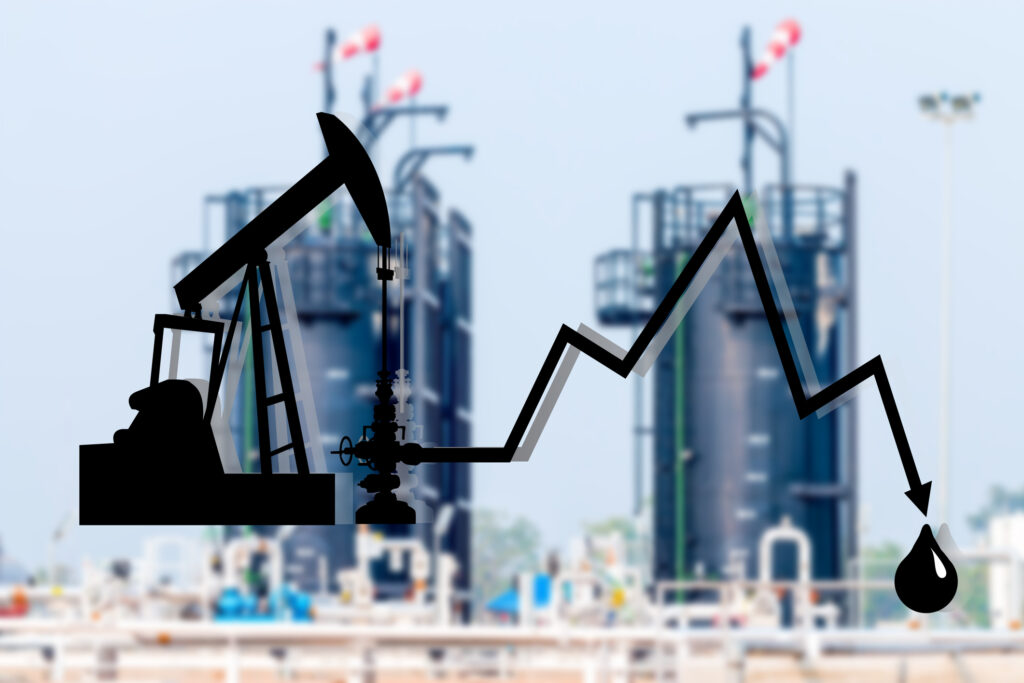
At the close of trading, the front-month West Texas Intermediate (WTI) futures contract, then expiring in June, saw a 0.7% decline, settling at $64.93 per barrel. Similarly, international Brent crude futures also dipped by 0.7%, trading at $61.53 per barrel. This downward movement followed a strong start to the previous week, where both contracts had climbed more than 1%, buoyed by an initial agreement between the U.S. and China to temporarily ease their contentious trade tariffs.
Economic Headwinds Dampen Investor Sentiment
A significant factor contributing to the cautious mood across energy markets was Moody’s recent decision to downgrade the U.S. sovereign credit rating. The agency adjusted its assessment from the top-tier ‘Aaa’ to ‘Aa1’ late last week, citing profound concerns over the nation’s burgeoning $36 trillion debt. This fiscal challenge, potentially exacerbated by proposed tax cuts under President Trump’s administration, casts a shadow over the long-term economic outlook for the world’s largest economy. Such a downgrade typically signals increased risk perception, prompting a flight to safety and a dampening effect on riskier assets like commodities, including crude oil.
The implications of this downgrade are far-reaching. It not only affects the perceived creditworthiness of the U.S. government but also influences global interest rates and investor confidence. For the oil market, a less stable U.S. economic outlook translates directly into fears of reduced energy demand, pressuring prices downward as traders recalibrate their expectations for future consumption.
China’s Mixed Economic Signals Under Scrutiny
Adding to the global economic anxieties were newly released economic indicators from China for April. The data presented a mixed picture for the world’s primary crude oil consumer. While growth in industrial output showed a deceleration, its performance still managed to surpass economists’ expectations. This suggests that the country’s factory activity has demonstrated a degree of resilience, even amidst persistent pressure from heightened U.S. trade tariffs on its exports.
However, the bright spot in industrial production was overshadowed by clear signs of weakness in domestic demand. Retail sales for April came in below market expectations, indicating a softening consumer appetite within China. Investors are keenly monitoring these developments for any signs of a robust recovery, especially as Beijing navigates its own path through economic growth challenges and the ongoing tariff tensions with Washington. Despite the announcement of a 90-day reprieve on steep tariffs between the two economic giants, uncertainty surrounding future trade negotiations continues to weigh on investor sentiment and, by extension, the outlook for Chinese oil demand.
Potential Supply Surge Looms Over Market Balance
Beyond demand-side worries, the prospect of increased global crude supply also exerted downward pressure on prices. Several developments suggest a loosening of the supply-demand balance in the near term.
Iran Nuclear Deal: A Game Changer?
A significant potential disruptor is the ongoing progress towards a nuclear deal with Iran. President Trump indicated last week that the U.S. was nearing an agreement, with Tehran reportedly having “sort of” accepted the terms. The signing of such a deal and the subsequent removal of international sanctions could unleash a substantial volume of Iranian oil back onto the global market. This potential influx of crude, which has been constrained for years, could significantly increase global supply, challenging the current market balance and intensifying downward pressure on prices.
OPEC+ Strategy and IEA Projections
Further contributing to oversupply concerns are the strategic moves by the Organization of the Petroleum Exporting Countries and its allies (OPEC+), alongside projections from key energy bodies. The International Energy Agency (IEA) issued a report noting that global oil supply is expected to increase faster than previously anticipated this year. This acceleration is largely attributed to OPEC+ members unwinding their agreed-upon output cuts, a move designed to restore market share and respond to evolving demand dynamics. Concurrently, the IEA also estimated a deceleration in global oil demand growth for the remainder of the year. The combination of rising supply from major producers and a projected slowdown in consumption creates a bearish outlook for crude prices.
Geopolitical Watch: Ukraine Peace Talks
While economic and supply fundamentals dominated Monday’s trading, geopolitical developments also captured some market attention. The scheduled call between President Trump and President Putin regarding the Russia-Ukraine conflict was closely watched. Analysts, however, tempered expectations regarding the immediate impact of potential peace talks on oil supply. Even if a peace deal were to materialize and sanctions against Russia were eventually lifted, the anticipated increase in global supply, according to expert assessments, would likely be limited. This suggests that while geopolitics always play a role, the more immediate drivers for crude prices remain rooted in macroeconomic health and the practicalities of supply management.
Navigating a Complex Market Landscape
In summary, the confluence of a U.S. credit downgrade signaling broader economic fragility, mixed but concerning economic data from China, and the looming prospect of increased global oil supply from both Iran and OPEC+ members, created a challenging environment for crude oil prices. These powerful forces collectively offset any lingering bullish sentiment that had emerged from the temporary U.S.-China tariff reprieve. Oil and gas investors must remain vigilant, closely monitoring global economic indicators, geopolitical shifts, and the evolving strategies of major oil producers to navigate this increasingly complex and volatile market landscape.