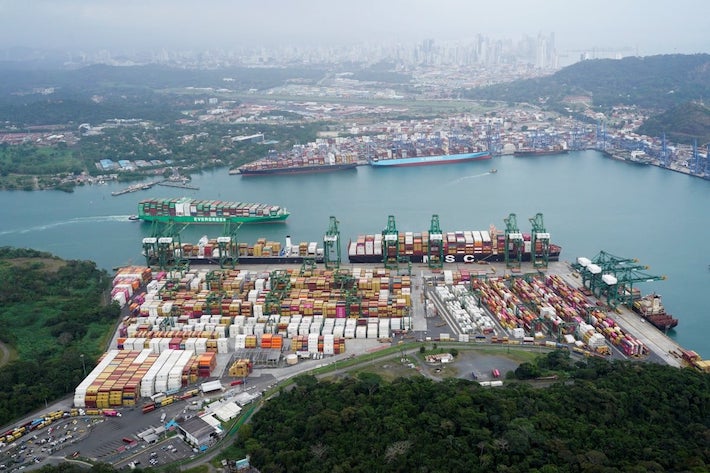
The global energy investment landscape is increasingly shaped by complex geopolitical maneuvers, a reality starkly highlighted by the current impasse surrounding BlackRock’s consortium bid for CK Hutchison’s extensive port network. What began as a strategic $22.8 billion acquisition to secure 43 vital ports across Asia, the Middle East, and Europe has devolved into a high-stakes standoff, jeopardizing a deal that touches upon the very arteries of international trade. At its core, the dispute centers on China’s state-owned shipping giant Cosco’s demand for a majority stake, a move fiercely opposed by the BlackRock-led group and, crucially, by the United States. This situation is far more than a corporate acquisition; it is a direct confrontation over strategic global infrastructure, with profound implications for supply chain resilience, commodity flows, and the broader geopolitical balance that underpins energy markets.
Geopolitics Disrupting Global Infrastructure Investment
The proposed acquisition of CK Hutchison’s port assets by a consortium led by BlackRock and Mediterranean Shipping Company (MSC) initially appeared to be a significant strategic play, aiming to optimize global logistics and enhance trade efficiency. However, the intervention of China’s Cosco, demanding majority control and veto rights, has transformed this commercial transaction into a geopolitical flashpoint. The strategic importance of these ports, particularly those near the Panama Canal, cannot be overstated. The United States has voiced strong objections to any scenario that would grant Chinese entities control over such critical chokepoints, citing national and economic security concerns. This mirrors Beijing’s earlier stance, which labeled the original sale a “betrayal” of China’s interests, despite none of the ports being located on the mainland. The White House has unequivocally stated that Chinese control of the Panama Canal region is unacceptable and violates existing treaties, creating an insurmountable hurdle for the current deal structure. For investors, this saga underscores the escalating risks in infrastructure plays, where national security interests and geopolitical rivalry can derail even the most meticulously planned cross-border transactions, introducing an unpredictable layer of complexity and potential for capital impairment.
Market Volatility and Commodity Price Sensitivity
The geopolitical friction impacting this massive port deal resonates across global commodity markets, contributing to an environment of heightened volatility. As of today, Brent crude is trading at $89.95, reflecting a 0.53% decline for the session, with its daily range spanning $93.87 to $95.69. Similarly, WTI crude sits at $86.28, experiencing a 1.3% drop, fluctuating between $85.50 and $87.47. Gasoline prices are also feeling the pressure, currently at $3.03, down 0.33%. This recent dip follows a significant 14-day trend where Brent crude shed nearly 20% of its value, falling from $118.35 on March 31st to $94.86 by April 20th. This substantial correction indicates market sensitivity to a confluence of factors, including demand concerns and geopolitical risks.
The uncertainty surrounding major port infrastructure, like the BlackRock-Hutchison deal, directly impacts the perceived stability of global supply chains. Ports are crucial conduits for the movement of energy commodities, refined products, and the vast array of goods that drive industrial and consumer demand. Any perceived threat to their operational stability or potential for politicization can ripple through shipping costs, insurance premiums, and ultimately, the demand forecasts for crude oil and natural gas. Investors must recognize that while immediate price movements are influenced by daily supply-demand dynamics, underlying geopolitical tensions like this port dispute create an enduring headwind, embedding a risk premium or discount into commodity valuations.
Forward Outlook: Trade Talks, New Infrastructure, and Energy Calendar
Looking ahead, the fate of the BlackRock-Hutchison port deal remains deeply entwined with the broader US-China trade negotiations. Sources indicate that Beijing views control over these critical shipping assets as a significant bargaining chip in ongoing tariff and trade discussions. This strategic positioning could prolong the impasse, leaving investors in limbo. Adding another layer of complexity, Panamanian officials are reportedly planning to develop new container ports by selling land on either side of the canal, with a crucial caveat: government entities, specifically naming Cosco, will be barred from bidding. This move signals a deliberate effort to counter potential Chinese influence in the region and could open doors for alternative, US-aligned investment in critical logistics infrastructure.
Against this backdrop, energy investors should closely monitor several key upcoming events. The OPEC+ Joint Ministerial Monitoring Committee (JMMC) Meeting on April 21st will offer insights into global supply policy, while the EIA Weekly Petroleum Status Reports on April 22nd and April 29th will provide vital data on crude inventories and demand trends. These reports, alongside the Baker Hughes Rig Count on April 24th and May 1st, will shape market sentiment regarding supply-demand balances. Crucially, the EIA Short-Term Energy Outlook on May 2nd will update demand forecasts, which could be significantly influenced by the ongoing stability, or instability, of global trade routes and port access. Any resolution, or further escalation, in the port deal saga could exert significant pressure on these forecasts, particularly concerning global trade volumes and the efficiency of energy commodity transportation.
Addressing Investor Concerns and Strategic Positioning
Our proprietary reader intent data reveals a consistent theme among investors: a keen focus on the future trajectory of crude prices and the stability of global energy markets. Questions such as “is WTI going up or down” and predictions for “the price of oil per barrel by end of 2026” underscore a pervasive need for clarity amidst volatility. This geopolitical standoff over vital port infrastructure directly contributes to that uncertainty. For institutional investors like BlackRock, the challenge lies in navigating such high-stakes international political risks when executing large-scale infrastructure plays. The potential collapse of this $22.8 billion deal would not only represent a significant setback for the consortium but also send a cautionary signal across the global investment community regarding the increasing difficulty of depoliticizing strategic asset acquisitions.
For investors seeking to position themselves in the current environment, a nuanced approach is critical. Diversification across different segments of the energy value chain, from upstream producers to midstream logistics and downstream refiners, can mitigate exposure to single points of failure. Furthermore, companies with robust, diversified supply chain strategies and those less reliant on single-country trade routes may offer greater resilience. As the market grapples with these complex dynamics, understanding the underlying data sources and analytical frameworks, which our readers frequently inquire about, becomes paramount. Proprietary market intelligence, like our own, offers an edge by providing timely context to geopolitical events and their potential impact on energy commodity prices, allowing investors to make more informed decisions in an increasingly interconnected and politically charged global economy.