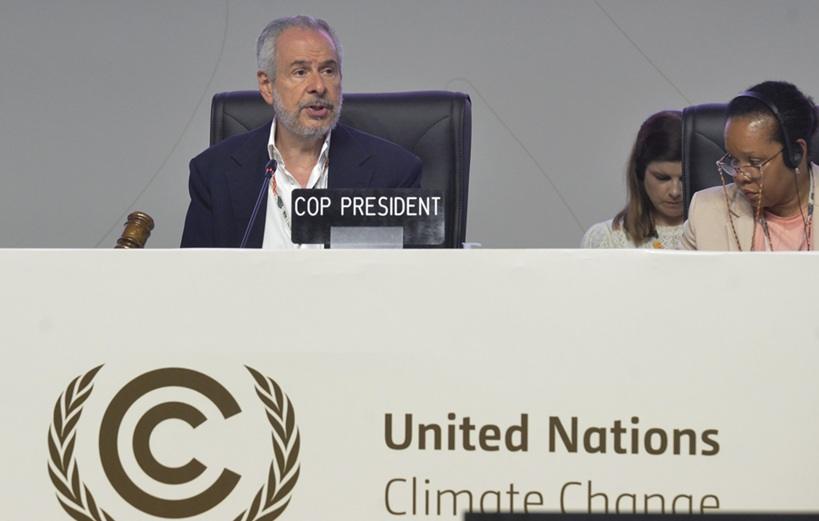
The conclusion of the COP30 climate conference in Belém, Brazil, has sent a clear, if understated, signal to the global oil and gas investment community: the immediate threat of internationally mandated, binding restrictions on fossil fuel production remains at bay. For the second consecutive year, the final agreement meticulously avoided any explicit mention of a “transition away from fossil fuels” or a concrete roadmap to achieve it, despite intense lobbying from nations like the EU and UK. This outcome, largely shaped by the adamant objections of major oil-producing countries including Saudi Arabia, Russia, and India, offers a critical lens through which to assess near-term market dynamics and long-term investment strategies in the hydrocarbon sector. While environmental groups express disappointment, astute energy investors recognize this as a continued window of operational stability for conventional energy assets, albeit one framed by an evolving global energy landscape.
COP30’s Non-Committal Stance: A Respite for Hydrocarbon Investments
The core takeaway from COP30 for oil and gas investors is the sustained lack of a unified, binding international commitment to phase out fossil fuels. Efforts by over 80 countries to reintroduce language from the 2023 COP28 conference, which first called for a global transition, were ultimately unsuccessful. This resistance, spearheaded by a coalition of key oil-producing nations, underscores the deeply entrenched economic and geopolitical reliance on hydrocarbons. The conference also failed to establish a binding roadmap to end deforestation, instead settling for a mere recognition of the need for forest loss reversal. In a move seen as a compromise, the Brazilian presidency committed to developing voluntary, science-based roadmaps on fossil fuel transition and deforestation over the next year. While these voluntary frameworks will operate outside the UN system, their very existence indicates a persistent, albeit slow-burning, pressure for future action. For now, however, the absence of immediate, enforceable curbs implies fewer regulatory headwinds for existing and planned upstream projects, allowing companies greater flexibility in their capital allocation strategies.
Market Volatility Amidst Demand Resilience Signals
The broader market reaction to global economic signals and geopolitical tensions continues to drive crude price volatility, even as the COP30 outcome offers underlying support for long-term demand narratives. As of today, Brent crude trades at $90.61 per barrel, marking an 8.83% decline from its daily high, with its range fluctuating between $86.08 and $98.97. Similarly, WTI crude has seen an 8.84% drop to $83.11, trading within a range of $78.97 to $90.34. This intraday dip follows a significant two-week trend where Brent shed $14, or 12.4%, falling from $112.57 on March 27th to $98.57 just yesterday. While these short-term movements reflect broader macroeconomic concerns and profit-taking, the implicit message from COP30 – that global demand for fossil fuels will not face immediate, severe international regulatory constraints – offers a degree of demand resilience that could underpin prices in the medium term. Our platform’s proprietary reader intent data highlights this focus, with investors frequently asking “what do you predict the price of oil per barrel will be by end of 2026?” This consistent query underscores the market’s hunger for clarity on future demand trajectories, a clarity that COP30’s outcome, paradoxically, provides by not imposing new restrictions.
OPEC+ Decisions and Future Supply Dynamics
The lack of new fossil fuel curbs from COP30 significantly impacts the strategic calculus for major producers, particularly OPEC+. The stage is now set for crucial supply-side decisions, with the OPEC+ Joint Ministerial Monitoring Committee (JMMC) meeting scheduled for tomorrow, April 17th, followed by the Full Ministerial Meeting on April 18th. These meetings will be closely watched by investors, who are actively seeking insights into “OPEC+ current production quotas” according to our internal data. The COP30 outcome, by removing the immediate pressure of an international phase-out mandate, potentially offers OPEC+ greater latitude to manage supply based purely on market fundamentals and geopolitical stability. Without a binding global directive to reduce oil and gas consumption, the cartel may feel less compelled to implement aggressive production cuts, especially if they perceive demand as robust. The decisions made in Vienna this week will therefore be pivotal in shaping crude supply dynamics for the coming months, directly influencing price stability and investment viability across the upstream sector. Beyond OPEC+, the continued absence of aggressive international mandates means that individual nations and companies retain more autonomy in their energy development plans, reinforcing the importance of national energy policies and resource endowments.
The Evolving Landscape of Climate Finance and Energy Transition
While COP30 fell short on fossil fuel commitments, it did make progress in other areas, notably climate finance. The conference endorsed a significant scaling of climate finance, targeting $1.3 trillion annually for developing countries by 2035 and expecting developed nations to triple adaptation finance to $300 billion per year. However, these ambitious goals lack binding enforcement mechanisms. For oil and gas investors, this signifies a dual reality. On one hand, the lack of direct fossil fuel curbs maintains a favorable operating environment for hydrocarbons. On the other, the accelerating flow of climate finance, even if voluntary, will inevitably stimulate the growth of renewable energy infrastructure and green technologies in developing economies. This long-term shift, while not immediately threatening, necessitates that oil and gas companies continue to integrate sustainability and decarbonization strategies into their business models to remain competitive and attract capital. The balance between maintaining robust fossil fuel production and strategically investing in lower-carbon solutions will be critical for navigating the evolving energy transition. Investors must therefore closely monitor not only crude prices and production quotas but also the deployment of climate finance and the resulting innovation in alternative energy sources to fully understand the long-term risk and reward profile of their energy portfolios.


