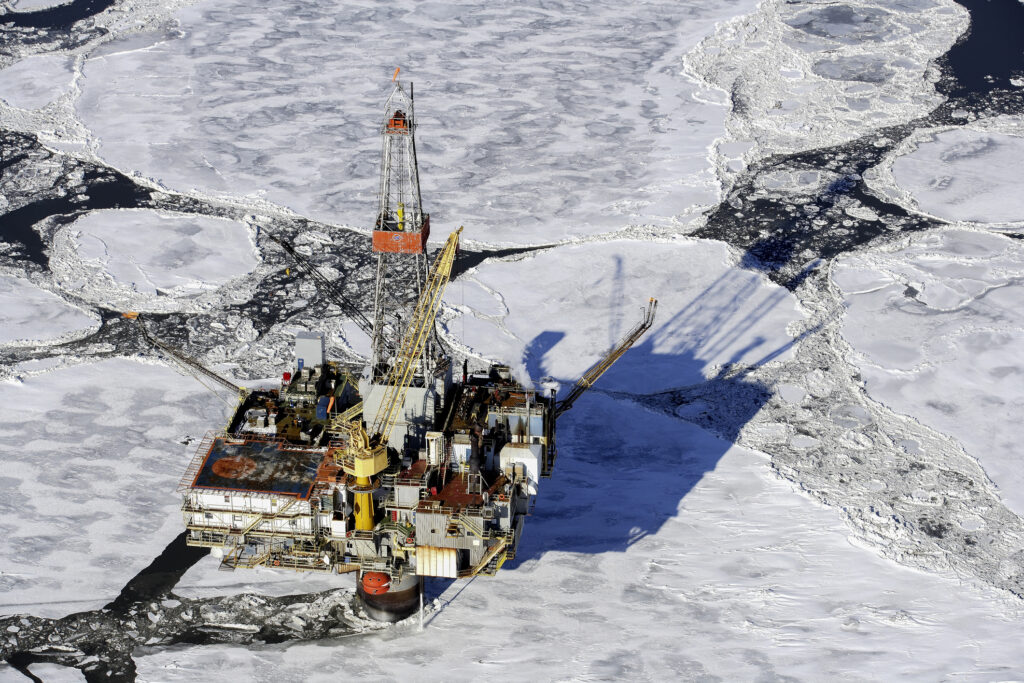
ConocoPhillips’ latest move to significantly expand its Arctic exploration footprint, specifically targeting new exploratory wells and seismic testing west of its colossal Willow development in Alaska’s National Petroleum Reserve, signals a bold long-term bet on the region’s energy potential. This isn’t merely an incremental step; it represents the company’s most ambitious exploration effort in the Arctic since 2020, underscoring a strategic commitment to a frontier that remains commercially viable despite global price fluctuations and significant regulatory hurdles. For investors, this expansion presents both considerable upside potential from new reserves and a complex risk profile tied to environmental reviews, policy shifts, and the long-term trajectory of global crude prices.
Strategic Expansion Amidst Arctic Prioritization
ConocoPhillips’ application to the Bureau of Land Management details plans for new access roads, well pads, and 3D seismic surveys within the Bear Tooth Unit, an area immediately adjacent to the existing Willow project. This strategic positioning aims to leverage existing infrastructure and enhance Willow’s production corridor, which itself is projected to reach a peak output of 180,000 barrels per day. The company has explicitly prioritized Alaska in its 2025 capital plan, making a clear pivot away from certain Lower 48 investments. This allocation of capital reflects a conviction that Arctic output will deliver superior long-term value, aligning with a broader industry trend of consolidating operations in high-potential, proven basins where economies of scale can be achieved. While no projected volumes for the new block have been disclosed, the sheer scale of the proposed seismic surveys suggests an expectation of substantial new discoveries that could extend the life and profitability of their Alaskan operations well into the future.
Navigating Regulatory Headwinds and Alaska’s Fiscal Realities
The path to Arctic expansion is rarely straightforward, and ConocoPhillips’ latest proposal faces a familiar gauntlet of environmental reviews and federal permitting. While the current U.S. presidential administration has signaled a supportive stance towards increased domestic energy production, particularly in Alaska, the regulatory process remains rigorous. There is currently no publicly disclosed timeline for a decision on this expansion. Furthermore, the economic backdrop of Alaska itself introduces additional complexities. The state’s heavy reliance on oil revenues has led to significant fiscal challenges, with Alaska being ranked as the worst state for doing business in America in 2025 by CNBC. This economic vulnerability is exacerbated by projected declines in the price of Alaska North Slope (ANS) crude, which averaged $85.24 per barrel in fiscal year 2024 but is forecast by the Alaska Department of Revenue to fall to $74.48/barrel in FY2025 and further to $67/barrel in FY2027. This declining revenue outlook could pressure state policymakers to seek increased returns from operators, potentially impacting future operating costs or tax structures for projects like Willow and its proposed expansion.
The Price Volatility Gambit: Brent Trends and Project Economics
ConocoPhillips’ commitment to long-cycle Arctic projects is a clear statement on its long-term crude price outlook, even as the immediate market exhibits volatility. As of today, Brent Crude trades at $94.85, having seen a marginal dip in the latest trading session. This price point, however, sits against a backdrop of significant recent fluctuation. Over the past 14 days, Brent has experienced a notable decline of nearly 9%, falling from $102.22 on March 25th to $93.22 on April 14th. Similarly, WTI Crude currently hovers around $90.98. These short-term movements highlight the inherent risks of investing in projects with multi-year development cycles, where initial capital allocation is made based on long-term price assumptions that can diverge from real-time market conditions. The economic viability of these new Arctic reserves, particularly given their higher extraction costs compared to conventional plays, hinges on sustained crude prices well above the state of Alaska’s own conservative forecasts for ANS crude. Investors must weigh the potential for substantial resource additions against the inherent exposure to global price swings and the long payback periods characteristic of such large-scale developments.
Investor Outlook: Forecasting the Future of Arctic Returns
The prevailing investor sentiment, as evidenced by frequent inquiries regarding consensus 2026 Brent forecasts and base-case price projections for the next quarter, underscores the critical role crude price stability plays in evaluating long-term investments. ConocoPhillips’ decision to push forward with Arctic expansion suggests internal price decks that are robust enough to justify significant capital deployment in a high-cost environment. Looking ahead, several key market events in the coming weeks will provide crucial signals for the short to medium-term crude price trajectory. The OPEC+ Joint Ministerial Monitoring Committee (JMMC) meeting on April 18th, followed by the full Ministerial meeting on April 20th, will be closely scrutinized for any indications of production policy adjustments. These decisions, alongside the regular cadence of API and EIA weekly crude inventory reports and the Baker Hughes Rig Count on April 17th and 24th, will shape market expectations and directly influence the economic calculus for large-scale, long-term projects like the Willow expansion. For investors evaluating ConocoPhillips, understanding the interplay between these upcoming macro events, the company’s ambitious Arctic strategy, and the inherent volatility of crude markets will be paramount in determining the ultimate return potential of this bold frontier bet.