From Nuclear Deterrence to Digital Powerhouse: A Cold War Silo’s Multi-Million Dollar Transformation
Investors keenly track the evolving landscape where legacy infrastructure finds new purpose, especially when it intersects with the surging demands of the digital economy. In a remarkable demonstration of strategic asset repurposing, a decommissioned intercontinental ballistic missile (ICBM) silo near Denver, Colorado, once poised to unleash devastating nuclear payloads, is undergoing a profound transformation. This subterranean marvel, a relic of the Cold War, is now the focus of a multi-million dollar venture aimed at housing a cutting-edge artificial intelligence (AI) data center, signaling a potent shift in capital deployment towards secure and energy-efficient digital infrastructure.
Australian venture capitalist Nik Halik acquired this formidable Cold War-era facility from the U.S. government in 2021 for an acquisition cost exceeding $10 million. For the past five years, Halik has spearheaded an ambitious renovation project, meticulously converting the heavily fortified structure into a modern, technologically advanced complex. This endeavor aligns with Halik’s distinctive investment philosophy, often characterized by high-stakes ventures and a knack for identifying and maximizing intrinsic value in unique assets. He articulates his vision clearly, stating a keen interest in substantial, secure structures and their potential for significant value addition.
Engineering a Legacy: The Foundation of a Digital Fortress
Constructed in 1959, this Titan I missile complex represented a monumental investment for its era, costing approximately $47 million, an equivalent of $350 million in today’s purchasing power. Its original mandate was critical: to house the 98-foot-tall Titan I missiles, each capable of delivering a nuclear warhead over 6,000 miles. As one of eighteen such silos built across the U.S. during the nascent stages of the Cold War, it embodies an unparalleled level of robust engineering and strategic foresight. The sheer scale and resilience engineered into these facilities, initially designed to withstand direct assault, now present an inherent advantage for ultra-secure data storage and processing needs.
Strategic Energy Independence: From Diesel to Next-Gen Power
A critical component of the original design, and a significant point of interest for energy investors, was the facility’s remarkable self-sufficiency. Four powerful diesel engines provided independent power generation, enabling the complex to operate entirely off-grid. Halik reports that just one of the silo’s three massive diesel fuel tanks possesses a staggering 50,000-gallon capacity, enough to power approximately 2,000 homes for two weeks. This inherent capability for off-grid operations highlights the facility’s strategic resilience, a trait increasingly valued for critical digital infrastructure in an era of potential grid vulnerabilities. The historical reliance on diesel fuel underscores the foundational role of traditional oil and gas resources in powering mission-critical operations, even as the site eyes a transition to advanced energy solutions.
From Obsolete Defense to Cutting-Edge Commerce
Despite their advanced design, the Titan I missiles experienced a brief operational lifespan. Launched between April 1962 and January 1965, all 54 missiles were decommissioned by early 1965, rendered obsolete by rapid technological advancements that ushered in the more sophisticated Titan II and Minuteman I ICBMs. Following their military retirement, the U.S. government stripped the facilities of valuable materials and subsequently sold many to private entities. Halik notes that his specific bunker saw continued use by government defense contractors and the Defense Advanced Research Projects Agency (DARPA) before its eventual transition to private ownership. This history speaks to the enduring structural integrity and security of the asset, even as its purpose shifted over decades.
Navigating Challenges: A $30 Million Renovation and Remediation Journey
The current renovation of this isolated Colorado facility represents a substantial capital expenditure, with estimated costs projected to reach $30 million. Investors understand that repurposing legacy infrastructure often comes with complex challenges. Halik’s hands-on approach, documented extensively, reveals the inherent dangers within the sprawling complex, from rusty infrastructure and exposed wiring to the presence of hazardous materials like cyanide, lead paint, mercury, and asbestos in the deeper levels. These remediation efforts, while costly, are essential investments that enhance the long-term viability and safety of the asset, ensuring it meets modern environmental and occupational standards for high-tech applications.
A Subterranean Ecosystem: Scale and Security for the Digital Age
The sheer scale of the complex is impressive, encompassing 200,000 square feet and descending 165 feet below the surface. This subterranean expanse originally accommodated the towering missiles and their extensive launch infrastructure. Today, it offers an unmatched level of physical security for data storage. The facility comprises seventeen distinct chambers interconnected by a labyrinthine network of tunnels spanning 4,500 feet, including launcher rooms, control domes, and a dedicated power dome. A significant portion of the complex boasts “Hoover Dam-type engineering,” featuring multiple layers of steel-reinforced concrete capable of withstanding approximately 15,000 pounds of pressure per square inch. This extreme fortification provides an unparalleled level of protection, a critical selling point for companies demanding the utmost security for their digital assets.
Reimagining Spaces: From Command Center to Cultural Hub
The original control room, where operators once stood ready to initiate launches of unimaginable destructive power, now stands as a poignant historical artifact. Halik plans to transform part of the facility into a museum, preserving relics like pieces of the launch desk and recently discovered papers containing launch codes and protocols. This not only adds a unique cultural dimension but also opens potential avenues for diversified revenue streams through tourism and historical preservation. Beyond historical appreciation, Halik envisions more audacious transformations, including converting one expansive chamber into a nightclub, complete with a DJ, bar, and performance spaces. This creative vision extends to promoting events like the “ATOMIKA festival” at another decommissioned missile site in New Mexico, showcasing the potential for these unique underground spaces to host immersive art and entertainment experiences.
The AI Power Play: A Natural Fit for Underground Data Centers
Central to Halik’s investment strategy is the conversion of a significant portion of the facility into an AI data center. The rationale is compelling for oil and gas investors considering the energy nexus. AI processing demands immense power and a stable, secure environment. The bunker’s naturally cool internal temperature of 52 degrees Fahrenheit year-round offers a substantial operational advantage, as it drastically reduces the electricity required for cooling servers—a cost that can consume over 30% of a typical data center’s energy budget. This intrinsic energy efficiency underscores the asset’s suitability for high-density computing loads, making it an attractive proposition for tech giants grappling with escalating energy costs. Halik emphasizes, “AI needs power, AI needs safe environments to basically have all their computational processing power.”
Pioneering Energy Solutions: Small Nuclear Reactors on the Horizon
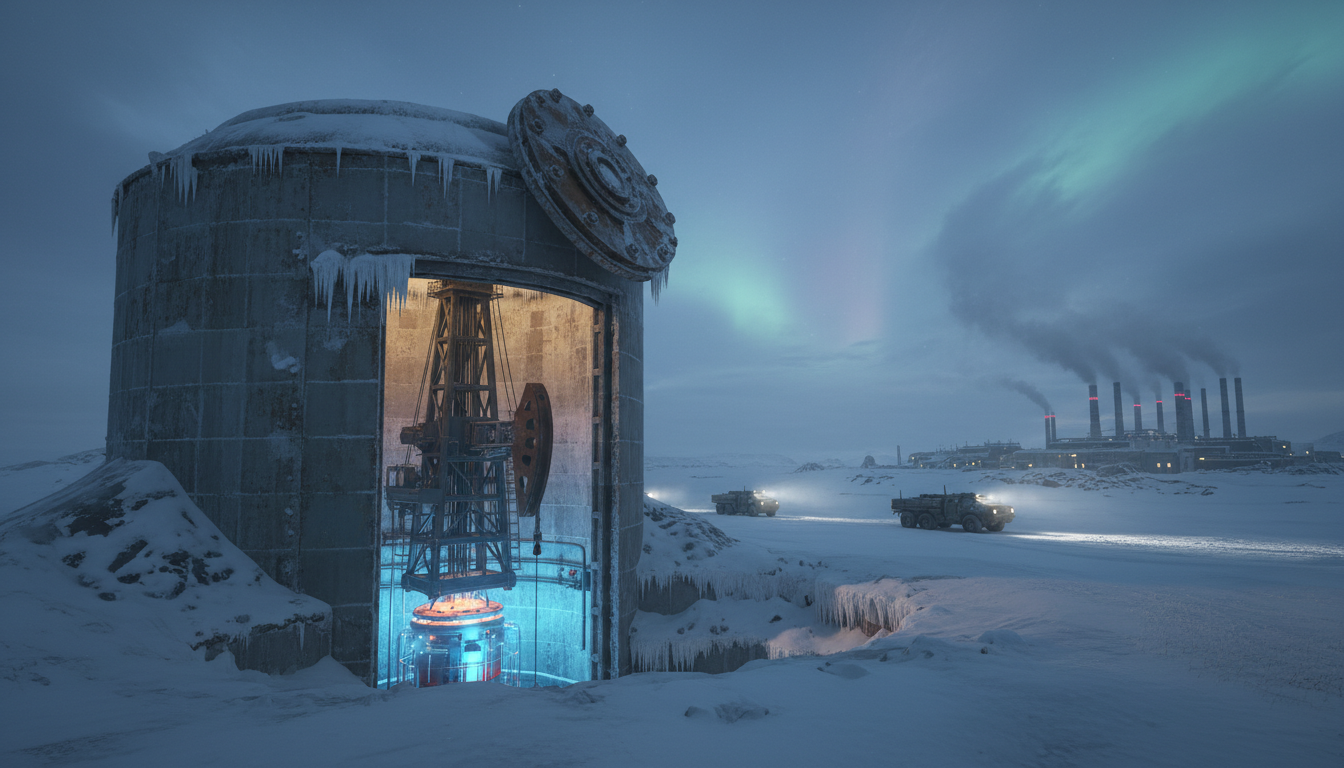
Looking ahead, Halik plans an ambitious upgrade to the facility’s power infrastructure. The vision involves replacing the existing diesel generator setup with small nuclear reactors (SMRs). This strategic shift from fossil fuel-based generation to advanced nuclear technology aims to achieve complete energy independence and eliminate the logistical challenges of continuous refueling. For energy sector investors, this represents a forward-looking investment in a resilient, zero-carbon power solution tailored for high-demand, mission-critical applications. The adoption of SMRs within such a secure, self-contained environment could set a precedent for future secure data infrastructure developments.
Market Validation: Growing Interest in Subterranean Data Solutions
Halik indicates that tech and AI companies have already expressed interest in the facility, a testament to the growing market demand for secure, naturally cooled, and energy-efficient data solutions. This trend is not isolated; companies like Iron Mountain successfully operate data processing and storage facilities within a former limestone mine in Pennsylvania, a 220-foot-deep, 40-acre complex that dwarfs Halik’s bunker. The increasing viability and competitive advantages of underground data centers validate the strategic investment in assets like this repurposed silo. As AI continues its exponential growth, driving unprecedented energy consumption, these fortified, naturally stable environments, capable of hosting advanced power generation, represent a compelling frontier for long-term capital allocation in the energy and technology sectors.