Clean Energy Funding Canceled; O&G Gains
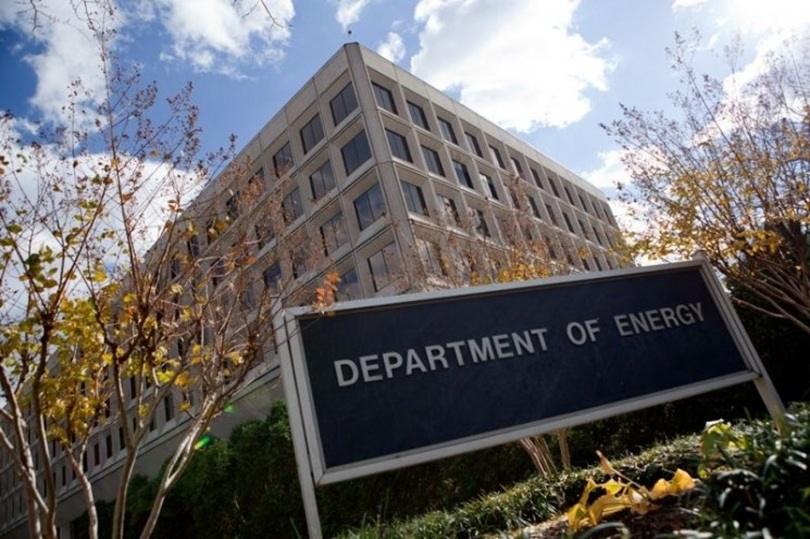
A significant policy pivot from the U.S. Department of Energy has just reshaped the landscape for energy investors. The administration has announced the termination of $3.7 billion in clean energy grants, citing a lack of thorough financial review by the prior administration and concerns over economic viability. This decisive move, affecting 24 awards primarily focused on carbon capture, clean hydrogen, and decarbonization, signals a clear shift towards prioritizing established, reliable energy sources and projects with a demonstrable return on investment. For oil and gas investors, this represents a substantial tailwind, potentially redirecting capital and regulatory focus back towards traditional hydrocarbon development and away from nascent, less proven clean energy technologies.
The Policy Shift: A Boost for Conventional Energy
The cancellation of $3.7 billion in grants under the Office of Clean Energy Demonstrations (OCED) marks a critical re-evaluation of national energy strategy. Among the 24 projects affected were substantial commitments, including $500 million for a carbon capture initiative at a Heidelberg Materials cement plant, $330 million earmarked for a clean hydrogen project by energy giant Exxon Mobil, and $375 million for a plastic recycling project led by Eastman Chemical. The administration’s rationale is unequivocal: these projects “failed to advance the energy needs of the American people, were not economically viable and would not generate a positive return on investment of taxpayer dollars.”
This stringent financial scrutiny, emphasizing taxpayer return and national security through robust energy supply, inherently favors the mature and proven profitability of the oil and gas sector. By pulling back from what it deems financially dubious clean energy ventures, the administration effectively reduces a source of competition for capital and regulatory attention. For integrated oil and gas companies, this could mean less pressure to diversify into less profitable clean energy segments and more freedom to focus on their core competencies, where returns are often more predictable and substantial. The stated aim to bolster “affordable, reliable energy sources” directly aligns with the fundamental value proposition of oil and natural gas.
Current Market Dynamics Amidst Policy Uncertainty
While the long-term implications of this policy shift are undeniably bullish for traditional oil and gas, the immediate market reaction reflects a complex interplay of factors. As of today, Brent Crude trades at $90.38 per barrel, a significant decline of 9.07% within the day, ranging from $86.08 to $98.97. Similarly, WTI Crude stands at $82.59, down 9.41% with a day range of $78.97 to $90.34. Gasoline prices have also dipped to $2.93, a 5.18% decrease, moving within a daily range of $2.82 to $3.10.
This recent intraday volatility is set against a broader bearish trend, with Brent having fallen by $20.91, or 18.5%, from $112.78 on March 30th to $91.87 yesterday. While today’s policy announcement could be seen as a long-term fundamental positive for traditional energy, the immediate market downturn suggests that broader macro concerns, geopolitical developments, or profit-taking are currently dominating price action. Investors must therefore differentiate between the powerful, albeit slower-moving, currents of policy support and the immediate, often reactive, movements of the global commodity markets. The policy shift provides a stronger floor for future demand narratives for O&G, even as short-term price movements contend with other market forces.
Investor Outlook and Upcoming Market Catalysts
Our proprietary data indicates that investors are keenly focused on the future trajectory of crude prices, with a common query being: “what do you predict the price of oil per barrel will be by end of 2026?” The cancellation of clean energy grants provides a crucial piece of the puzzle for this forward-looking analysis. By reducing the emphasis on certain decarbonization projects and prioritizing “affordable, reliable energy sources,” the administration signals a more supportive environment for sustained fossil fuel production, which could influence the supply side of the equation through 2026 and beyond. This policy stance could lead to more robust investment in exploration and production, potentially moderating price spikes that might otherwise occur due to supply constraints.
The near-term outlook will be heavily influenced by a series of critical events. This weekend, the OPEC+ Joint Ministerial Monitoring Committee (JMMC) meets, immediately followed by the full Ministerial Meeting. These gatherings are pivotal, especially given the current price volatility and investor interest in “OPEC+ current production quotas.” Any adjustments to production targets by the cartel will have immediate and significant market repercussions. Following these, market participants will closely watch the API Weekly Crude Inventory and EIA Weekly Petroleum Status Reports on April 21st and 22nd, respectively, then again on April 28th and 29th. These reports offer crucial insights into U.S. supply and demand dynamics, which, combined with the Baker Hughes Rig Count on April 24th and May 1st, will paint a clearer picture of domestic production trends and investment appetite within the sector. The policy pivot provides a supportive domestic backdrop for these supply-side indicators.
Strategic Implications for Oil & Gas Companies
For oil and gas companies, this policy pivot holds profound strategic implications. The administration’s emphasis on “highest possible return on investment” directly validates the economic models of many traditional hydrocarbon projects. Companies like Exxon Mobil, despite having a clean hydrogen project canceled, may find their core oil and gas ventures facing fewer regulatory hurdles and potentially a more stable investment environment. This could translate into a reallocation of capital within integrated energy companies, favoring proven, high-yield fossil fuel extraction and infrastructure over speculative clean energy initiatives. Such a shift often translates to increased shareholder value through enhanced dividends or share buybacks, aligning with the administration’s stated focus on economic viability and efficient use of capital.
Furthermore, the drive to “strengthen national security” through reliable energy sources often necessitates robust domestic production. This could spur increased activity in U.S. shale plays, offshore developments, and midstream infrastructure projects designed to transport these resources efficiently. Sectors within the oil and gas industry that stand to benefit most include exploration and production (E&P) firms, midstream operators focused on pipelines and storage, and potentially refining companies as the long-term demand outlook for petroleum products receives an implicit nod of approval from federal policy. This creates a clearer, albeit dynamic, investment thesis for companies committed to traditional energy, allowing them to plan and execute with greater certainty regarding governmental support.


