Copenhagen Infrastructure Partners (CIP), a leading name in global renewable energy infrastructure, has significantly deepened its commitment to the burgeoning green hydrogen sector with a strategic acquisition in Germany. This move signals a potent shift in capital allocation within the broader energy landscape, offering crucial insights for investors tracking the energy transition from traditional oil and gas to sustainable alternatives.
The Danish investment powerhouse recently secured a 70% controlling interest in the initial phase of an ambitious 1-gigawatt (GW) green hydrogen production facility situated in Lubmin, Germany. This pivotal stake was acquired from H2APEX Group SCA, a Luxembourg-based developer and operator specializing in advanced green hydrogen plants. The transaction underscores CIP’s strategic vision to not only participate but to lead in the development of future energy infrastructure critical for decarbonization efforts across Europe.
Germany’s Green Hydrogen Hub Takes Shape
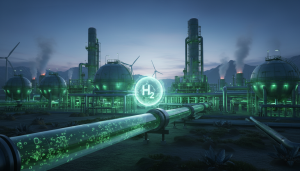
The Lubmin project is designed with a phased approach, commencing with a robust 100-megawatt (MW) electrolyzer capacity in its inaugural stage. This initial phase is projected to yield an impressive 10,000 tonnes of green hydrogen annually, a substantial contribution to Germany’s growing clean energy demands. Critically, the long-term blueprint for the facility envisions a tenfold expansion, scaling up to an ultimate capacity exceeding 1 GW. This long-term outlook highlights a significant commitment to establishing a large-scale, sustainable hydrogen production hub capable of serving diverse industrial and mobility sectors.
The strategic location of Lubmin, a key energy hub on Germany’s Baltic Sea coast, further enhances the project’s appeal. Its proximity to existing gas pipeline infrastructure, as well as potential for offshore wind integration, positions it as an ideal site for efficient green hydrogen production and distribution. For investors, this geographical advantage de-risks the project by ensuring robust connectivity to potential off-takers and feedstock sources, a vital consideration in new energy ventures.
Financial Underpinnings and Strategic Funding
A cornerstone of the Lubmin project’s financial viability is the substantial backing it has garnered from the European Union. The initiative is slated to receive EUR 167 million (approximately USD 192.8 million) in vital funding through the Important Projects of Common European Interest (IPCEI) program. This EU-level endorsement is not merely financial; it signifies a strategic alignment with Europe’s overarching goals for energy independence, industrial decarbonization, and the establishment of a robust hydrogen economy.
CIP’s involvement is instrumental in securing the necessary pre-financing for the plant, ensuring that development progresses seamlessly until the full IPCEI funds become available. This critical interim financing mechanism minimizes development risks and accelerates project timelines, a key factor for investors seeking efficient capital deployment. The Danish fund’s initial investment commitment of EUR 15 million is specifically allocated to propel the project forward to its crucial Final Investment Decision (FID) phase. Beyond this initial outlay, both CIP and H2APEX have articulated a joint ambition to finance the total project volume, which is estimated to be several hundred million euros, through to its commissioning.
Securing Offtake: A De-Risked Commercial Strategy
One of the most compelling aspects of this investment for market participants is the already secured preliminary off-take agreement for the hydrogen produced in the initial phase. This pre-arranged commitment to purchase the plant’s output provides a strong foundation for revenue predictability and commercial stability, significantly de-risking the project from an investor’s perspective. In nascent markets like green hydrogen, securing long-term buyers is paramount and acts as a powerful signal of market demand and project viability.
The presence of a firm off-take agreement typically facilitates easier access to further project financing and can improve the overall return profile. It confirms that the ambitious production targets are matched by tangible market demand, offering confidence to stakeholders that the investment will translate into a commercially successful operation. This foresight in securing commercial agreements early is a hallmark of experienced infrastructure investors like CIP.
Investment Implications for Oil & Gas Markets
For investors accustomed to the dynamics of traditional oil and gas, CIP’s latest move offers a compelling barometer of the accelerating energy transition. As global economies push towards net-zero emissions, investments in large-scale green hydrogen projects are becoming increasingly strategic. This acquisition exemplifies how significant capital is being redirected from fossil fuel-centric portfolios towards renewable energy infrastructure and new energy vectors.
The expertise of CIP in managing large, complex infrastructure projects, combined with H2APEX’s specialized knowledge in green hydrogen technology, creates a robust partnership. This collaboration is indicative of the new ecosystem emerging in the energy sector, where traditional financial acumen meets cutting-edge clean energy innovation. Oil and gas investors should view such developments not as isolated events, but as integral components of a broader, irreversible shift in the global energy matrix, presenting both challenges and novel opportunities for capital deployment in sustainable fuels and energy systems.
Outlook: A Glimpse into Europe’s Energy Future
The Lubmin green hydrogen project, backed by formidable financial and strategic support, is poised to become a significant contributor to Europe’s decarbonization efforts. It represents a tangible step towards building a resilient, sustainable energy infrastructure capable of meeting future industrial and societal needs without relying on fossil fuels. CIP’s substantial stake in this venture reinforces its position as a frontrunner in financing the energy transition, while simultaneously offering investors a clear pathway into a high-growth sector.
As the project advances towards its Final Investment Decision and subsequent commissioning, its progress will be closely watched by the global energy community. It stands as a testament to the increasing viability and scalability of green hydrogen as a key component of the future energy mix, signaling robust investment potential for those willing to navigate the evolving landscape of sustainable energy finance.