In a groundbreaking development that could reshape global energy market forecasts, China has demonstrated a significant decoupling of its economic growth from carbon emissions. For the first time, robust expansion in the nation’s clean power capacity has directly led to a year-on-year reduction in carbon dioxide (CO2) emissions, even as overall electricity demand surged. This marks a pivotal shift from previous declines, which were primarily symptomatic of economic deceleration, signaling a potentially structural transformation in the world’s largest energy consumer.
China’s Emissions Reversal: A New Paradigm
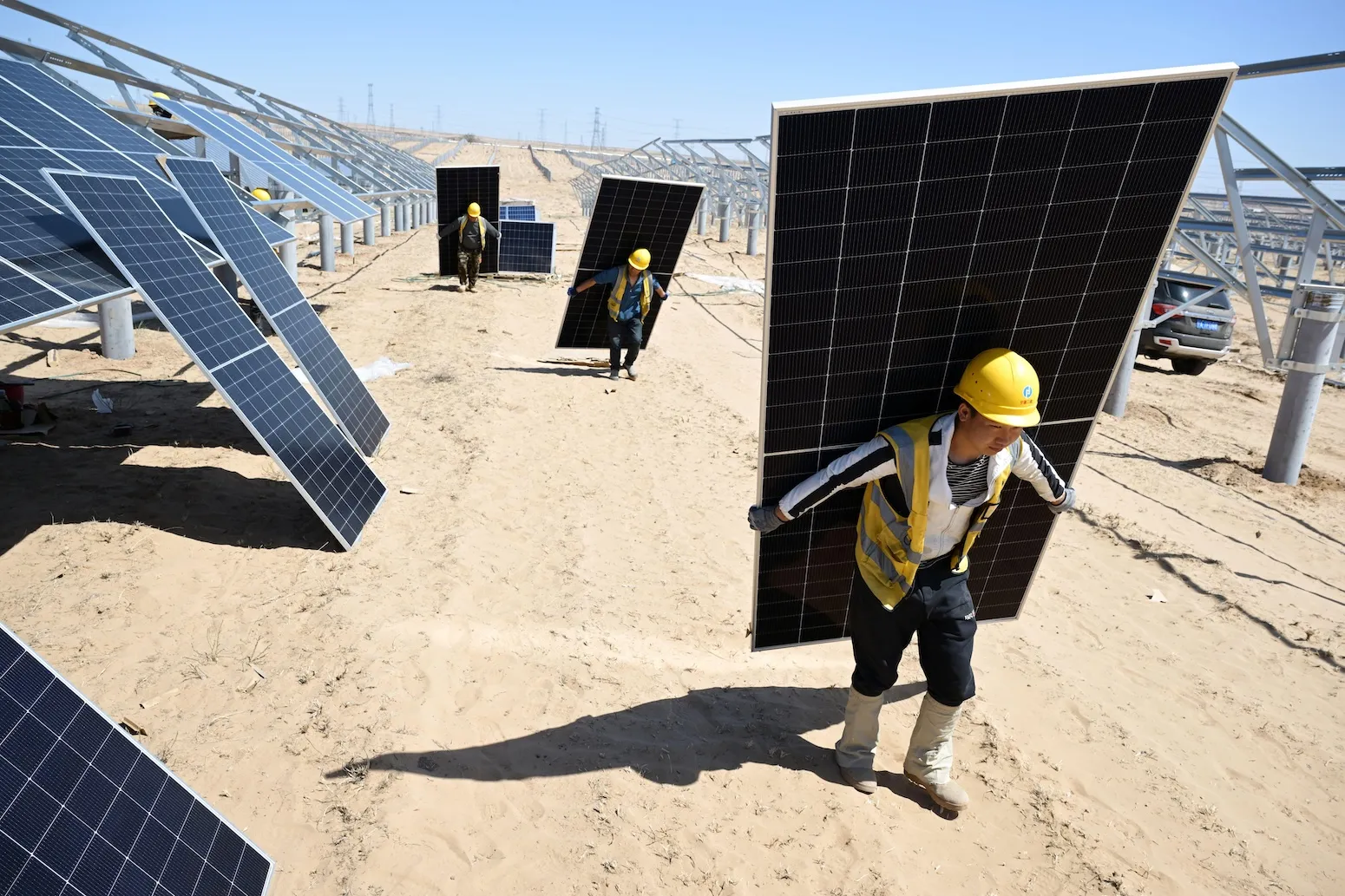
Recent analysis reveals that China’s CO2 emissions experienced a notable 1.6% year-on-year decline in the first quarter of 2025. This downward trend extends to a 1% reduction over the latest 12-month period ending March 2025. The critical differentiator this time around is the underlying cause: an unprecedented surge in new wind, solar, and nuclear power generation. This rapid deployment of renewable and zero-carbon energy sources was sufficient to displace coal-fired electricity production, effectively lowering the carbon intensity of China’s power grid despite an overall increase in power consumption.
For investors closely monitoring the global energy landscape, this data point is more than just an environmental statistic; it represents a tangible shift in the demand dynamics for fossil fuels. While emissions remain just 1% below their recent peak, the sustained nature of this decline – stable or falling for over a year – suggests a more resilient trend than previously observed. This development warrants close attention from those with stakes in the oil, gas, and coal sectors, as well as an opportunity lens for clean energy proponents.
The Power Sector’s Pivotal Role
The electrification of China’s economy is a key battleground for emissions reduction, and the latest figures offer compelling evidence of progress. Growth in clean power generation has now definitively outpaced both the current and long-term average growth rates for electricity demand. This fundamental shift is directly translating into reduced reliance on fossil fuels for power generation. Specifically, power-sector emissions decreased by 2% year-on-year in the 12 months leading up to March 2025.
Should this trajectory persist, it would undeniably herald a sustained peak and subsequent decline in China’s power-sector emissions. Such a scenario carries profound implications for the global energy complex. As the world’s largest coal consumer, any significant and structural reduction in China’s coal demand for power generation could send ripples across international commodity markets, influencing everything from thermal coal prices to the competitive landscape for natural gas as a transition fuel.
Policy Drivers and Economic Reorientation
Beyond the sheer volume of clean energy installations, strategic policy initiatives are accelerating China’s energy transition. The ongoing trade disputes, notably those initiated by the Trump administration, have spurred renewed efforts within China to rebalance its economy towards domestic consumption rather than an export-led growth model. This economic reorientation could lead to a less energy-intensive growth path in certain sectors, indirectly curbing overall fossil fuel demand.
Furthermore, a new pricing policy for renewables has ignited a scramble to install capacity before its full implementation, creating a surge in deployment. These policy mechanisms, coupled with China’s commitment to its 2030 emissions targets under the Paris Agreement, underscore the nation’s resolve. While a “growing gap” still needs to be bridged to meet these ambitious targets, the current pace of clean energy deployment indicates a serious effort to close that gap.
Historical Context and Future Outlook
To fully appreciate the significance of current trends, it’s essential to view them against China’s recent emissions history. Over the past decade, China’s CO2 emissions from fossil fuels and cement surged by nearly a fifth. Previous periods of decline, such as the shallow dip in 2015-2016 following a round of stimulus measures or the sharper fall in 2022 due to stringent zero-Covid controls, were largely transient and linked to economic stress. The current reduction, driven by clean power, represents a more durable, structural shift.
Looking ahead, the trend of falling power-sector emissions is projected to continue throughout 2025. However, the longer-term trajectory beyond this year remains subject to critical policy decisions. The content of China’s next five-year plan, anticipated next year, will be instrumental in setting the clean energy and emissions targets that will guide the nation’s energy future. Additionally, Beijing’s economic policy response to the evolving global trade landscape will heavily influence the pace and scale of decarbonization efforts.
Implications for Oil & Gas Investors
For investors in the oil and gas sector, China’s clean energy ascendancy presents a complex challenge and an evolving risk profile. While the immediate impact is most pronounced in the power sector, primarily affecting coal, the long-term implications for oil demand are undeniable. A structurally decarbonizing power sector, combined with an economy shifting towards domestic consumption and potentially less energy-intensive growth, could temper China’s future appetite for imported oil.
China’s role as a behemoth of global energy demand means that even marginal shifts in its consumption patterns can have outsized effects on international markets. If its clean energy deployment continues to accelerate, potentially allowing the nation to peak its overall emissions earlier than anticipated, it would reinforce the “peak demand” narrative for fossil fuels globally. Oil and gas companies must critically assess their long-term investment strategies, considering a world where China’s energy demand growth is increasingly met by domestic clean sources rather than incremental fossil fuel imports. This necessitates a strategic pivot towards gas as a transition fuel, robust carbon capture solutions, or diversification into renewable energy ventures to remain resilient in a rapidly changing energy landscape.