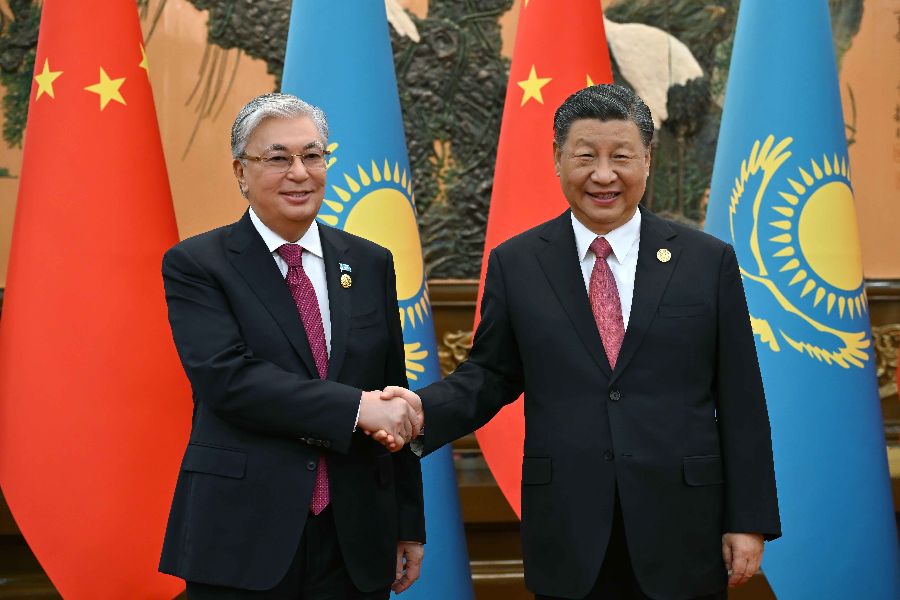
China’s strategic engagement in Central Asia is undergoing a profound transformation, evolving from a raw infrastructure play to a sophisticated, multi-faceted investment strategy with significant implications for global energy markets. While initially characterized by massive infrastructure spending under the Belt and Road Initiative (BRI), Beijing’s approach has matured, now encompassing a broader spectrum of economic, technological, and even soft power initiatives. This pivot, particularly evident in its deepened ties with Kazakhstan, signals China’s long-term ambition to secure diverse energy supplies, develop green technologies, and solidify its regional influence, creating a new energy landscape that demands close attention from investors.
The Evolving BRI Footprint in Central Asia
Since its inception in 2013, China’s Belt and Road Initiative has funneled an astonishing $1.2 trillion into 147 countries, constructing an expansive network designed to enhance trade and connectivity. Kazakhstan has emerged as a cornerstone of this grand strategy, drawing significant Chinese investment across transportation, energy, and broader economic development sectors. Over 200 projects have seen Chinese capital, with cumulative investments reaching $25.3 billion between 2005 and 2023. Bilateral trade between China and Kazakhstan surged to $44 billion in 2024, representing 45% of the total China-Central Asia trade volume.
Crucially, the BRI’s focus underwent a qualitative shift in 2023. Moving beyond simply building roads and pipelines, the initiative expanded into “software”-oriented areas such as educational exchanges, clean energy, public health, and artificial intelligence. This strategic broadening was highlighted at the second China-Central Asia Summit in Astana, held from June 16-18, 2025. Here, China and Kazakhstan inked 58 new agreements valued at $25 billion, bringing total Chinese investment in Kazakhstan to an impressive $50 billion. These agreements span critical areas like green energy, agriculture, and infrastructure, including access to China’s Green Technology Bank, a $2 billion coal gasification plant, a pumped storage power plant in Almaty, and large-scale agricultural processing facilities in the Zhambyl and Akmola regions. Such moves underscore China’s commitment to a more integrated, long-term presence in the region.
Navigating Volatility: China’s Energy Security Play
China’s robust investment in Central Asia gains particular relevance against a backdrop of ongoing volatility in global energy markets. As of today, Brent crude trades at $90.38 per barrel, experiencing a significant intraday decline of 9.07%, having fluctuated within a range of $86.08 to $98.97. Similarly, WTI crude stands at $82.59, down 9.41% for the day. This recent downturn follows a steeper trend, with Brent having shed over 18.5% of its value, falling from $112.78 on March 30 to $91.87 just yesterday. Such sharp price movements underscore the inherent risks and uncertainties in relying solely on global spot markets.
In this environment, China’s Central Asia strategy represents a deliberate effort to enhance its energy security and mitigate exposure to global price swings and geopolitical disruptions. By investing directly in oil and gas projects within Kazakhstan and developing diversified transport routes like the Trans-Caspian International Transport Route (TITR), China secures more direct and stable access to vital energy resources. Furthermore, the substantial agreements in green energy, such as the pumped storage plant and access to the Green Technology Bank, signal a dual strategy: securing traditional hydrocarbon supplies while simultaneously investing in a cleaner, more diversified energy future. This long-term approach aims to insulate China from the very market gyrations currently observed, providing a more predictable energy landscape for its industrial and economic growth.
Investor Focus: Beyond Crude Futures
Our proprietary reader data reveals a clear investor focus on the near-term trajectory of oil prices and the influence of OPEC+ production decisions. Common inquiries revolve around predictions for oil prices by the end of 2026 and the specifics of current OPEC+ quotas. While these short-term market movers are undoubtedly critical for trading strategies, China’s expanding footprint in Central Asia presents a different, yet equally compelling, long-term investment narrative that extends beyond daily crude futures.
For the discerning energy investor, China’s strategy offers a lens through which to view sustained value creation. Beijing’s commitment to securing direct energy supplies, fostering regional stability through joint security pledges, and establishing platforms for smooth trade provides a foundational layer of stability for its ventures. Despite acknowledged limitations in translating economic might into widespread soft power or trust, the sheer scale and strategic depth of China’s investments – now totaling $50 billion in Kazakhstan alone – represent a powerful de-risking mechanism for its energy supply chains. This long-term vision, focusing on integrated energy solutions and regional partnerships, is designed to buffer against the very market uncertainties that preoccupy many investors, thereby offering a more stable, albeit slower-burning, return profile.
Upcoming Catalysts and the Geopolitical Chessboard
The immediate calendar is packed with events poised to influence the short-term energy market. This weekend, the OPEC+ Joint Ministerial Monitoring Committee (JMMC) and the full Ministerial Meeting will convene, with their decisions on production quotas expected to set the tone for global supply. Following closely, the API Weekly Crude Inventory report on Tuesday and the EIA Weekly Petroleum Status Report on Wednesday will provide crucial insights into demand and inventory levels. These events are significant catalysts for daily price movements and short-term trading strategies.
However, China’s Central Asia gambit operates on a distinct, multi-decade timeline. While it is certainly impacted by global energy prices, its strategic objectives transcend the immediate outcomes of an OPEC+ meeting or weekly inventory data. The qualitative expansion of the BRI, marked by ongoing bilateral agreements in green energy and technology, signifies a continuous entrenchment of China’s influence. Future summits and diplomatic engagements will likely further solidify these ties, continuing to build out the ‘software’ aspect of the BRI. Investors should recognize that China is actively reshaping the geopolitical energy map, building a diversified and secure supply network that will increasingly impact global energy flows and trade patterns, irrespective of transient market data points.