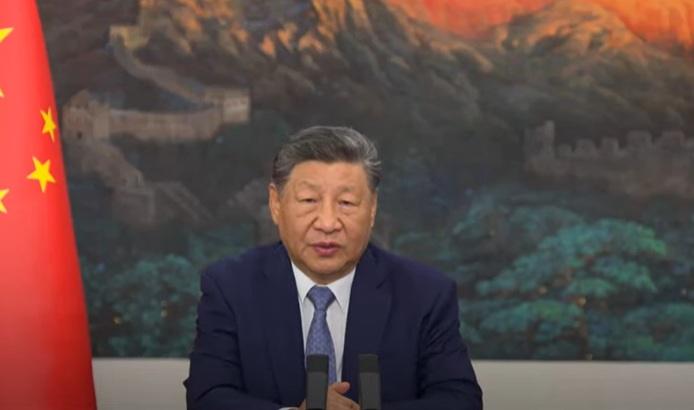
The global oil and gas investment landscape is in constant flux, shaped by geopolitical shifts, supply-side dynamics, and increasingly, by long-term energy transition policies. A recent pivotal announcement from China’s President Xi Jinping, outlining the nation’s first-ever absolute emissions reduction target, serves as a powerful signal for the future trajectory of global energy demand. While immediate market volatility often dominates headlines, these foundational policy shifts from the world’s largest energy consumer represent a structural headwind for oil, compelling investors to re-evaluate their long-term strategies.
China’s Decarbonization: A Definitive Shift in Demand Outlook
China, currently responsible for nearly 30% of global greenhouse gas emissions, has formally committed to an absolute reduction target, aiming to cut economy-wide net GHG emissions by 7-10% from peak levels by 2035. This marks a significant policy evolution, moving beyond previous “intensity” goals to a concrete ceiling on total emissions. Complementing this, Beijing plans a monumental expansion of its clean energy infrastructure, targeting 3,600 gigawatts of installed wind and solar capacity by 2035 – a more than six-fold increase from 2020 levels. Furthermore, non-fossil fuels are slated to account for over 30% of China’s total energy consumption within the same timeframe. While some climate advocacy groups have voiced aspirations for even greater ambition, these targets, set by the world’s leading energy consumer, unequivocally signal a long-term deceleration in oil demand growth, transforming a previously insatiable market into one strategically prioritizing decarbonization.
Immediate Market Reaction Amidst Long-Term Policy Signals
Despite China’s clear long-term direction, the oil market remains highly susceptible to immediate supply-demand imbalances and broader macroeconomic sentiment. As of today, Brent Crude trades at $90.38 per barrel, experiencing a sharp 9.07% decline within the day, with its range spanning $86.08 to $98.97. Similarly, WTI Crude has fallen to $82.59, down 9.41%, trading between $78.97 and $90.34. Gasoline prices have also dipped, now at $2.93, a 5.18% drop for the day. This immediate bearish pressure is not isolated; our proprietary data reveals Brent Crude has shed a significant $20.91, or 18.5%, over the past 14 days, falling from $112.78 to $91.87. This dramatic price action underscores a market grappling with more than just long-term policy announcements. Investors are keenly asking about the likely trajectory of oil prices by the end of 2026, and this recent volatility suggests a complex interplay of current economic anxieties, potential oversupply signals, and the slowly dawning realization of structural demand shifts like those emanating from China.
Upcoming Events: Navigating Supply Management in a Shifting Demand Landscape
The pronounced market volatility sets a critical backdrop for several key upcoming events that will directly influence near-term oil prices. This weekend, the OPEC+ Joint Ministerial Monitoring Committee (JMMC) convenes on April 18th, followed by the full OPEC+ Ministerial Meeting on April 19th. With Brent prices sliding significantly, the immediate focus will be on whether the alliance signals any adjustments to current production quotas. Investors are particularly attentive to OPEC+’s strategy for maintaining market stability as prices retreat. Beyond OPEC+, the market will closely watch inventory data: the API Weekly Crude Inventory reports on April 21st and 28th, followed by the authoritative EIA Weekly Petroleum Status Reports on April 22nd and 29th. These reports will provide crucial insights into U.S. supply levels and refinery activity, offering a snapshot of demand strength. Finally, the Baker Hughes Rig Count on April 24th and May 1st will indicate future production trends. These immediate supply-side drivers will contend with the growing awareness of China’s long-term energy transition, creating a challenging environment for price discovery.
Investor Outlook: Strategic Positioning for the Energy Transition
For oil and gas investors, China’s absolute emissions reduction target is not merely a headline; it’s a fundamental re-rating factor for long-term demand projections. While the market’s immediate reactions are often driven by cyclical factors and short-term supply-demand dynamics, the structural shift articulated by Beijing creates a persistent headwind. Those asking about crude oil’s price trajectory by the end of 2026 must consider that even if OPEC+ successfully props up prices in the short term, the foundational demand growth model for oil is evolving. Companies heavily reliant on unconstrained fossil fuel demand, particularly in Asia, will face increasing pressure. Conversely, firms with diversified portfolios, robust carbon capture technologies, or significant investments in renewable energy infrastructure are better positioned to capitalize on the global energy transition. The key for investors is to differentiate between cyclical market noise and the undeniable, long-term policy signals that dictate the future of global energy consumption. Strategic allocation towards lower-carbon segments of the energy complex, or companies demonstrating clear decarbonization pathways, will be paramount in navigating this evolving landscape.


