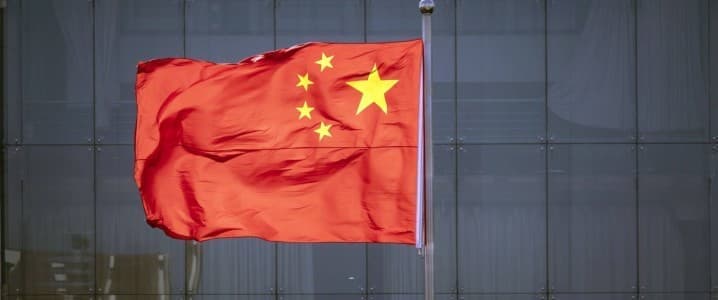
The global oil market is currently navigating a complex web of geopolitical tensions, and the latest US sanctions targeting Chinese entities for importing Iranian crude have added another intricate layer. This move, which blacklists around 100 individuals, vessels, and companies, including China’s Shandong Jincheng Petrochemical Group and key infrastructure like the Rizhao Shihua Crude Oil Terminal, has drawn a swift and firm response from Beijing. China has vowed to protect the rights and interests of its companies, elevating concerns over potential disruptions to global energy flows and injecting further uncertainty into an already volatile investment landscape. For astute energy investors, understanding the implications of this escalating diplomatic friction on supply chains, market prices, and long-term strategy is paramount.
Escalating Sanctions and China’s Firm Stance
The recent sanctions package, announced by the US Treasury, represents the fourth such round this year aimed at curbing Iran’s oil export revenues. Among the prominent targets is Shandong Jincheng Petrochemical Group, a “teapot” refinery in Shandong province accused of procuring millions of barrels of Iranian crude since 2023. Critically, the sanctions also hit the Rizhao Shihua Crude Oil Terminal at Lanshan Port, implicated in handling Iran’s “shadow fleet” tankers, which discreetly move sanctioned oil across Asia. This terminal’s designation is particularly significant, as industry sources indicate it is half-owned by a logistics unit of Sinopec, China’s refining behemoth, and handles approximately one-fifth of the company’s crude oil imports. This direct impact on a major state-linked entity underscores the seriousness of the US action.
In response, China’s Foreign Ministry spokesperson, Guo Jiakun, unequivocally stated that Beijing “will do what is necessary to ensure its energy security and safeguard the lawful rights and interests of Chinese companies and citizens.” The spokesperson condemned “unilateral illicit sanctions that have no basis in international law or authorization of the UN Security Council,” emphasizing that normal cooperation with Iran is “legitimate and justified.” This strong language signals China’s intent to push back, potentially through diplomatic channels or by reinforcing alternative supply strategies, further complicating the enforcement efficacy of the US sanctions and creating a dual-track market where sanctioned barrels continue to find buyers, albeit at a discount.
Current Market Reaction and Supply Dynamics
The geopolitical backdrop provided by these sanctions is playing out against a market already experiencing significant price movements. As of today, Brent crude trades at $90.38, reflecting a notable 9.07% drop within a day range of $86.08-$98.97. WTI crude similarly saw a sharp decline to $82.59, down 9.41% over a day range of $78.97-$90.34. This recent softening in prices, following a more substantial trend where Brent has fallen from $112.78 on March 30th to its current level, suggests broader market concerns potentially related to global demand outlooks or an easing of certain geopolitical premiums. While the sanctions themselves might imply a tightening of supply by attempting to remove Iranian barrels, the immediate price reaction does not directly reflect this. Instead, the market appears to be weighing the risk of demand destruction from a potentially strained Chinese economy against the theoretical reduction in supply.
The targeting of key Chinese infrastructure like the Rizhao Shihua terminal, which is a vital artery for Sinopec, introduces genuine concerns about China’s ability to efficiently process its crude imports. While China’s vow to protect its interests suggests it will seek workarounds, these often involve higher logistical costs, less transparent shipping routes, and potentially greater reliance on other suppliers. This situation could lead to a two-tiered market for crude: a transparent, compliant market, and a more opaque, discounted market for sanctioned barrels. Investors should consider how these dynamics could impact refining margins, particularly for companies with significant exposure to Chinese refining operations or those heavily reliant on specific crude grades.
Forward Outlook: Geopolitical Tensions and Upcoming Catalysts
The current geopolitical maneuvering sets the stage for several critical upcoming energy events that investors must closely monitor. The immediate focus will be on the OPEC+ Joint Ministerial Monitoring Committee (JMMC) Meeting on April 19th, followed by the full OPEC+ Ministerial Meeting on April 20th. These meetings will be crucial in assessing whether the new US sanctions, and China’s response, influence the cartel’s production policy. Will OPEC+ interpret the situation as a potential supply disruption warranting a continuation of current cuts, or as a demand-side risk if China’s economic activity is hampered, possibly leading to a reconsideration of output levels?
Further clarity on the global supply-demand balance will emerge from the API Weekly Crude Inventory reports on April 21st and 28th, and the EIA Weekly Petroleum Status Reports on April 22nd and 29th. These reports will provide vital snapshots of crude and product inventories in the US, offering insights into demand trends and the effectiveness of global supply adjustments. The Baker Hughes Rig Count, scheduled for April 24th and May 1st, will also shed light on US production activity, which remains a key variable in the global supply equation. The interplay between US sanction enforcement, China’s countermeasures, and OPEC+’s adaptive strategy will be a defining feature of the market in the coming weeks and months.
Addressing Investor Concerns: Price Volatility and Strategic Positioning
Our proprietary reader intent data reveals that many investors are keenly focused on the trajectory of oil prices, with questions like “what do you predict the price of oil per barrel will be by end of 2026?” frequently surfacing. There’s also significant interest in OPEC+’s current production quotas and the underlying data sources powering our market insights. This proactive engagement underscores the prevailing uncertainty and the need for informed analysis in a rapidly shifting energy landscape.
The current environment, marked by escalating sanctions and China’s pushback, introduces another layer of geopolitical risk premium or, conversely, demand uncertainty. For investors navigating these choppy waters, a diversified energy portfolio becomes increasingly critical. Companies with robust balance sheets, diversified supply chains that reduce reliance on specific geopolitical flashpoints, and strong operational efficiencies are likely to demonstrate greater resilience. The long-term price outlook for 2026 will heavily depend on how effectively the US can enforce its sanctions, China’s actual response to safeguard its energy security, and OPEC+’s ability to balance global supply with evolving demand. The recent sharp declines in Brent and WTI crude prices are a clear signal that the market is already pricing in a degree of concern, whether it’s related to demand weakness, an easing of geopolitical tensions, or simply increased uncertainty. Investors must remain vigilant, adapting their strategies to both the immediate market volatility and the evolving geopolitical narrative.


