Singapore’s Green Corridor: A Blueprint for Regional Decarbonization
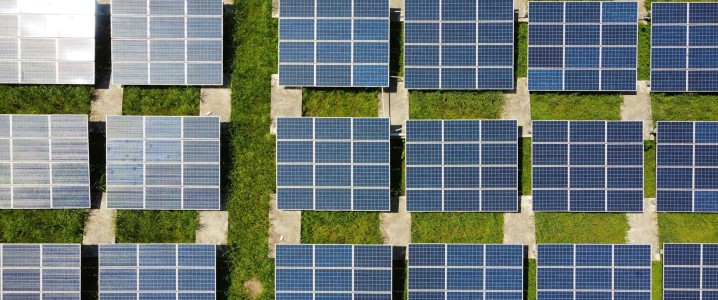
The recent joint venture agreement between Singapore’s Equator Renewables Asia and CRE International, the clean energy arm of China National Nuclear Corporation, marks a significant milestone in Southeast Asia’s energy transition. This collaboration will see the development of a substantial solar project in Indonesia’s Riau Islands, designed to export up to 400 MW AC of clean, solar-generated electricity to Singapore via a dedicated subsea transmission link. This is not merely a bilateral energy deal; it’s a tangible step towards establishing a regulated “Green Electricity Corridor” within the ASEAN bloc, showcasing a scalable model for cross-border renewable energy trade. The ambitious project incorporates a 2,200 MWp solar PV installation complemented by 3,200 MWh of battery storage, ensuring a firm and consistent supply of zero-emissions power. For traditional oil and gas investors, this initiative serves as a powerful indicator of the structural shifts underway, signaling sustained long-term pressure on fossil fuel demand, particularly in the power generation sector.
The strategic intent behind this project is clear: Singapore, a nation with limited indigenous renewable resources, is aggressively pursuing decarbonization targets. Its Energy Market Authority (EMA) has elevated its clean electricity import goal to 6 gigawatts (GW) by 2035, a substantial increase from its initial 4 GW target. This commitment underscores the country’s drive to transform its power sector, which currently accounts for approximately 40% of its national carbon emissions. The involvement of a major Chinese state-owned entity like China National Nuclear Corporation, through its renewables unit, highlights the growing confluence of capital, technology, and strategic partnerships flowing into large-scale renewable infrastructure. While Equator Renewables Asia focuses on transmission and offtake coordination, CRE International takes the lead on generation-side investment, construction, and operation, leveraging China’s extensive experience in deploying vast solar and battery storage solutions.
Immediate Market Volatility vs. Long-Term Demand Erosion
While long-term energy transition projects like the Singapore-Indonesia solar deal steadily erode future oil demand, the immediate market remains acutely sensitive to short-term dynamics. As of today, Brent crude trades at $90.38 per barrel, reflecting a significant daily decline of 9.07%. This steep drop comes after a pronounced downward trend over the past two weeks, with Brent falling by 19.9% from $112.78 on March 30th to its current level. Similarly, WTI crude is trading at $82.59, down 9.41% today, and gasoline prices have softened to $2.93, a 5.18% decrease. This current volatility, driven by a complex interplay of macroeconomic concerns, inventory shifts, and geopolitical sentiment, captures the immediate attention of investors.
However, it is crucial for oil and gas investors to differentiate between these transient market fluctuations and the fundamental, structural shifts being propelled by the global energy transition. The demand for low-carbon energy in key economic hubs like Singapore is not an abstract concept; it translates into concrete projects that displace fossil fuel consumption. While a 400 MW AC solar export might seem modest in the context of global oil demand, it represents a direct reduction in the need for natural gas or fuel oil for power generation in Singapore. These cumulative reductions, replicated across numerous economies committing to decarbonization, build significant long-term pressure on crude and natural gas prices, even as daily trading metrics dominate headlines.
Navigating the Next Fortnight: Key Events for Oil & Gas Investors
The coming weeks are packed with critical events that will undoubtedly shape short-to-medium term sentiment in the oil and gas markets, providing valuable data points for investors monitoring the ongoing interplay between supply management and evolving demand. Kicking off this intense period are the OPEC+ JMMC Meeting on April 19th, followed by the full OPEC+ Ministerial Meeting on April 20th. Given the recent substantial decline in crude prices, these meetings will be under intense scrutiny for any signals regarding production quotas or strategic shifts from major producers. Any decision to adjust output, or even a strong reaffirmation of current policies, could significantly influence price action and market stability.
Beyond OPEC+, the market will closely watch the weekly inventory data from the API (April 21st, 28th) and the EIA (April 22nd, 29th). These reports provide a crucial snapshot of supply-demand balances in the United States, offering insights into refinery run rates, crude stocks, and gasoline demand – all vital metrics for assessing market health. Furthermore, the Baker Hughes Rig Count, scheduled for April 24th and May 1st, will offer a forward-looking indicator of drilling activity and potential future supply. For investors analyzing the long-term impact of renewable energy deals, these short-term supply-side factors provide the immediate context in which traditional energy companies operate, influencing their capital allocation decisions and, ultimately, their ability to compete in an increasingly decarbonized world.
Investor Sentiment: Pricing in the Energy Transition
Our proprietary reader intent data reveals a clear focus among investors on the future trajectory of the oil and gas sector. Questions such as “what do you predict the price of oil per barrel will be by end of 2026?” are consistently among the most asked, underscoring a deep concern about long-term valuation and the sustainability of current business models. This forward-looking anxiety is directly relevant to deals like the Indonesia-Singapore solar project. While individually modest, these initiatives collectively form a powerful current that will influence the supply-demand balance for fossil fuels over the next decade and beyond.
The investor community is also keenly tracking the performance of specific O&G majors, evidenced by queries like “How well do you think Repsol will end in April 2026?” This highlights a desire to understand which companies are best positioned to navigate the energy transition. Firms with diversified portfolios, those investing in low-carbon solutions, or those with robust balance sheets capable of weathering market shifts, are increasingly favored. The strategic move by China National Nuclear Corporation to expand its renewables footprint, for instance, reflects a broader trend among state-backed and international energy companies to pivot towards cleaner energy sources. Smart investors are no longer just looking at immediate production figures or quarterly earnings; they are assessing the long-term viability of business models in a world increasingly committed to decarbonization. The accelerating pace of renewable adoption, driven by policy mandates and innovative cross-border projects, necessitates a re-evaluation of traditional oil and gas investment theses, demanding a deeper understanding of both the immediate market and the profound structural changes underway.


