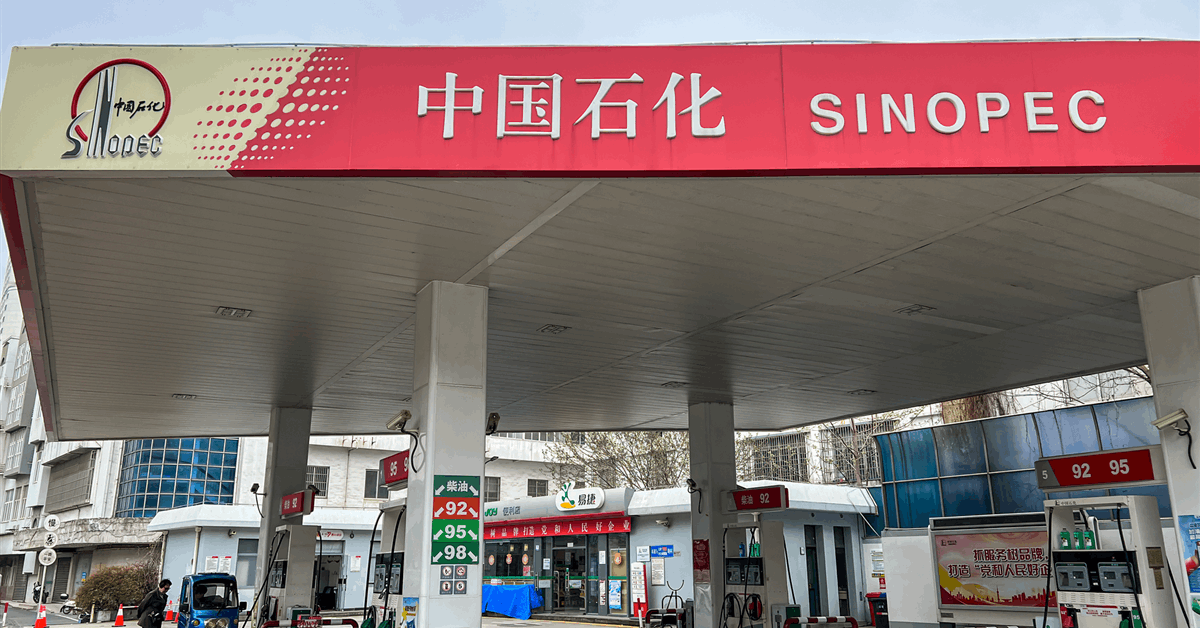
China’s Energy Giants Pivot: A New Era for Downstream Investment
China’s state-owned oil majors are navigating a profound transformation, moving strategically away from traditional, often loss-making, fossil fuel segments towards higher-value chemicals and alternative energy solutions. This pivot is not merely an operational adjustment but a fundamental re-evaluation of their core business models, driven by the nation’s ambitious energy transition goals and evolving domestic demand. For investors, understanding this shift is paramount, as these companies are repositioning themselves from conventional oil and gas players into diversified energy and materials powerhouses, poised for growth in new, high-tech sectors.
Downstream Refining Under Pressure: A Global and Domestic Squeeze
The financial results from companies like Sinopec and PetroChina clearly illustrate the headwinds facing traditional refining operations. Sinopec, for instance, reported a significant 36% drop in net income, primarily driven by a staggering 59% tumble in operating profit from its refining business and deepening losses in its bulk chemicals unit. PetroChina, while less exposed, still saw a combined 19% decline in these segments year-over-year. These domestic pressures are further exacerbated by global market dynamics. As of today, Brent Crude trades at $90.38, reflecting a notable 9.07% decline in daily trading and an overall 18.5% drop from $112.78 just two weeks ago. This significant price volatility directly impacts feedstock costs and product margins for refiners worldwide, including China. Similarly, gasoline prices have seen a 5.18% decrease to $2.93, highlighting softening demand. Domestically, the rapid electrification of transport, from cars to trucks and trains, means that demand for traditional transport fuels has almost certainly peaked in China, a sentiment echoed by PetroChina’s CFO, Wang Hua, who cited electric charging and natural gas as key threats to gasoline consumption in the second half of the year. This confluence of global price pressure and domestic demand erosion makes the strategic pivot away from traditional refining not just an option, but an imperative for sustainable profitability.
High-Value Chemicals: The Future of Profitability and Investor Focus
In response to the declining profitability of bulk fuels and chemicals, Chinese majors are making a decisive shift towards specialized, high-end chemical products. This strategic redirection is not a minor adjustment; it’s a significant retooling of their capital allocation and innovation efforts. Sinopec’s President, Zhao Dong, has articulated plans to accelerate the elimination of outdated facilities and control investment in commodity chemicals, particularly as the government’s next five-year plan, beginning in 2026, emphasizes economic quality over sheer volume. Instead, high-end chemicals are designated as a “critical investment direction,” poised to meet substantial demand growth from burgeoning industries like aerospace (aircraft, drones), robotics, advanced batteries, and new energy vehicles (NEVs). PetroChina’s strategic blueprint echoes this, targeting specialized compounds ranging from paraffin and lubricants to low-sulfur marine fuel, carbon fibers, and materials essential for insulating high-voltage cables. These products offer higher margins, less exposure to commodity price swings, and align perfectly with China’s industrial upgrading agenda. Our proprietary data indicates that investors are keenly focused on long-term commodity price forecasts, with frequent queries regarding “what do you predict the price of oil per barrel will be by end of 2026?” and “How well do you think Repsol will end in April 2026?”. This strong interest in future price stability underscores why the shift to specialized chemicals is so critical; it provides a crucial hedge against crude price volatility and positions these companies for diversified revenue streams less dependent on the ebb and flow of global oil markets. Investors should view these moves as a clear signal of strategic intent to build resilience and capture growth in sectors less tethered to the traditional energy cycle.
Embracing the Green Transition: LNG, EVs, and Upcoming Market Catalysts
Beyond high-end chemicals, China’s oil giants are aggressively expanding into cleaner energy solutions, recognizing the inevitable trajectory towards decarbonization. PetroChina, for example, reported impressive growth in its alternative fuel infrastructure during the first half of the year, with liquefied natural gas (LNG) refueling stations seeing volumes surge by 59%, and electric vehicle (EV) charging stations experiencing an astounding 213% jump. This focus on cleaner-burning gas and electric vehicles is a clear strategy to loosen crude oil’s grip on their profitability and align with national environmental objectives. For investors, these developments are particularly relevant when viewed against upcoming market catalysts. While the immediate focus of the OPEC+ Joint Ministerial Monitoring Committee (JMMC) and Full Ministerial meetings this weekend (April 18th and 19th) will undoubtedly shape crude supply expectations and near-term price dynamics, these Chinese majors are clearly looking beyond the next barrel. Their aggressive push into LNG and EV infrastructure, alongside weekly U.S. inventory reports from API and EIA (scheduled for April 21st/22nd and April 28th/29th) that signal ongoing shifts in global energy consumption patterns, underscores a long-term strategic resilience. The Baker Hughes Rig Count reports (April 24th and May 1st) will also provide insights into future upstream activity, but the Chinese majors’ pivot demonstrates a proactive effort to insulate themselves from the volatility and long-term decline risks associated with traditional crude. This dual strategy of high-value chemical production and clean energy infrastructure development positions them robustly for a future where global energy policies are increasingly focused on decarbonization and diversified energy portfolios.
Conclusion: Investing in China’s Evolving Energy Landscape
The strategic reorientation of China’s state oil majors represents a significant investment opportunity for those who can discern the long-term trends. Their pivot from bulk fuels to specialized chemicals and robust investment in clean energy infrastructure, such as LNG and EV charging, is a pragmatic response to both domestic market shifts and global energy transition imperatives. While current market conditions, characterized by crude price volatility and declining traditional fuel demand, present immediate challenges, these companies are laying the groundwork for future growth in higher-margin, more sustainable sectors. Investors should closely monitor their capital expenditure allocations, R&D initiatives, and progress in these new segments. This transformation signifies that these are no longer just oil companies, but emerging diversified energy and advanced materials providers, poised to capture value in China’s rapidly evolving economic and environmental landscape.