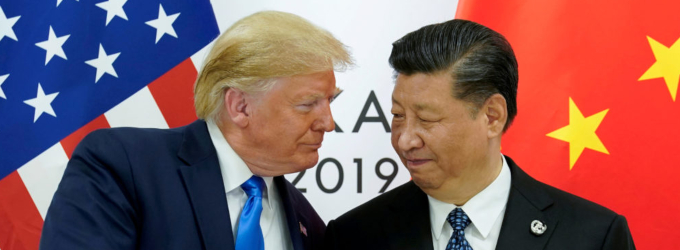
The high-stakes meeting between President Trump and President Xi Jinping, scheduled for later today, casts a long shadow over global energy markets, particularly regarding the future of Russian oil flows. This pivotal encounter transcends typical trade discussions, presenting a critical test of the U.S. administration’s resolve to exert pressure on Moscow’s energy revenues. For investors navigating an already volatile landscape, the outcomes of these talks could significantly reshape supply dynamics, demand forecasts, and, ultimately, crude oil pricing in the near to medium term. Our proprietary market insights suggest that while the immediate focus is on geopolitical leverage, the ripple effects will be felt across every segment of the oil and gas investment thesis.
Geopolitical Headwinds and Immediate Market Reaction
Just one week after the U.S. announced sanctions on major Russian oil entities, Rosneft PJSC and Lukoil PJSC, the spotlight shifts to Beijing, Moscow’s most crucial energy customer. The prospect of the U.S. leaning on China to curb its substantial purchases of Russian crude introduces a new layer of uncertainty into an already sensitive market. As of today, Brent crude trades at $90.38 per barrel, marking a significant 9.07% decline within the day, with an intraday range spanning from $86.08 to $98.97. Similarly, WTI crude has seen a sharp downturn, trading at $82.59, down 9.41% from its open, fluctuating between $78.97 and $90.34. This immediate market reaction underscores investor anxiety surrounding potential disruptions to established trade routes and the effectiveness of enforcement. The 14-day trend for Brent crude highlights this broader deceleration, falling from $112.78 on March 30th to today’s $90.38, a notable 19.9% reduction. While the sanctions themselves are intended to impact Russia, the market’s current volatility reflects the perceived risk of broader economic friction, particularly if Beijing chooses to retaliate or if U.S. enforcement efforts extend to Chinese entities.
China’s Strategic Balancing Act and Implementation Challenges
China stands as the single largest buyer of Russian crude, providing a vital economic lifeline amidst Western sanctions. The challenge for President Trump lies in applying significant pressure without derailing other critical economic priorities, such as ongoing trade negotiations with the world’s second-largest economy. As geo-economics analyst Chris Kennedy highlights, “Trump likely doesn’t want to do that, given the delicate trade talks that are underway.” Beijing’s history of leveraging its economic power, such as its rare earth dominance in past tariff disputes, suggests that any aggressive U.S. move could invite multifaceted retaliation. While China maintains it does not recognize unilateral U.S. restrictions, its larger state-owned and private oil companies remain wary of secondary sanctions and the risk of losing access to U.S. financial markets. The effectiveness of any new sanctions, as Senator Chris Van Hollen pointed out, “will depend entirely on whether they’re serious about implementation” against key buyers like China and India. Investors must closely monitor not just the rhetoric from today’s meeting, but the subsequent actions taken by the U.S. Treasury and other agencies regarding enforcement against Chinese refiners, trading firms, and financial institutions involved in Russian oil transactions.
Addressing Investor Concerns and Forward Price Projections
Our proprietary reader intent data reveals a keen focus among investors on the future trajectory of oil prices and the stability of global supply. Common questions this week include “What do you predict the price of oil per barrel will be by end of 2026?” and “What are OPEC+ current production quotas?” These inquiries underscore the market’s search for clarity amidst geopolitical flux. The outcome of the Trump-Xi meeting will undoubtedly factor heavily into these long-term price predictions. If the U.S. successfully pressures China to reduce Russian oil imports, it could lead to an oversupply of Russian crude seeking alternative markets, potentially depressing prices for a period, assuming other producers do not cut output. Conversely, if enforcement leads to widespread disruption of the “shadow fleet” or hits Chinese entities hard, it could create supply bottlenecks, pushing prices higher. Currently, the significant intraday drops in Brent and WTI indicate that the market is pricing in the potential for reduced demand or increased supply, or a combination of both, stemming from these geopolitical maneuvers. However, the long-term outlook remains highly dependent on the delicate balance between geopolitical pressure, economic retaliation, and the fundamental supply-demand dynamics managed by key players like OPEC+.
Upcoming Events to Watch for Market Direction
Beyond the immediate geopolitical headlines, the next fortnight is packed with critical energy events that will provide further direction for the market. Investors should mark their calendars for the OPEC+ Joint Ministerial Monitoring Committee (JMMC) Meeting on April 19th, followed by the full OPEC+ Ministerial Meeting on April 20th. These gatherings are crucial for understanding future production quotas and the group’s strategy in response to global supply and demand shifts. Given the potential for increased Russian crude on the market or disruptions to its flow, OPEC+’s decisions could either stabilize or further destabilize prices. Additionally, the weekly API Crude Inventory reports (April 21st and 28th) and the EIA Weekly Petroleum Status Reports (April 22nd and 29th) will offer vital insights into U.S. supply, demand, and storage levels, providing a snapshot of the world’s largest consumer. On the supply side, the Baker Hughes Rig Count on April 24th and May 1st will indicate North American drilling activity. These scheduled events, coupled with the evolving geopolitical landscape post-Trump-Xi talks, create a dynamic environment demanding vigilant monitoring for any investor looking to capitalize on or hedge against the significant volatility likely to characterize the oil and gas sector in the coming weeks and months.