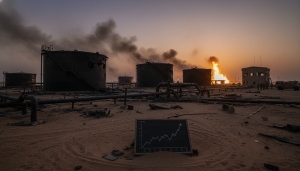
Investors tracking the global energy landscape are keenly observing a significant uptick in China’s crude oil imports, a development poised to inject bullish sentiment into the international oil markets. The world’s largest crude importer registered a substantial surge in June, with daily inbound shipments climbing to an impressive 12.14 million barrels per day. This represents a robust 7.4% increase compared to the same period last year, signaling a potent revival in demand from the Asian economic powerhouse.
This notable expansion in import volumes was primarily fueled by a sharp escalation in deliveries from key Middle Eastern producers, specifically Saudi Arabia and Iran. Market analysts attribute this import surge to a confluence of factors: the strategic restocking efforts by Chinese refineries following scheduled maintenance cycles, coupled with aggressive, opportunistic purchasing by the nation’s independent refining sector, often referred to as “teapots,” capitalizing on attractive discounts for various crude grades.
According to official data from China’s General Administration of Customs, the total crude volumes imported last month reached 49.89 million tonnes. This figure marks the highest monthly intake since March, underscoring a pronounced acceleration in China’s energy appetite. Industry experts point to the synchronized restart of multiple refinery units and highly competitive pricing for Persian Gulf crude as primary catalysts. These dynamics were particularly influential for independent refiners concentrated in China’s Shandong province, who are always on the lookout for advantageous supply deals to bolster their refining margins.
Shifting Supply Dynamics: Saudi Dominance and Iranian Resurgence
The latest import data highlights a dynamic shift in China’s crude sourcing strategy. Shipments from Saudi Arabia, a consistent and reliable supplier, witnessed a significant expansion, increasing by 845,000 barrels per day to reach 1.78 million barrels per day. This substantial rise reinforces Saudi Arabia’s pivotal role in meeting China’s escalating energy needs and its robust contractual relationship with Chinese state-owned energy giants.
Even more noteworthy, and perhaps more complex for global geopolitics, is the estimated surge in Iranian crude imports. Traders estimate that Iranian deliveries climbed by approximately 445,000 barrels per day. This significant increase occurs despite the persistent weight of U.S. sanctions targeting Tehran’s oil exports. The ability of Chinese buyers, particularly the independent refiners, to circumvent these restrictions demonstrates the practical limitations of enforcement and the powerful allure of discounted crude.
These sanctioned Iranian barrels have proven irresistibly attractive to China’s independent refiners, often trading at a substantial discount ranging from $2 to $3.50 per barrel below international Brent crude benchmarks. Such pricing arbitrage provides a significant competitive edge, allowing these refiners to enhance profitability and maintain operational flexibility in a highly competitive market.
The Sanctions Conundrum and Global Implications
The renewed flow of Iranian crude into China is unfolding against a backdrop of evolving U.S. policy considerations. Reports suggest that the current administration is evaluating potential adjustments to existing sanctions enforcement mechanisms. This development is being closely monitored by global crude markets, as any official relaxation of sanctions, whether through formal waivers or a de facto tolerance, could have profound implications.
Analysts caution that a material easing of sanctions enforcement could further widen the price differential between sanctioned and mainstream crude barrels. Such a scenario would inevitably reshape Asia’s crude sourcing landscape, potentially diverting more demand towards discounted grades and away from traditional suppliers, thereby impacting global oil trade flows and pricing structures. For investors, this introduces an added layer of geopolitical risk and opportunity, requiring careful assessment of supply chain resilience and pricing volatility.
Tightening Markets and Increased Volatility Ahead
China’s intensified crude intake carries significant implications for the broader global oil markets. A sustained increase in demand from the world’s largest importer, particularly its heavy reliance on Persian Gulf crude, could contribute to a tightening of crude availability in other key basins, notably the Atlantic Basin. This could, in turn, constrain shipments destined for European markets as the continent heads into the critical fourth quarter, potentially driving up regional prices and challenging supply security.
Furthermore, the aggressive buying spree by Chinese entities raises concerns about potential market volatility. Should China’s strategic and commercial crude storage facilities approach capacity limits, or if the pace of buying were to abruptly decelerate later in the year, the spot market could experience heightened price swings. This dynamic underscores the delicate balance between robust demand and the finite capacity for inventory accumulation, a factor critical for commodity traders and energy investors to monitor.
While Saudi Arabia benefits from consistent, large-volume contract sales, the notable resurgence of Iranian crude highlights the inherent difficulties in enforcing unilateral sanctions against a determined buyer and seller. This situation underscores a shifting paradigm in global oil flows, where economic incentives can, at times, override geopolitical pressures. As Chinese refiners have moved decisively to secure summer crude volumes, market attention now pivots towards Beijing’s procurement activities for July and how Washington will choose to respond to these increasingly sophisticated sanctions workarounds.
The current trajectory of China’s crude imports signals a strong underpinning for global oil demand in the near term. However, it also introduces layers of complexity related to geopolitical risk, supply chain resilience, and the effectiveness of international sanctions. Savvy energy investors must remain vigilant, analyzing these intricate dynamics to navigate the evolving global crude market landscape effectively.