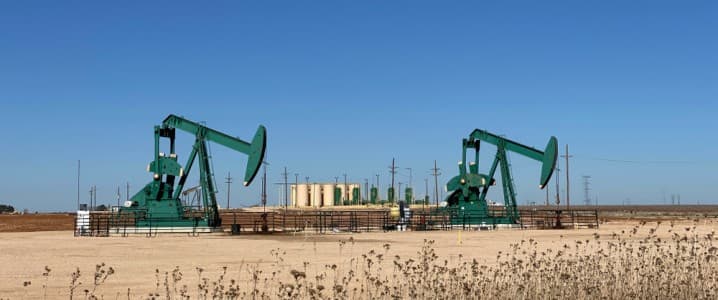
Chevron’s Permian Pivot: Prioritizing Cash Flow Over Unbridled Growth
In a landmark strategic shift reverberating across the energy sector, Chevron has officially declared its Permian Basin operations have reached their long-term production target of 1 million barrels of oil equivalent per day (boe/d). This pivotal achievement marks the end of an era of aggressive expansion and ushers in a new phase focused intently on maximizing free cash flow and delivering consistent shareholder returns. Instead of chasing further volume increases, the integrated energy giant now plans to maintain this impressive output level through 2040, dramatically re-engineering its operational footprint in the process.
The implications for investors are clear: Chevron is transforming its Permian powerhouse from a high-growth engine into a robust, self-funding cash cow. This strategic reorientation is designed to lock in an estimated $5 billion in annual free cash flow from its Permian assets by 2027. This isn’t merely an aspirational figure; the company has already taken decisive steps to realize this goal. Chevron has streamlined its drilling activity, reducing its active rig count from 13 to 9, and has scaled back its hydraulic fracturing crews from four to three this year alone. These operational efficiencies are projected to deliver a significant $2 billion boost in cash flow over the 2025–2026 period, even assuming a conservative Brent crude price of $60 per barrel. After years of fueling Chevron’s rapid expansion, the Permian is now entering a phase of deliberate, disciplined optimization.
The Strategic Rationale: Shareholder Returns and Capital Discipline
Chevron’s pivot reflects a broader industry trend towards capital discipline and a renewed emphasis on shareholder value. For years, the U.S. shale revolution was defined by an relentless pursuit of production growth. However, investor sentiment has increasingly shifted, demanding higher returns and a more sustainable business model from energy producers. By transitioning its Permian operations from a growth-at-all-costs paradigm to a steady-state, cash-generating model, Chevron is directly addressing these evolving market expectations.
This strategic recalibration underscores a fundamental shift in capital allocation priorities within Chevron. The company has signaled a trimming of upstream exploration and production budgets, instead channeling capital towards increased dividends and share buybacks. This move is a clear signal to the market that the era of prioritizing volume over value is largely over for major players like Chevron, who are now focused on long-term financial stability and consistent distributions to their owners. The decision also aligns with broader national interests in fostering sustained domestic energy output, albeit with a focus on efficiency rather than pure expansion.
Chevron’s Unrivaled Permian Advantage
A significant, often underappreciated, aspect of Chevron’s Permian strategy lies in its unique mineral rights position. Approximately 15% of the company’s Permian production originates from land it owns outright. This substantial advantage means Chevron is not beholden to royalty payments on a significant portion of its output, directly enhancing its netback prices and bolstering its profit margins. This proprietary land base provides an inherent cost advantage and a degree of operational flexibility that many competitors simply cannot match, making its cash flow targets even more robust and attainable.
This ownership stake is a powerful differentiator, allowing Chevron to capture a larger share of the value chain from its production. In an environment where every dollar of efficiency and every basis point of margin improvement is critical, Chevron’s mineral rights portfolio provides a structural competitive edge that reinforces the long-term viability and profitability of its Permian assets, even under a steady-state production model.
Broader Implications for U.S. Shale and Energy Investing
Chevron’s strategic shift in the Permian is not an isolated event; it sends a powerful signal across the entire U.S. shale landscape. With the Permian Basin responsible for over half of the tight-oil growth in the United States, Chevron’s decision to plateau its production could foreshadow a broader flattening of output across the sector. This move by one of the industry’s titans suggests that the era of hyper-growth in U.S. shale may be maturing, with a collective focus shifting towards maximizing returns from existing assets rather than aggressively expanding drilling programs.
Market-wide data further reinforces this narrative. U.S. rig counts have been on a downward trend, declining for eleven consecutive weeks. This sustained pullback in drilling activity reinforces the notion that capital is being reallocated away from new well development towards enhancing shareholder distributions and strengthening balance sheets. For energy investors, this evolving landscape means a re-evaluation of how U.S. shale companies are valued. The metric of success is increasingly becoming free cash flow generation and capital returns, rather than sheer production volume.
The implications extend beyond corporate balance sheets. Policymakers and government administrations should take note: major oil and gas producers are playing the long game. This game is now fundamentally about generating sustainable returns and ensuring financial resilience, not just about boosting headline production numbers. Chevron’s strategy highlights a future where disciplined capital allocation and efficient operations will define success in the Permian, setting a potential benchmark for the entire industry.
In conclusion, Chevron’s pivot in the Permian Basin represents a significant moment for the company and the broader energy sector. By prioritizing sustained cash flow and shareholder returns over aggressive growth, Chevron is adapting to a new market reality. Investors seeking stable, income-generating opportunities in the oil and gas sector will find Chevron’s refined strategy compelling, as the company leverages its scale, efficiency, and unique asset base to deliver consistent value for decades to come.