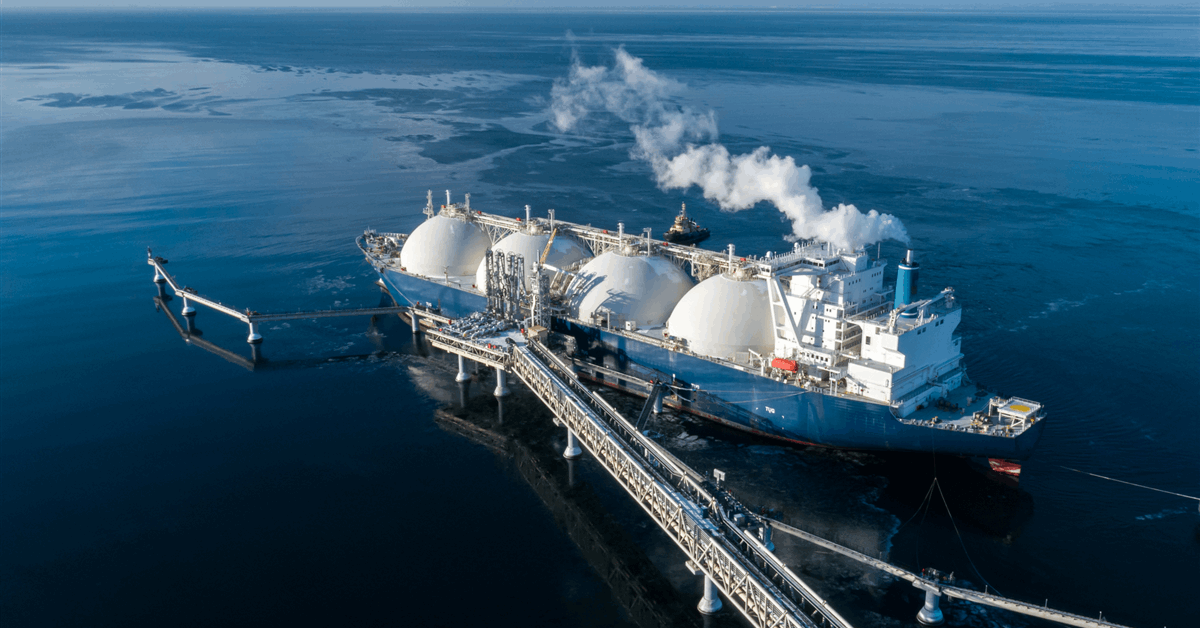
In a landscape increasingly defined by energy security concerns and the accelerating transition away from fossil fuels, long-term supply agreements remain a cornerstone for major players. The recent multi-decade liquefied natural gas (LNG) sale and purchase agreement (SPA) between Cheniere Marketing LLC, a subsidiary of Cheniere Energy, Inc., and JERA Co. Inc. stands as a powerful testament to this enduring strategy. This deal, spanning from 2029 through 2050, not only fortifies an existing relationship but also underscores the strategic importance of LNG in global energy portfolios, offering a crucial bulwark against market volatility for both producers and consumers.
The Enduring Value of Long-Term LNG Commitments
Cheniere’s latest agreement with JERA, Japan’s largest power producer and a global LNG powerhouse, is a significant development for investors tracking the natural gas sector. Under the terms, JERA will procure approximately 1.0 million metric tons per annum (mtpa) of LNG on a free-on-board (FOB) basis. Crucially, the purchase price is indexed to the Henry Hub price, supplemented by a fixed liquefaction fee. This structure provides Cheniere with predictable revenue streams and JERA with a stable, transparent pricing mechanism, mitigating exposure to short-term market swings. For Cheniere, this further solidifies its position as a leading global LNG supplier, extending its contract book well into the middle of the century and demonstrating robust demand for its flexible, reliable supply.
From JERA’s perspective, this multi-decade commitment is a strategic move to diversify and strengthen its LNG procurement portfolio. In an era where geopolitical events can rapidly reshape supply chains, securing long-term, indexed supply from a trusted partner like Cheniere enhances Japan’s energy security and stability. The deal reflects a mutual recognition of LNG’s critical role as a bridge fuel and a reliable energy source for decades to come, ensuring steady power generation and industrial supply for Japan and the broader Asian market.
Navigating Market Volatility with Strategic Contracts
The timing of such a long-term agreement is particularly insightful when viewed against the backdrop of current energy market dynamics. As of today, Brent crude trades at $90.38, marking a sharp 9.07% decline within the day, with its range fluctuating between $86.08 and $98.97. Similarly, WTI crude is at $82.59, down 9.41% for the day, having traded between $78.97 and $90.34. This significant intraday volatility follows a broader trend; Brent has fallen by $20.91, or 18.5%, from $112.78 on March 30th to $91.87 just yesterday. Such pronounced swings in crude prices highlight the inherent instability in global energy markets.
Against this volatile environment, the Cheniere-JERA LNG deal, with its Henry Hub-indexed pricing, offers a degree of insulation and predictability. While oil and gas prices often correlate, the specific indexation to Henry Hub for LNG provides a distinct risk profile. For investors concerned about the broader energy market’s unpredictability, long-term, indexed LNG contracts represent a more stable revenue outlook compared to unhedged spot market exposure. This stability is highly attractive, especially when considering the “cleaner burning” attributes of natural gas, which positions it favorably within ongoing energy transition dialogues, even as crude markets experience dramatic shifts.
JERA’s Dual-Track Approach: LNG and Renewable Expansion
JERA’s strategic maneuvers extend beyond merely securing long-term LNG supply. Earlier this month, the company announced the formation of JERA Nex bp, a 50-50 joint venture with BP plc, aimed at becoming a global leader in offshore wind development, ownership, and operation. This venture boasts an impressive portfolio with a net potential generating capacity of 13 gigawatts (GW), including approximately 1 GW of installed capacity, a 7.5 GW development pipeline, and an additional 4.5 GW of secured leases. This dual-track strategy reveals JERA’s comprehensive vision for future energy security and sustainability.
The establishment of JERA Nex bp, with a dedicated Japan-focused unit, signals a clear commitment to diversifying its energy mix and investing heavily in renewable sources. For investors, this demonstrates JERA’s forward-thinking approach, balancing the immediate need for reliable baseload power (secured via LNG) with the long-term imperative of decarbonization through significant renewable energy investments. This strategy not only hedges against future carbon pricing risks but also positions JERA to capitalize on the burgeoning global demand for green energy infrastructure.
Investor Focus: Long-Term Outlook Amidst Short-Term Catalysts
Our proprietary reader intent data indicates that investors are keenly focused on the future trajectory of energy prices, with questions like “what do you predict the price of oil per barrel will be by end of 2026?” dominating queries. While precise predictions are challenging, the Cheniere-JERA deal provides a compelling example of how companies are building long-term value irrespective of daily price swings. For investors seeking stability and growth in the energy sector, companies with robust, multi-decade contract backlogs in critical energy infrastructure like LNG offer a more predictable investment thesis compared to those solely exposed to commodity spot markets.
Looking ahead, the market will be influenced by several key upcoming events. The OPEC+ Joint Ministerial Monitoring Committee (JMMC) and full Ministerial meetings on April 18th and 19th, respectively, will be critical in shaping crude production quotas and, consequently, global oil supply. Any shifts in policy here could trigger significant market movements. Furthermore, weekly data releases such as the API Crude Inventory (April 21st, 28th) and the EIA Weekly Petroleum Status Report (April 22nd, 29th) will provide crucial insights into demand and inventory levels in the US. The Baker Hughes Rig Count on April 24th and May 1st will offer a glimpse into upstream activity. While these events drive short-term trading, the strategic implications of deals like the Cheniere-JERA SPA highlight the enduring investment opportunities in foundational energy assets that underpin global energy security and transition over the long haul.


