Global Energy Leaders Navigate Heightened Middle East Tensions, Advise Caution on Oil Price Forecasts
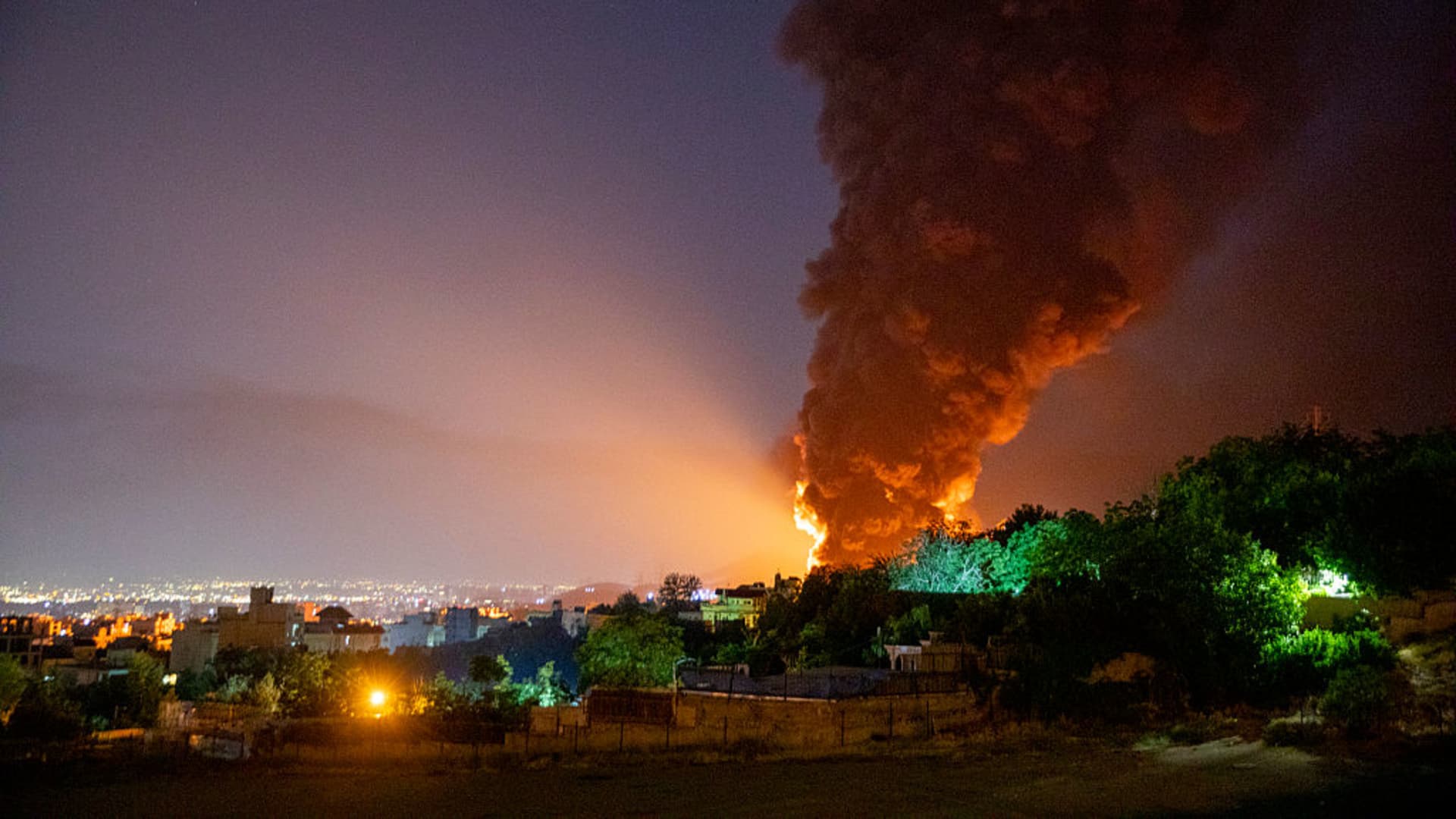
The global oil and gas sector finds itself once again grappling with significant geopolitical instability, following a weekend of direct military exchanges between Iran and Israel. As the world monitors these escalating tensions, top energy executives are emphasizing extreme caution regarding crude oil price predictions, underscoring the inherent unpredictability of the market in such volatile times. The events of Friday, June 13, 2025, which saw Israeli forces target nuclear and military facilities in Iran, resulting in casualties among key scientific and military personnel, have reverberated through energy circles, forcing a re-evaluation of supply security and price trajectory.
Industry Veterans Advocate for Prudence Amidst Market Flux
Speaking at the prestigious Energy Asia conference in Kuala Lumpur, Lorenzo Simonelli, President and CEO of energy technology giant Baker Hughes, articulated a sentiment widely shared across the industry. He candidly advised against attempting to forecast oil prices, stating from extensive experience that such predictions almost invariably prove incorrect. Simonelli characterized the preceding 96 hours as exceptionally “fluid,” reflecting the rapid and unpredictable nature of the regional developments. He expressed a hopeful outlook for de-escalation, yet affirmed that Baker Hughes, like all major players, remains vigilant, closely monitoring the unfolding situation. For ongoing projects and strategic decisions, the company has adopted a pragmatic “wait-and-see” approach, acknowledging the swift pace of change and the need to anticipate future scenarios.
Echoing this cautious stance was Meg O’Neill, CEO of Australian oil and gas titan Woodside Energy. Also addressing attendees at the Kuala Lumpur conference, O’Neill confirmed that Woodside is diligently assessing the potential ripple effects of the conflict on global energy markets. She highlighted that forward prices for crude oil were already exhibiting “very significant” reactions in the immediate aftermath of the previous four days’ events, indicating a palpable investor response to the increased risk premium.
The Critical Chokepoint: Strait of Hormuz Implications
A primary concern for global energy security and oil market stability revolves around the Strait of Hormuz, a narrow yet vital waterway situated between Iran and the United Arab Emirates. This strategic passage is indispensable, serving as the sole maritime route connecting the Persian Gulf to the open ocean. Approximately 20% of the world’s total crude oil supply transits through this chokepoint, making it, as described by the U.S. Energy Information Administration, “the world’s most important oil transit chokepoint.”
O’Neill explicitly warned that any disruption to supplies flowing through the Strait of Hormuz would trigger “even more significant effects on prices.” Such an event would inevitably lead to a global scramble as nations and industries race to secure their essential energy requirements. While reports indicated Iran was reportedly considering closing the Strait in retaliation for the recent attacks, reassurance came from the Joint Maritime Information Center (JMIC). As of Sunday, the JMIC issued an advisory confirming the Strait remained open, stating there was “no confirmed information pointing towards a blockade or closure,” while pledging to continue close monitoring of the situation. Despite this, the mere threat underscores the fragility of global oil supply chains in the face of escalating regional hostilities.
Geopolitics and Energy: An Indivisible Link
O’Neill further reinforced the deeply intertwined relationship between global geopolitics and energy commodity prices. She drew historical parallels, citing examples stretching back to the Second World War and the transformative oil crisis of the 1970s, to illustrate how political events have consistently shaped and often dictated the trajectory of oil and gas markets. This historical perspective serves as a stark reminder for investors that energy prices are not solely a function of supply and demand fundamentals but are profoundly influenced by political risk and international relations.
Despite her nuanced understanding of market dynamics and geopolitical influences, O’Neill firmly reiterated her reluctance to offer concrete oil price forecasts. Her position, mirroring Simonelli’s, emphasized the futility of such exercises, particularly when looking at longer time horizons. “There’s many things we can forecast. The price of oil in five years is not something I would try to put a bet on,” she concluded, underscoring the profound uncertainty that pervades the long-term outlook for crude oil.
Investor Outlook: Navigating Uncertainty
For investors in the oil and gas sector, the message from these industry leaders is clear: prepare for sustained volatility and approach market predictions with extreme caution. While the immediate threat to the Strait of Hormuz appears contained for now, the underlying geopolitical tensions between Iran and Israel remain highly elevated. This environment necessitates a keen focus on risk management, diversification, and a deep understanding of how potential regional developments could impact global energy flows and, consequently, asset valuations.
The current landscape demands that investors prioritize companies with robust balance sheets, diversified operations, and proven resilience against market shocks. The expert consensus from Kuala Lumpur suggests that while the fundamentals of energy demand remain strong, the overriding factor influencing short-to-medium term price action will likely be the unpredictable ebb and flow of Middle Eastern geopolitics. Staying informed and agile will be paramount for successfully navigating these turbulent waters.