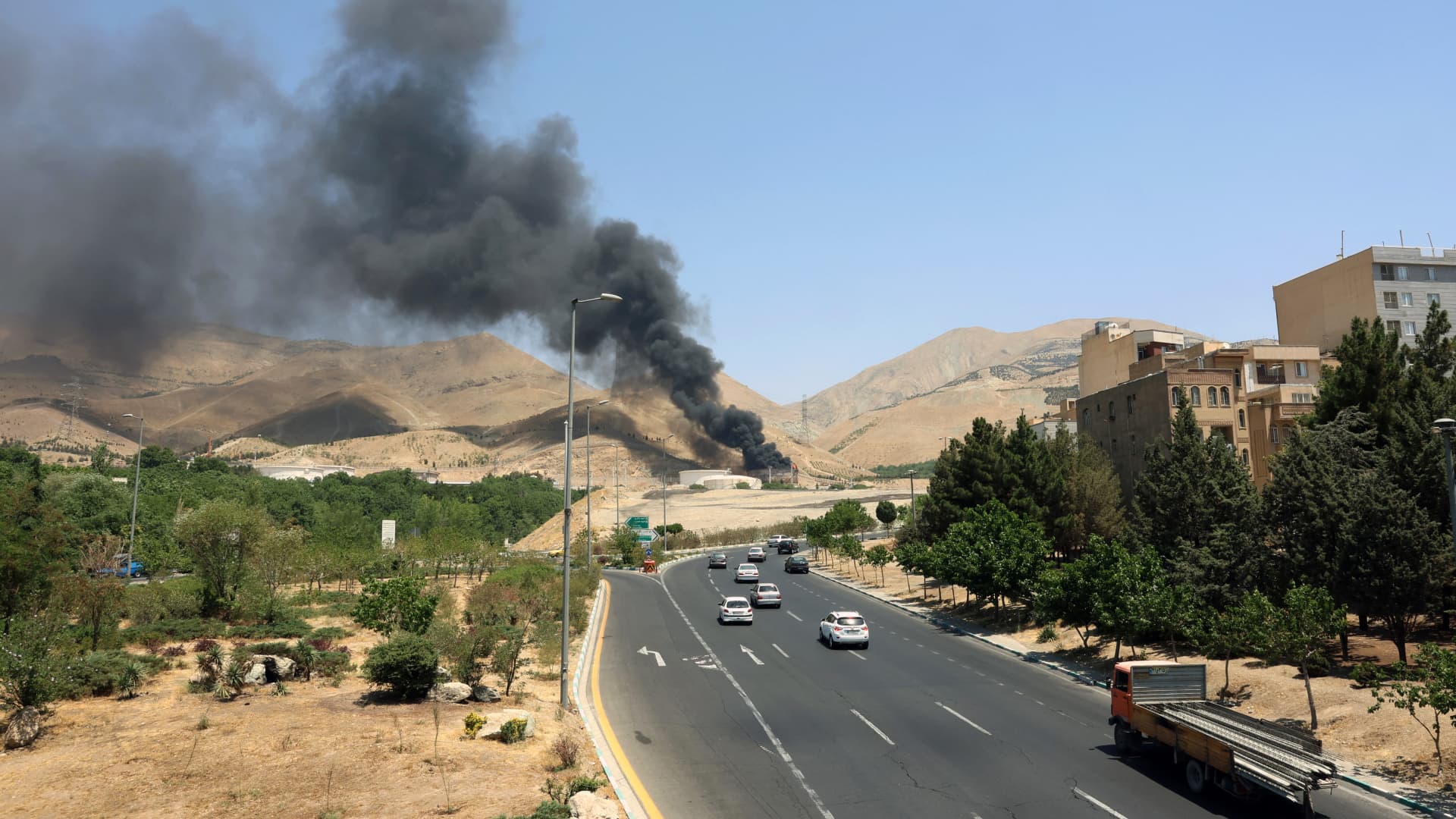
Global energy sector leaders are sounding a powerful alarm over the rapidly escalating conflict between Israel and Iran, underscoring the severe implications for international oil markets and global energy security. Recent events, including reports of smoke billowing from the Shahran oil depot northwest of Tehran on June 16, 2025, highlight the inherent volatility of the Middle East and its immediate impact on crude supply dynamics and pricing.
Mounting Tensions Threaten Global Energy Lifelines
The past four days have witnessed a significant and concerning escalation of hostilities, ignited by a surprise Israeli aerial strike targeting Iranian military and nuclear infrastructure. This initial offensive has since spiraled into a more widespread conflict between the regional adversaries. While localized energy installations in both nations have reportedly sustained damage, major crude production facilities and critical export infrastructure have, fortunately, remained untouched so far. However, industry executives warn that the potential for a catastrophic disruption to global energy flows remains critically high, with the gravest scenario involving Iran’s potential attempt to block the highly strategic Strait of Hormuz.
Wael Sawan, Chief Executive Officer of Shell, articulated profound apprehension during the recent Energy Asia conference in Kuala Lumpur, Malaysia. He described the preceding 96 hours as “very concerning,” not only for the immediate stability of the region but also for the broader trajectory of the global energy system, citing an unprecedented backdrop of geopolitical uncertainty and volatility. Sawan emphasized Shell’s extensive operational footprint and significant shipping activities throughout the Middle East, stating that navigating the evolving situation is currently “top of mind” for the company’s leadership team.
Market Reacts: Crude Prices Climb Amid Uncertainty
The heightened geopolitical risks immediately translated into an upward movement in crude prices. On Tuesday, international benchmark Brent crude futures for August delivery advanced over 2% to reach $74.84 per barrel as of 1:15 p.m. London time. Concurrently, U.S. West Texas Intermediate (WTI) futures for July delivery also saw a 2% increase, trading at $73.2. Energy market analysts and traders widely regard this intensifying Middle East confrontation as the most significant geopolitical event impacting oil markets since Russia’s full-scale invasion of Ukraine in 2022, underscoring its potential for far-reaching economic repercussions on a global scale.
For investors focused on oil and gas, these price movements reflect a growing risk premium being factored into crude contracts. The market’s immediate reaction signals a deep-seated concern about future supply stability, prompting a shift in portfolio considerations towards assets that can withstand or benefit from prolonged periods of geopolitical tension and potential supply constraints.
Executive Focus on Personnel Safety and Regional Operations
Patrick Pouyanné, CEO of TotalEnergies, highlighted his company’s paramount concern amid the Israel-Iran tensions: the safety and security of its extensive workforce across the region. TotalEnergies boasts a unique and deeply entrenched historical presence in the Middle East, having commenced operations in Iraq a century ago. Today, the French energy behemoth maintains robust operations spanning Iraq, Abu Dhabi, Qatar, and Saudi Arabia, solidifying its position as the largest international oil company operating within the region. Pouyanné expressed a fervent hope that future military actions would meticulously avoid targeting oil installations directly. He warned that such strikes would not only gravely endanger personnel and assets but also unleash severe and problematic disruptions across global energy markets, impacting everything from refining margins to consumer prices.
The statements from both Shell and TotalEnergies CEOs underscore the intricate challenges faced by integrated oil and gas companies operating in volatile regions. Their substantial investments and long-term commitments necessitate rigorous risk assessment and contingency planning, making the current climate a critical test of their operational resilience and strategic foresight.
The Strait of Hormuz: A Global Chokepoint Under Threat
The Strait of Hormuz, a narrow yet profoundly vital maritime passage connecting the Persian Gulf to the Arabian Sea, remains a critical focal point of market anxiety. Recognized as one of the world’s most indispensable chokepoints for global oil shipments, a significant portion of the world’s seaborne crude oil and refined products traverses this waterway daily. Reports now indicate a growing reluctance among some shipowners and operators to traverse these waters, a direct response to the heightened regional instability and the perceived increase in navigational risk.
Any sustained impediment to transit through Hormuz, even a temporary one, would inevitably trigger a sharp and immediate escalation in international oil prices. Such a scenario would also inflate global shipping costs significantly and introduce substantial delays throughout the crude supply chain, potentially leading to energy shortages in key consuming markets. While market observers generally maintain a degree of skepticism that Iran would fully close the strait due to the immense international backlash it would provoke, the mere threat and the current precautionary avoidance by some vessels inject a considerable risk premium into crude prices. This situation compels investors to consider the potential for supply shocks and their ripple effects across the entire energy complex.
Navigating the Year of Volatility for Oil and Gas Investments
The current geopolitical environment demands unwavering vigilance and strategic foresight from energy investors. The pronouncements from industry titans like Sawan and Pouyanné serve as a clear indicator of the profound uncertainty now gripping the Middle East’s energy landscape, a region that remains central to global crude supply. With critical infrastructure potentially at risk and the indispensable Strait of Hormuz under increased scrutiny, the global oil market is poised for continued volatility. Monitoring diplomatic efforts, military developments, and the resilience of international supply routes will be paramount for those navigating the investment landscape in the coming weeks and months.
This period powerfully reinforces the inherent geopolitical risks that underpin the international energy sector, making informed decision-making more crucial than ever for investors seeking to protect or grow their capital in oil and gas. Understanding the interplay between regional conflicts and global supply dynamics will be key to identifying potential opportunities and mitigating downside risks in this increasingly unpredictable market environment.