The global energy landscape continues its dynamic evolution, presenting both significant opportunities and complex challenges for oil and gas investors. While crude markets often grab headlines with their immediate volatility, a quieter, yet profoundly impactful, shift is underway in the electric vehicle (EV) sector. Contemporary Amperex Technology Co. Limited (CATL), the world’s largest battery manufacturer, is reportedly eyeing Europe for its innovative battery-swapping technology. This move, if successful, could accelerate EV adoption by addressing critical barriers for consumers and further solidify the long-term demand erosion thesis for fossil fuels.
CATL’s European Battery Swap Offensive: A Game Changer for EV Adoption
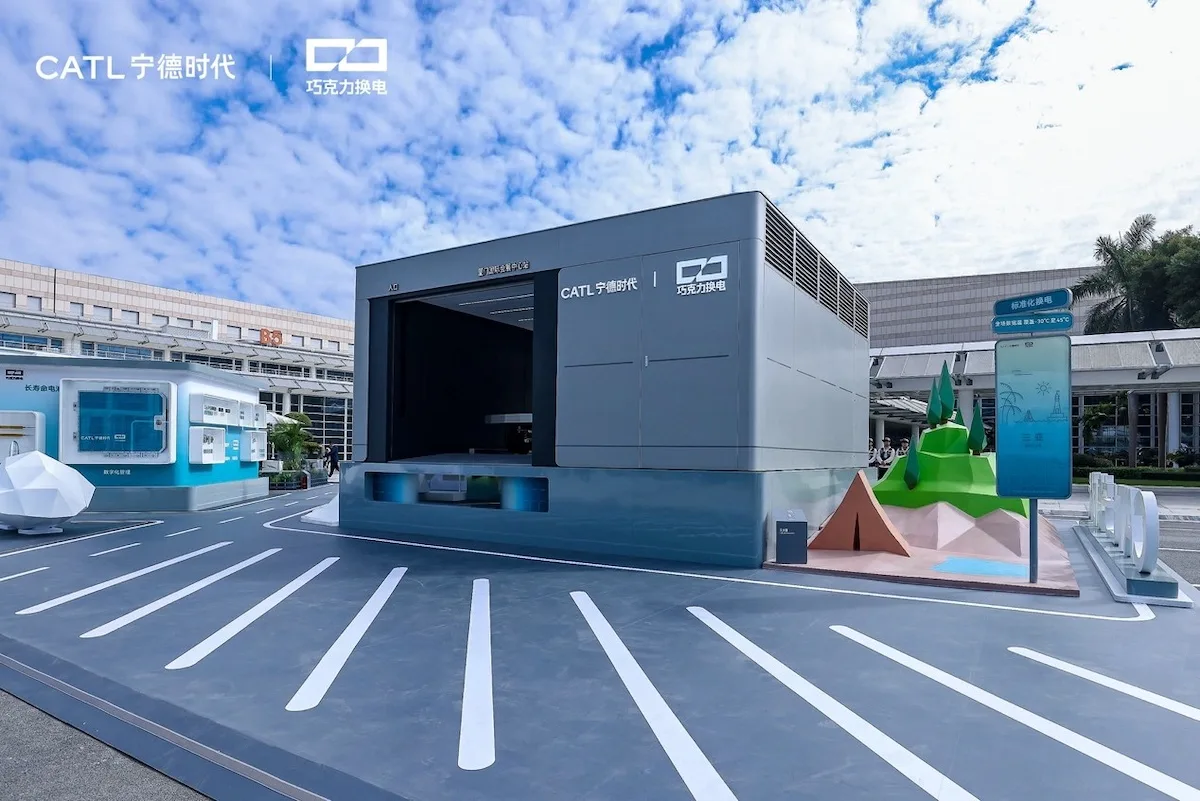
CATL’s consideration of bringing its battery-swapping technology to Europe represents a strategic gambit with significant implications. Executives from the company have publicly stated their belief in the “huge potential” for battery exchange in Europe, citing its ability to lower battery costs and enhance durability. The blueprint for this expansion stems from CATL’s robust operations in China, where the company aims to establish 1,000 swapping stations by year-end and an ambitious 10,000 stations with partners within three years. This isn’t merely an incremental upgrade; it’s a fundamental shift in EV ownership. Battery swapping eliminates the need for consumers to purchase expensive battery packs outright, instead allowing them to lease, thus significantly reducing the upfront cost of an EV. Furthermore, the ability to exchange an empty battery for a fully charged one in minutes sidesteps the prolonged charging times associated with traditional plug-in models.
Until now, battery-swapping has struggled to gain traction outside of China, primarily due to the substantial infrastructure investment required. Nio’s modest presence of around 60 stations across several European nations highlights this challenge. However, CATL’s entry, particularly with its standardized “Choco-SEB” system, could be a catalyst. Unveiled last winter, the Choco-SEB system features two fixed-size battery packs – the 20# for smaller cars (2.20-2.30m wheelbase) and the 25# for larger vehicles (up to 2.90m wheelbase). The first compatible model, China’s Oshan 520 by Changan, is already on the market, with ten more models anticipated this year. This standardization is key; it reduces complexity and encourages broader OEM participation. Moreover, CATL’s stated openness to joint ventures and technology licensing, especially in light of Brussels’ pressure on Chinese firms, suggests a collaborative approach that could overcome some geopolitical hurdles and accelerate infrastructure build-out across the continent.
Crude Market Volatility Versus the Inexorable March of Electrification
For oil and gas investors, understanding the interplay between immediate crude market dynamics and the long-term structural shifts in energy demand is paramount. As of today, Brent crude trades at $95.58, marking a 0.83% increase for the day, with WTI crude following suit at $91.75, up 0.51%. These daily movements underscore the constant sensitivity to geopolitical tensions, supply disruptions, and economic indicators. Notably, Brent has seen a significant pullback over the past three weeks, falling from $102.22 on March 25th to $93.22 yesterday, before today’s slight rebound. This 8.8% decline highlights the inherent volatility driven by factors such as fluctuating demand expectations and strategic supply decisions.
Yet, while these short-term price swings dominate headlines, the underlying narrative of energy transition continues to strengthen. CATL’s aggressive push into the European EV battery-swapping market, alongside the broader trend of electrification, represents a persistent, long-term headwind for crude demand. Gasoline prices, currently at $3.01 and up 1.35% for the day, still reflect significant consumer reliance on internal combustion engines. However, initiatives that make EVs more affordable and convenient directly threaten this demand. Each new EV sold, especially one enabled by a more accessible battery infrastructure, translates to fewer barrels of oil consumed over its lifetime. Investors must therefore distinguish between the cyclical, often event-driven, volatility of crude prices and the linear, technologically driven erosion of demand. This duality requires a nuanced investment strategy that accounts for both immediate market signals and the accelerating pace of structural change.
Investor Focus: Bridging Near-Term Crude Forecasts with Long-Term EV Impact
Our proprietary reader intent data reveals a clear and consistent focus among investors this week: a strong desire to build a base-case Brent price forecast for the next quarter and to understand the consensus 2026 Brent forecast. These questions highlight the immediate and medium-term concerns dominating investment decisions. However, it’s crucial to integrate developments like CATL’s European battery swap ambitions into these forecasts, even if their impact on crude prices isn’t immediately visible in daily trading. While quarter-on-quarter Brent forecasts are heavily influenced by geopolitical events, OPEC+ decisions, and inventory levels, the 2026 outlook and beyond must increasingly account for accelerated EV adoption.
The potential for CATL’s swapping technology to significantly lower the total cost of EV ownership and mitigate range anxiety directly impacts the pace of gasoline demand erosion. While Chinese “tea-pot” refinery runs and Asian LNG spot prices are immediate indicators for certain segments of the market, the structural shift towards electric mobility is a more foundational driver for long-term crude demand models. Investors seeking a robust 2026 Brent forecast must therefore consider not just supply-side constraints and geopolitical risks, but also the accelerating rate of demand destruction from a more accessible and appealing EV market. CATL’s move is not just about batteries; it’s about altering consumer behavior on a continental scale, which will inevitably ripple through global oil demand projections.
Navigating Upcoming Events Amidst a Shifting Energy Paradigm
The coming weeks are packed with key events that will shape the near-term outlook for oil markets, but investors must view them through the lens of the broader energy transition. The OPEC+ Joint Ministerial Monitoring Committee (JMMC) meeting on April 18th, followed by the Full Ministerial meeting on April 20th, will be critical for understanding future supply strategies. These meetings will dictate production quotas and provide insights into the cartel’s reaction to current market balances. Alongside, the weekly API Crude Inventory reports on April 21st and 28th, and the EIA Weekly Petroleum Status Reports on April 22nd and 29th, will offer granular data on U.S. supply, demand, and storage levels. The Baker Hughes Rig Count, scheduled for April 17th and 24th, will provide a barometer for upstream activity and future production capacity.
While these events primarily influence the supply side and immediate demand responses, their implications are increasingly intertwined with the long-term energy transition narrative. OPEC+ decisions, for instance, are not made in a vacuum; they implicitly consider the long-term threat of demand erosion from EVs. Although the immediate focus will be on current market tightness or surplus, the backdrop of developments like CATL’s push into Europe steadily influences their strategic calculus. Investors should analyze these upcoming data points and policy decisions not just for their immediate impact on crude prices, but also for how they position the market in a world where electrification, spearheaded by innovations like battery swapping, is steadily chipping away at the foundation of fossil fuel demand. The energy market is in a constant state of rebalancing, and understanding both the daily fluctuations and the tectonic shifts is essential for informed investment.