Cement production is one of the world’s largest sources of CO2 emissions. Finding cost-effective ways to store carbon directly in building materials could help reduce the industry’s environmental footprint. In the new study, scientists explored how modifying biochar, a porous carbon-rich material made from plant waste, can make cement more sustainable.
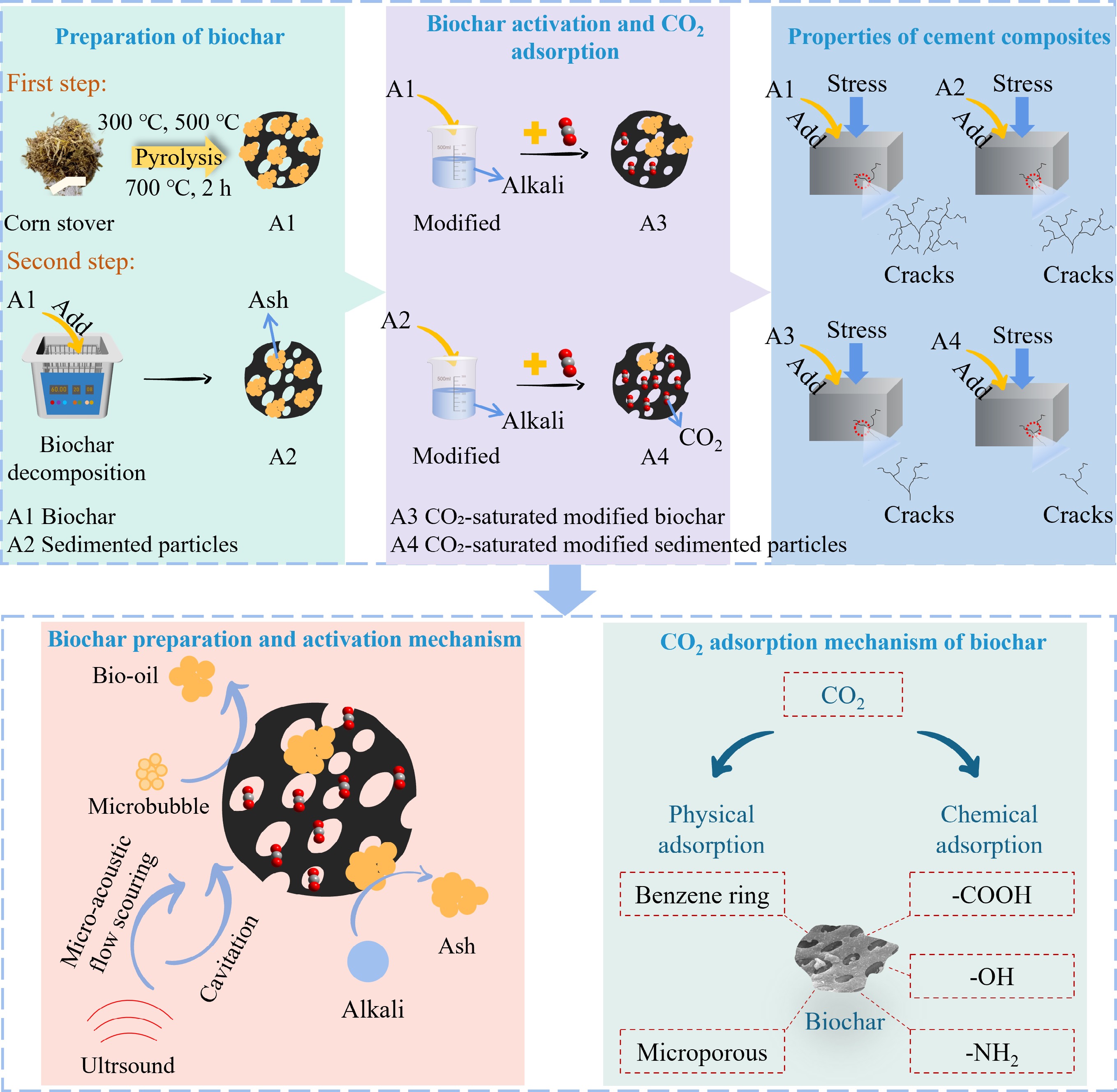
The researchers produced biochar by heating corn straw at different temperatures and separated its main component, called sedimented particles. Both the original and separated biochar samples were treated with an alkali solution to enhance their structure and tested for CO2 adsorption. The team then mixed these biochars into cement at various proportions to evaluate their effects on strength and carbon capture.
The results revealed that the sedimented particles had a greater ability to trap CO2 than untreated biochar, and that alkali modification further improved this capacity by refining the material’s microscopic pore structure. Biochar produced at 500 °C performed the best overall, combining strong adsorption ability with improved cement performance.
When added to cement, the CO2-saturated modified biochar made the material denser and stronger, particularly at a one percent replacement level. The study also showed that the biochar captures CO2 primarily through physical adsorption, which occurs quickly and efficiently under normal conditions.
In addition to enhancing mechanical strength, incorporating biochar reduced the total carbon footprint of the cement mixtures. The researchers concluded that the right combination of biochar type, treatment, and dosage can help transform ordinary cement into a carbon-storing material without compromising performance.
“This work provides new insight into using biochar as a sustainable additive that supports carbon neutrality in the construction sector,” said lead author Binglin Guo. “By improving both strength and carbon sequestration, biochar-modified cement offers a practical step toward greener building materials.”