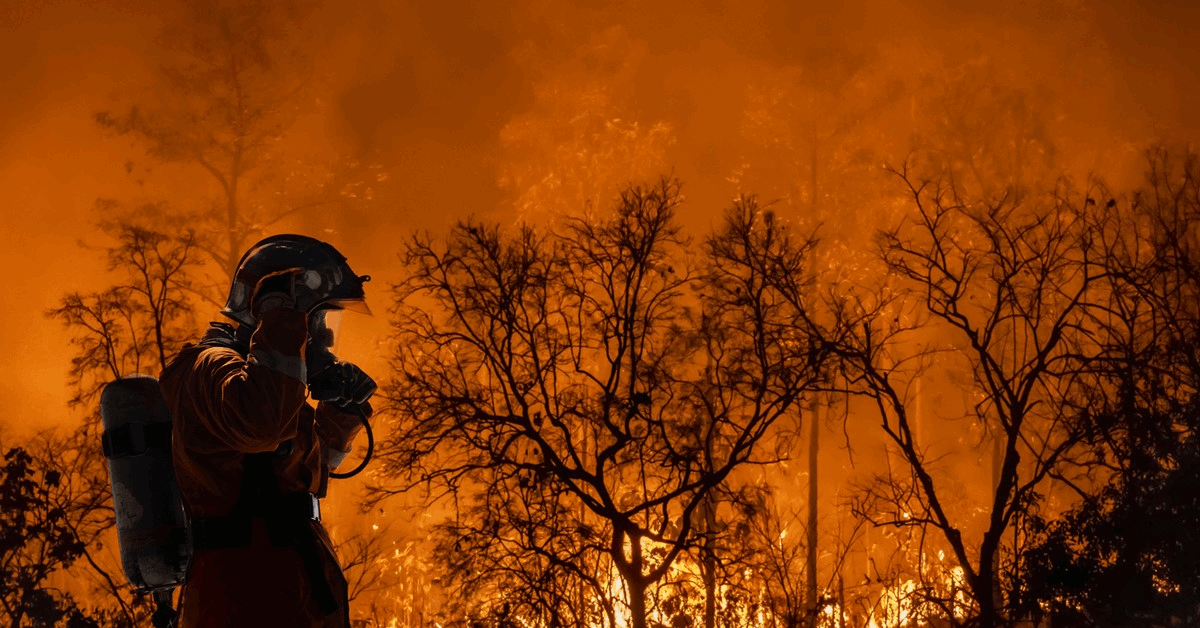
The Canadian oilsands, a critical pillar of global energy supply, are once again grappling with an unexpected and significant disruption. Raging wildfires across Western Canada have escalated, moving beyond community evacuations to directly impact key oil and gas operations in northern Alberta. This unforeseen natural disaster introduces a fresh layer of uncertainty into an already volatile global energy market, compelling investors to reassess short-term supply forecasts and long-term operational resilience for companies operating in the region.
Immediate Supply Curtailment and Operational Challenges
The severity of the wildfires has forced major producers to take immediate action, leading to material curtailments and operational delays. Canadian Natural Resources Ltd. (CNRL), the nation’s largest oil and gas producer, confirmed the evacuation of personnel from its Jackfish 1 oilsands project, resulting in an immediate halt of 36,500 barrels per day (bpd) of bitumen production. This represents a direct, measurable loss to current supply.
Similarly, MEG Energy Corp. has proactively evacuated non-essential staff from its Christina Lake project. While MEG stated it is still producing oil from its existing capacity, the wildfire’s impact extended to a crucial third-party power line, disconnecting the site from the grid. This power loss is critically delaying the startup of an additional 70,000 bpd of production at Christina Lake, effectively deferring a significant planned supply increase. Cenovus Energy Inc. has also signaled potential delivery issues from one asset and evacuated staff from another in the Cold Lake region, underscoring the widespread nature of the threat. The combined impact of these events, while not a complete shutdown of the entire oilsands, represents a substantial and sudden shock to anticipated North American crude availability.
Market Response Amidst Broader Price Dynamics
The news of these production curtailments has landed in a market already experiencing complex dynamics. As of today, Brent crude trades at $96.62, marking a 1.93% increase on the day, while WTI sits at $92.94, up 1.82%. Gasoline prices also reflect this upward movement, trading at $3 per gallon, up 1.01%. This immediate upward price reaction suggests that traders are factoring in the unexpected supply constraints from Canada.
However, it’s crucial to contextualize this against the recent trend. Our proprietary market data shows that Brent had experienced a notable decline over the past 14 days, falling from $102.22 on March 25th to $93.22 on April 14th, a significant drop of nearly 8.8%. This recent price recovery, therefore, could be interpreted as a partial rebound from oversold conditions, with the Canadian wildfires providing a fresh, tangible supply-side catalyst. Investors are weighing whether this new disruption is significant enough to reverse the broader bearish sentiment that had taken hold, or if it merely provides temporary support in a market still grappling with demand uncertainties and geopolitical risks. The duration of the wildfires and the speed of production resumption will be critical factors in shaping sustained price action.
Navigating Investor Concerns and Upcoming Catalysts
Our proprietary reader intent data highlights that investors are keenly focused on forward-looking analysis, specifically asking for “base-case Brent price forecasts for next quarter” and “consensus 2026 Brent forecasts.” The Canadian wildfire situation directly impacts these projections, introducing a new variable that must be carefully modeled.
Looking ahead, the energy market calendar is packed with events that will interact with this developing supply story. The **OPEC+ Joint Ministerial Monitoring Committee (JMMC) meeting on April 18th**, followed by the **Full Ministerial Meeting on April 20th**, will be under intense scrutiny. While Canadian oilsands production is not directly controlled by OPEC+, an unexpected tightening in global supply from the West could subtly influence the cartel’s production policy decisions. A perception of a tighter market might offer OPEC+ greater flexibility in maintaining current output cuts or even considering slight adjustments, depending on their assessment of global demand. Furthermore, the **API Weekly Crude Inventory reports (April 21st, April 28th)** and the **EIA Weekly Petroleum Status Reports (April 22nd, April 29th)** will provide crucial data points. Any sustained curtailment of Canadian supply is likely to impact North American crude inventories, and investors will be watching these reports closely for signs of market rebalancing or further tightening. The **Baker Hughes Rig Count (April 17th, April 24th)** will also offer a broader perspective on North American drilling activity, albeit with a longer-term impact on supply.
Strategic Implications for Oilsands Investment
Beyond the immediate supply shock, these recurring wildfire events prompt a deeper strategic evaluation for oilsands investors. Wildfires are an increasingly common and potent threat to operations in Western Canada, raising questions about the systemic risks associated with climate change impacts on energy infrastructure. Companies must demonstrate robust operational resilience strategies, including enhanced emergency response protocols, firebreak maintenance, and potential infrastructure hardening, to mitigate future disruptions.
For investors, this underscores the importance of assessing a company’s Environmental, Social, and Governance (ESG) preparedness, particularly its ability to manage climate-related physical risks. Diversification of assets, both geographically and across different energy sources, may become an increasingly attractive strategy. Furthermore, the ability of these producers to swiftly restore operations and manage potential insurance claims will be key indicators of their operational strength. The long-term investment case for Canadian oilsands will increasingly hinge not just on resource endowment and extraction efficiency, but also on proven resilience against evolving environmental challenges.


