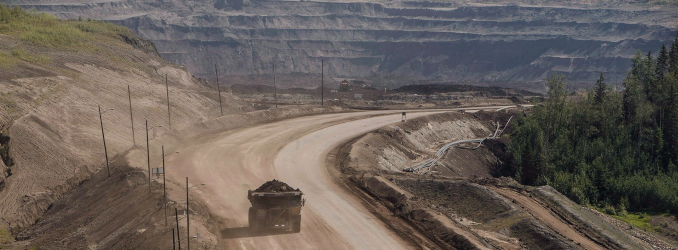
The Canadian oil patch is poised for a transformative period, with the stage set for a wave of mega-mergers that could redefine its competitive landscape. Following a robust year for transactions in 2025, which saw deal values reach $37.8 billion – a level not seen since 2017 – the low-hanging fruit of smaller acquisition targets has largely been picked clean. This historical consolidation has concentrated control of Alberta’s vast oil sands production, with Canadian Natural Resources Ltd., Cenovus Energy Inc., Suncor Energy Inc., ConocoPhillips, and Exxon Mobil Corp.’s Imperial Oil Ltd. now accounting for approximately 85% of the region’s output. As the industry matures, the focus is shifting from acquiring smaller players to larger, strategic combinations among the giants, mirroring recent trends in the U.S. shale sector and driven by a confluence of market pressures and strategic imperatives.
Consolidation’s Second Act: From Small to Mega
The Canadian energy sector has undergone significant structural change over the last decade. Since 2017, when international majors began divesting oil sands assets to domestic players, a consistent trend of consolidation has reshaped the industry. This initial phase was characterized by larger Canadian entities absorbing smaller, regionally focused producers, leading to a more streamlined but also more concentrated market. The $37.8 billion in executed or pending deals by the close of 2025 underscores the intensity of this activity, reflecting a strategic drive to achieve scale and operational efficiencies. With most medium and small oil sands players now integrated into larger portfolios, the logical next step for growth-hungry companies, particularly those with a low cost of capital like Canadian Natural, is to consider mergers among the remaining heavyweights. This evolution suggests that the Canadian oil patch is entering a new phase of consolidation, where the scale of transactions will inherently increase.
U.S. Precedent and Current Market Pressures
The Canadian market is closely observing its southern neighbor, where a series of “mega deals” have reshaped the U.S. shale patch. Transactions such as Exxon Mobil’s acquisition of Pioneer Natural Resources Co. in 2024 and Chevron Corp.’s purchase of Hess Corp. last year highlight a clear strategic playbook: bolster efficiency and optimize asset portfolios in an environment where drilling costs are rising and margins are tightening. This dynamic is highly relevant to Canadian operators. As of today, April 21st, Brent Crude is trading at $93.91, showing a significant daily gain of 3.85%, while WTI Crude stands at $90.38, up 3.39%. While these intraday gains are notable, investors must view them within a broader context. Our proprietary data indicates that Brent crude has experienced a substantial decline of nearly 20% over the past two weeks, falling from $118.35 on March 31st to $94.86 yesterday. This recent volatility, compounding an almost 18% decline in oil prices over the past two years, intensifies the pressure on producers to find new avenues for cost reduction and value creation. Mega-mergers offer a compelling path to achieve these goals, through economies of scale, optimized capital allocation, and enhanced operational synergies.
Strategic Drivers: Pipeline Capacity and Shareholder Value
Beyond the immediate financial pressures of fluctuating commodity prices, two critical factors are accelerating the strategic shift towards mega-mergers in Canada: potential export pipeline capacity constraints and a renewed focus on shareholder value. While new pipeline capacity has eased bottlenecks in the short term, the prospect of scarcity re-emerging in the coming year or two is encouraging producers to prioritize M&A over expanding production from their own well sites. Acquiring existing production and infrastructure can be a more capital-efficient way to grow and manage market access compared to greenfield developments. This is evident in past moves like Cenovus’s $5.61 billion purchase of MEG Energy. Furthermore, corporate leadership is increasingly signaling a readiness for inorganic growth. Suncor’s Chief Executive, Rich Kruger, explicitly stated earlier this month that “any and all actions we do, internal or organic or inorganic, will be in the shareholders’ best interest to increase their ultimate value.” This statement, keenly observed by analysts and investors alike, underscores a strategic pivot towards M&A as a primary lever for shareholder value creation among Canada’s largest energy companies.
Investor Questions and the Forward Outlook
Investors are keenly observing these developments, with common questions surfacing around market direction and future price stability. Our reader intent data shows significant interest in fundamental price movements, such as “is WTI going up or down?” and long-term outlooks like “what do you predict the price of oil per barrel will be by end of 2026?” These questions highlight the need for clarity amidst market uncertainty. The answers will be heavily influenced by several key upcoming events. Today, April 21st, the OPEC+ JMMC Meeting is underway, a critical forum that could signal shifts in global supply policy and immediately impact crude prices. In the coming days, the EIA Weekly Petroleum Status Reports on April 22nd and April 29th, alongside the Baker Hughes Rig Count on April 24th and May 1st, will provide granular insights into U.S. inventory levels and drilling activity, offering short-term directional cues for WTI and Brent. For a more comprehensive look at the end-of-2026 price predictions, the EIA Short-Term Energy Outlook, scheduled for release on May 2nd, will be a crucial data point, offering official government forecasts that will help shape investor sentiment. In this environment, strategic mega-mergers in Canada could offer a degree of stability and enhanced investment attractiveness by creating more resilient, efficient, and diversified energy companies, potentially offering a safer harbor for capital amidst ongoing market volatility and evolving supply-demand dynamics.