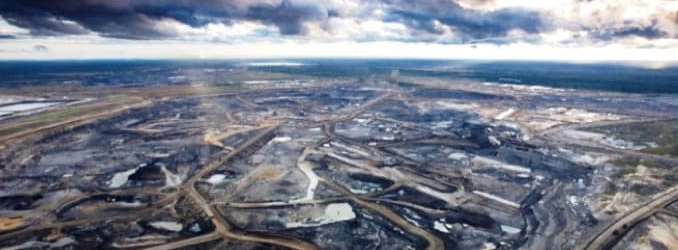
The global energy landscape is undergoing a profound recalibration, with investor attention increasingly shifting from the once-dominant U.S. shale basins to the robust and resilient Canadian oil sands. After years of facing infrastructure bottlenecks and overshadowed by rapid shale growth, Canada’s heavy oil producers are now demonstrating remarkable operational efficiency and strategic positioning. A critical pipeline expansion has unlocked new market access, propelling output to unprecedented levels and sparking renewed interest from institutional investors seeking long-term, stable returns in a volatile commodity market. This transition marks a pivotal moment for energy portfolios, as the fundamental strengths of oil sands assets come to the forefront.
Canadian Oil Sands Emerge from Shale’s Shadow with Record Growth
The narrative surrounding Canadian oil sands has decisively shifted from a story of constrained potential to one of burgeoning growth and market expansion. The newly operational Trans Mountain pipeline expansion is the primary catalyst, effectively connecting Canadian crude to the lucrative Asian markets and significantly enhancing its global competitiveness. This vital infrastructure has not only alleviated years of capacity limitations but also dramatically improved local pricing for heavy oil, narrowing discounts to the U.S. benchmark from an onerous $30 or more to a much more manageable $10-$12 per barrel range. This improved differential directly impacts producer margins, making Canadian barrels more profitable.
Production figures underscore this bullish outlook. Canadian crude output hit a record high in June and is projected to expand by another 300,000 to 400,000 barrels per day, reaching 6 million daily barrels by 2030. This consistent growth trajectory, coupled with enhanced market access, has fueled a surge in investor confidence. Over the past year, the shares of Canada’s leading oil sands producers, including Imperial Oil Ltd., Suncor Energy Inc., and Cenovus Energy Inc., have outperformed the S&P Global Oil Index by as much as three-fold. This strong performance reflects a broader institutional re-evaluation, with U.S. institutional investors increasing their stake in oil sands companies to 65% from just 40% a decade ago. The industry’s consolidation, exemplified by Cenovus’s acquisition of MEG Energy, has also contributed to greater efficiency and streamlined operations, further enhancing their attractiveness.
The Structural Advantage: Oil Sands vs. Maturing U.S. Shale
The current investor pivot is not merely a reaction to new pipeline capacity but a recognition of the fundamental geological and operational differences between oil sands and U.S. shale. While U.S. shale basins, particularly the Permian, have been prodigious sources of supply, they face inherent challenges as they mature. Shale wells are characterized by rapid decline rates, requiring continuous, substantial capital investment in new drilling simply to maintain existing production levels. This treadmill effect places constant pressure on capital expenditure budgets and free cash flow generation.
In stark contrast, oil sands assets boast exceptionally long production lives and significantly slower decline rates. This inherent stability means producers do not face the same imperative to continually drill new wells just to sustain output. Instead, capital can be primarily allocated to maintaining existing facilities and optimizing operations, leading to a much lower sustaining capital requirement. This structural advantage translates directly into lower operating costs and more predictable cash flows, even in periods of moderate crude prices. Indeed, analysis reveals that four of the five lowest-cost, large-cap oil companies in North America are, in fact, oil sands producers. This cost efficiency and geological longevity position Canadian oil sands as a compelling investment for long-term value creation, particularly as U.S. shale production plateaus and its cost-curve steepens.
Navigating Market Volatility: Upcoming Events and Price Dynamics
While Canadian oil sands producers benefit from improved local pricing and structural cost advantages, the broader global crude market remains subject to significant volatility. As of today, Brent Crude is trading at $90.61, reflecting an 8.83% decline within a daily range of $86.08 to $98.97. Similarly, WTI Crude stands at $82.68, down 9.31%. This marks a continuation of a recent downward trend, with Brent having fallen from $112.57 to $98.57 over the past 14 days. These price movements highlight ongoing concerns about a global supply glut and shifting demand dynamics, influencing overall market sentiment.
Looking ahead, investors will be keenly observing a series of critical upcoming energy events that could significantly impact crude prices. The OPEC+ Joint Ministerial Monitoring Committee (JMMC) meeting on April 17th, followed by the full Ministerial Meeting on April 18th, are paramount. Investors are eager to understand OPEC+’s stance on current production quotas and whether any adjustments will be made in response to prevailing market conditions. This directly addresses prevailing investor questions about global supply management. Furthermore, weekly data releases such as the API Crude Inventory on April 21st and 28th, and the EIA Weekly Petroleum Status Report on April 22nd and 29th, will offer crucial insights into short-term supply and demand balances in the U.S. The Baker Hughes Rig Count on April 24th and May 1st will provide a gauge of drilling activity. These events will shape the near-term price environment, influencing the profitability outlook for all oil producers, including those in the Canadian oil sands, despite their inherent resilience and improved local pricing.
Investor Focus: Long-Term Value in a Shifting Landscape
The current market environment prompts significant investor introspection, with many asking about the trajectory of crude prices through the end of 2026. While short-term price fluctuations are inevitable, the strategic appeal of Canadian oil sands lies in their capacity to deliver consistent returns over the long haul. The low decline rates and reduced capital intensity translate into robust free cash flow generation, even at moderate oil prices. This financial discipline and operational stability are increasingly valued by institutional investors who seek reliable dividend streams and share buybacks, rather than speculative growth.
The growing institutional stake in Canadian oil sands producers underscores a broader strategic shift: a recognition that these assets provide a critical foundation of stable, long-life production within a diversified energy portfolio. Their ability to withstand price drops due to a favorable cost structure, coupled with enhanced market access, makes them a compelling proposition. As U.S. shale becomes more capital-intensive to maintain production, the oil sands offer a contrasting investment thesis centered on efficiency, predictability, and sustainable cash returns. For investors navigating a complex global energy market, the Canadian oil sands present a clear case for long-term value and resilience.