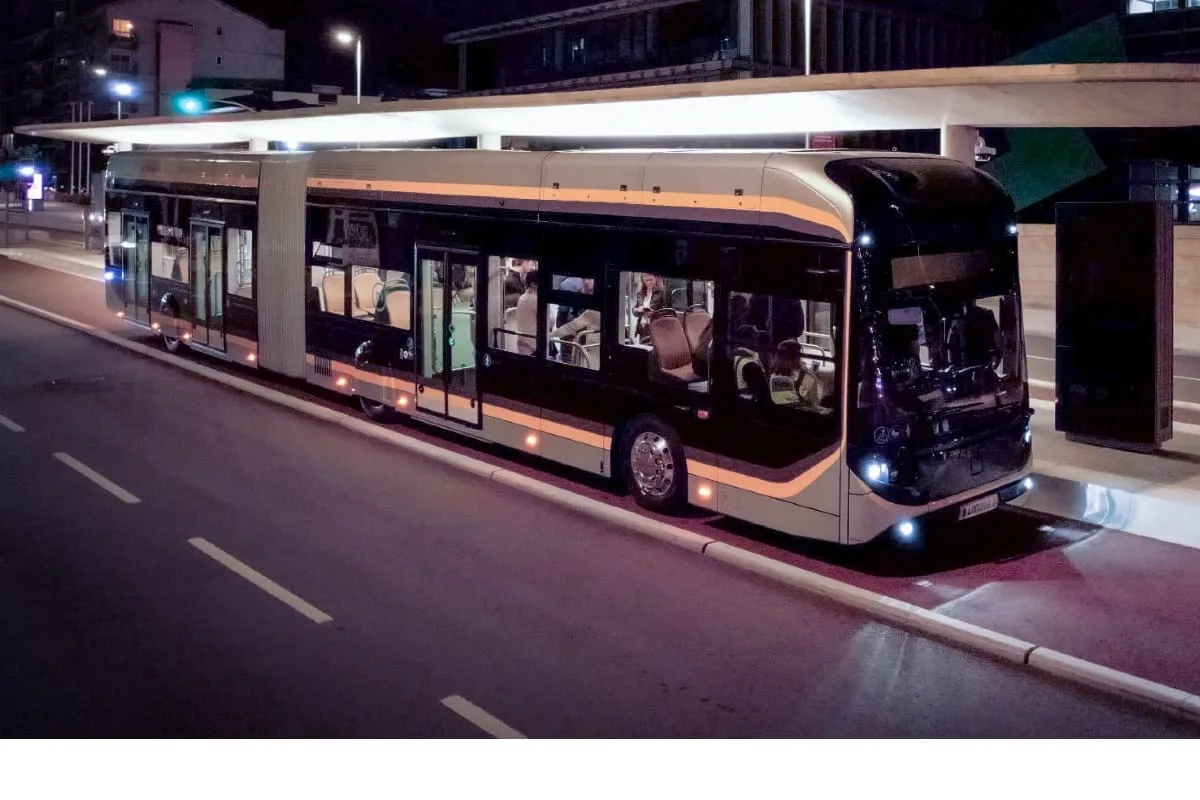
The energy transition continues to reshape global markets, presenting both challenges and opportunities for investors. While headlines often focus on the immediate volatility of crude prices, a deeper analysis reveals significant, structural shifts occurring within key sectors like transportation. The recent advancements in electric and hydrogen bus technology, exemplified by manufacturers like CaetanoBus, offer a crucial lens through which to assess the accelerating pace of decarbonization and its long-term implications for traditional energy demand.
Shifting Gears: The Dual Reality of Current Oil Markets and Future Transport
Investors navigating the complex energy landscape are currently facing a fascinating dichotomy. As of today, Brent crude trades at $95.62, showing a robust 0.88% gain within a day range of $91 to $96.89. WTI crude mirrors this strength, standing at $92.06, while gasoline prices remain firm at $2.96 per gallon. This immediate strength in fossil fuel markets, following a 14-day period where Brent saw a dip of $9, or 8.8%, from $102.22 to $93.22, might suggest a resilient demand outlook for some.
However, beneath this surface, the foundational shifts in transportation are accelerating. The launch of new generation electric and hydrogen buses by CaetanoBus, in 8.5, 12, and 18-metre variants, is not merely a product update; it signifies a maturing market for zero-emission heavy-duty vehicles. This sustained commitment to decarbonization by major manufacturers, even amidst strong oil prices, underscores a persistent long-term headwind for oil demand, especially in urban and regional transport fleets. Investors must reconcile the short-term price signals with the undeniable, long-term trajectory towards electrification and alternative fuels.
Supply Chain Revolution: Implications for Energy Infrastructure Investors
The strategic decisions made by companies like CaetanoBus regarding their supply chain offer critical insights into the future of energy investments. The company’s pivot to LFP batteries from CATL, replacing previous NMC cells, is a significant development. These CATL BC5 battery systems, offering up to 465 kWh for 12-meter variants and a substantial 700 kWh for 18-meter versions, are highlighted for their “durability” and “ultra-long cycle life exceeding 4,000 charge cycles, with minimal degradation over time.” This directly translates to lower operational costs and extended vehicle lifespans, making electric fleets an increasingly attractive proposition for municipalities and private operators.
Furthermore, the switch to CRRC motors, utilizing a highly integrated 6-in-1 system that reduces weight by up to 70%, signifies a focus on efficiency and performance. For investors pondering questions such as “how are Chinese tea-pot refineries running this quarter?” or “what’s driving Asian LNG spot prices this week?”, these supply chain shifts are highly relevant. They demonstrate a growing reliance on diversified, often Asian-centric, manufacturing for critical EV components, diverting capital and resource allocation away from traditional fossil fuel infrastructure. This structural shift impacts everything from raw material demand (e.g., lithium, cobalt, nickel) to the competitive landscape of industrial manufacturing, creating new avenues for investment while challenging existing ones.
Navigating the Hydrogen vs. Battery Divide: A Strategic Outlook
One of the most pressing questions for investors in the energy transition space is the long-term viability and market share of battery-electric versus hydrogen fuel cell technologies. CaetanoBus’s strategy provides a compelling case study, offering both BEV and FCEV options for its 12- and 18-meter models. The company’s continued success in securing “numerous orders for hydrogen buses” and its self-description as a “pioneer in hydrogen drivetrain integration” highlights strong market interest in H2 solutions, particularly for heavier-duty applications where range and rapid refueling are paramount.
The integration of Toyota’s latest 2.5 stack fuel cell technology (70 kW output) with CRRC drivetrains and CATL battery packs (up to 130 kWh for 12m, 170 kWh for 18m hydrogen buses) represents a pragmatic, hybrid approach. This blend aims to leverage the strengths of both technologies, optimizing for performance, range, and cost. This strategic flexibility is critical when considering the broader energy market. Upcoming events, such as the OPEC+ JMMC meeting on April 18 and the Full Ministerial meeting on April 20, will undoubtedly touch upon global demand forecasts. The accelerating adoption of both BEV and FCEV solutions, as evidenced by CaetanoBus’s expanding portfolio, directly informs these long-term projections, suggesting an increasingly constrained growth ceiling for oil demand in key transportation segments. Similarly, the EIA and API weekly reports, scheduled for April 21/22 and April 28/29, provide near-term inventory data, but the strategic direction of manufacturers points to a future where demand for fossil fuels in transport continues to erode.
Investor Sentiment and the Future of Transportation Demand
For investors actively asking “build a base-case Brent price forecast for next quarter” or seeking the “consensus 2026 Brent forecast,” understanding the undercurrents of transportation electrification is paramount. The expansion of CaetanoBus’s zero-emission product range, including an 18-meter Bus Rapid Transit (BRT) configuration, signals a broad market penetration strategy that will impact urban and inter-urban transport networks globally. The promise of “reliable performance over more than a decade of operation” for the new LFP batteries significantly reduces the total cost of ownership for fleet operators, making the transition from diesel a more economically compelling decision.
This technological evolution directly challenges the long-term demand narrative for crude oil. While current market prices reflect immediate supply-demand balances, the sustained commitment to clean transport by major manufacturers like CaetanoBus represents a persistent structural shift. This shift dictates that a significant portion of future transportation demand growth will be met by electric or hydrogen-powered vehicles, rather than internal combustion engines. Astute energy investors must integrate this accelerating pace of energy transition into their long-term commodity price forecasts and portfolio strategies, recognizing that the future of transport is rapidly moving away from its fossil fuel dependence.