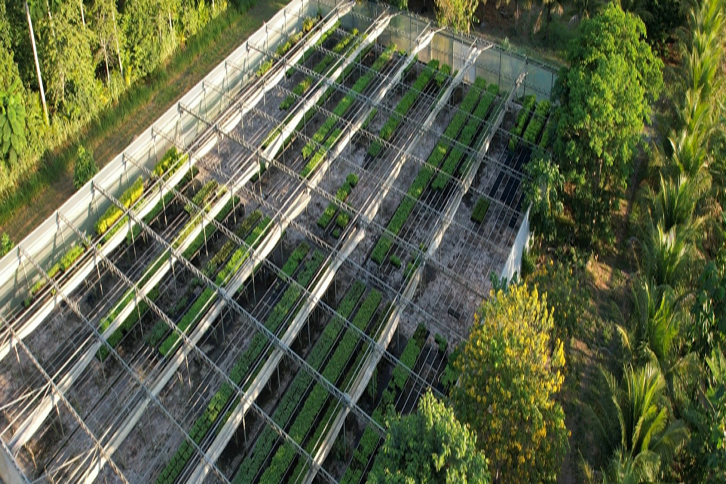
The global energy landscape continues its multifaceted evolution, presenting both challenges and opportunities for investors navigating the transition. While traditional hydrocarbon markets remain central, the strategic importance of diversified portfolios, particularly those integrating robust environmental, social, and governance (ESG) initiatives, is undeniably growing. A prime example emerges from Brazil, where Carbon2Nature Brasil, a joint venture between Neoenergia and Iberdrola’s Carbon2Nature, alongside ecosystem restoration specialist Biomas, has initiated the Muçununga Project. This ambitious €8.5 million ($9.3 million) venture in southern Bahia is set to restore 1,200 hectares of vital Atlantic Forest, signaling a significant investment in high-integrity carbon offsets and offering a tangible blueprint for future-focused energy investment.
High-Integrity Carbon Offsets: A New Frontier for Value Creation
The Muçununga Project stands out as a leading model for nature-based solutions, committing a substantial €8.5 million ($9.3 million) to ecological restoration. This investment targets 1,200 hectares across eight municipalities in Bahia, with nearly 2 million seedlings from over 70 native species slated for planting by 2027. This commitment to biodiversity, featuring a diverse range of species from araçá to jatobá, is particularly noteworthy. Industry data indicates that only about 1% of global forest recovery projects focused on carbon utilize more than 10 species. By contrast, Muçununga’s approach to reestablishing complex ecological corridors sets a new benchmark for quality and environmental impact, generating approximately 525,000 carbon credits over its 40-year horizon. Each credit, representing one ton of CO₂ removed, offers a verifiable asset in a market increasingly scrutinizing the integrity of offsets. Beyond the environmental benefits, the project is also designed to deliver direct socio-economic value, creating around 80 local jobs and fostering community development in the region. For investors, this dual focus on ecological restoration and community upliftment underpins a strong ESG narrative, crucial for long-term capital appreciation in a sustainability-conscious market.
Market Volatility and the Appeal of Diversified Assets
In the current market climate, the contrasting dynamics between traditional energy commodities and emerging carbon assets are stark. As of today, Brent crude trades at $98.3, reflecting a 1.1% dip, while WTI crude sits at $89.84, down 1.46%. This daily fluctuation is part of a broader trend; our proprietary data shows Brent crude has seen a significant 12.4% decline over the past two weeks, dropping from $108.01 on March 26th to $94.58 on April 15th. Such volatility in hydrocarbon prices, even as gasoline prices remain stable, naturally prompts investors to seek diversification and stability. Our internal reader intent data highlights a growing investor appetite for understanding the fundamental data sources powering market analysis and the intricacies of carbon credit generation. Questions about the reliability of market data and the integrity of carbon models underscore a desire for transparency and verifiable value. Projects like Muçununga, with its clear investment figures, specific ecological goals, and projected credit generation, offer a tangible, long-term asset that can act as a hedge against the inherent unpredictability of traditional commodity markets. The verifiable nature of its carbon credits, backed by robust biodiversity practices, positions it as a premium offering in the voluntary carbon market, attracting capital from institutions committed to both financial returns and genuine environmental impact.
Strategic Positioning Ahead of Key Energy Events and Brazil’s COP30 Hostship
The timing of the Muçununga Project’s announcement is particularly strategic, coinciding with Brazil’s preparations to host COP30. This global spotlight on Brazil’s environmental commitments significantly elevates the profile of pioneering initiatives like this. It sends a strong signal to the international community about the nation’s proactive stance on climate action and biodiversity conservation, potentially attracting further green investment. From an investor perspective, this alignment with national and international environmental agendas reduces regulatory risk and enhances the project’s long-term viability. Looking ahead, the immediate future holds several critical events that will shape the broader energy outlook. The upcoming OPEC+ Joint Ministerial Monitoring Committee (JMMC) meeting on April 18th, followed by the Full Ministerial meeting on April 20th, will provide crucial insights into global oil supply strategy. Additionally, the API Weekly Crude Inventory reports on April 21st and 28th, alongside the EIA Weekly Petroleum Status Reports on April 22nd and 29th, will offer fresh data on demand and inventory levels. While these events primarily influence hydrocarbon prices, a sustained period of market uncertainty or production adjustments could further accelerate investor interest in alternative energy assets and nature-based solutions. Projects that demonstrate clear pathways to carbon capture, such as Carbon2Nature Brasil’s goal to capture over 10 million tons of CO₂ in the coming years, become increasingly attractive as a means of diversifying exposure and aligning with global decarbonization efforts.
Scalability and Institutional Backing for Nature-Based Solutions
The Muçununga Project is not an isolated endeavor but part of a larger, scalable vision for nature-based solutions. Biomas, the ecosystem restoration company co-developing the project, boasts a formidable roster of shareholders including Itaú, Marfrig, Rabobank, Santander, Suzano, and Vale. This institutional backing signals a robust endorsement from major players across finance, agribusiness, and industry, highlighting the growing recognition of ecological restoration as a viable and valuable asset class. Biomas’s ambitious goal to restore 2 million hectares of degraded land over the next two decades further underscores the potential for significant expansion and long-term impact. For investors in the oil and gas sector, participating in such ventures, either directly or through diversified funds, offers a strategic pathway to mitigate carbon footprints, enhance ESG credentials, and tap into a rapidly expanding market for high-quality carbon credits. The structured revenue stream from credit sales, coupled with the inherent environmental and social benefits, presents a compelling investment thesis, particularly for companies and funds seeking to align their portfolios with the evolving demands of the energy transition and a net-zero future.


