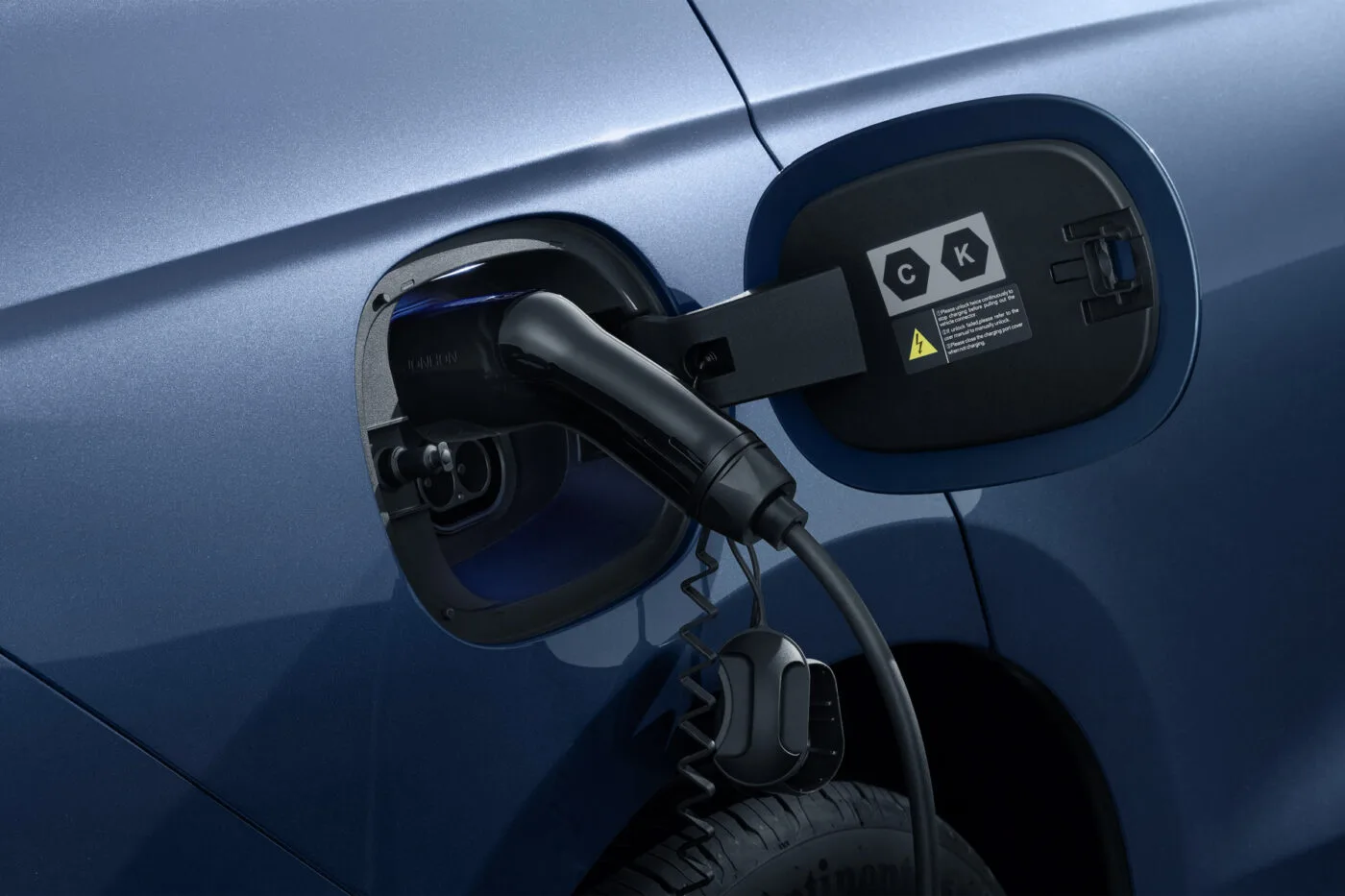
The global energy landscape is undergoing a profound transformation, with electrification playing an increasingly dominant role. A recent announcement by BYD, the Chinese automotive giant, underscores this accelerating shift, signaling a new era for electric vehicle (EV) adoption in Europe. BYD’s plan to deploy its “Flash Charging” technology across the continent, promising charging speeds of up to 1,000 kW via a single CCS cable, represents a significant leap in infrastructure capability. This development has far-reaching implications, not just for the automotive sector but for the entire energy complex, challenging long-held assumptions about future oil demand and necessitating a re-evaluation of investment strategies in the traditional oil and gas sector.
The Dawn of Ultra-Fast EV Charging in Europe
BYD’s “Flash Charging” system, already operational in China, is set to revolutionize the EV experience in Europe. The company plans to establish 200 to 300 charging stations equipped with this technology by the second quarter of 2026. What makes this particularly impactful is the reported ability to deliver 1,000 kW using a single CCS connector, a significant improvement over the dual-cable approach often seen with such high power in other markets. This massive charging capacity, built upon BYD’s “Super e-platform” and integrated Blade battery technology, drastically reduces charging times, effectively mitigating one of the primary barriers to widespread EV adoption. Premium models like the Denza Z9 GT and D9 MPV are slated to be among the first to showcase this capability, demonstrating the practical application of 1,000 kW DC charging. This initiative is not occurring in a vacuum; other industry players, such as Alpitronic and Phoenix Contact, are also pushing the boundaries of CCS technology, with connectors capable of handling up to 1,000 kW, often incorporating advanced cooling concepts. The collective drive towards ultra-fast charging signals an irreversible momentum in the transition away from fossil fuels in transportation.
Oil Market Volatility Amidst Accelerating Structural Shifts
Against the backdrop of these transformative developments in EV technology, the traditional oil market continues to exhibit considerable volatility. As of today, Brent crude trades at $90.38 per barrel, marking a significant decline of 9.07% within the day, with prices fluctuating widely between $86.08 and $98.97. Similarly, WTI crude has experienced a sharp downturn, settling at $82.59 per barrel, a drop of 9.41%, having traded between $78.97 and $90.34. The downward pressure extends to refined products, with gasoline prices currently at $2.93, reflecting a 5.18% decrease. This current market weakness follows a pronounced downtrend over the past two weeks, where Brent crude shed $20.91, or 18.5%, moving from $112.78 on March 30th to $91.87 just yesterday. While geopolitical tensions, inventory levels, and macroeconomic concerns are often cited as immediate drivers for these price movements, the accelerating pace of EV infrastructure deployment, epitomized by BYD’s European strategy, introduces a powerful, long-term structural headwind. The rapid expansion of high-speed charging networks directly impacts future demand forecasts for gasoline, challenging the long-term price stability and demand growth prospects that oil and gas investors have historically relied upon.
Navigating Future Demand: OPEC+ Strategies and Inventory Watch
The advent of ultra-fast EV charging adds a critical layer of complexity to the strategic decisions facing major oil producers. Investors are keenly asking about the future trajectory of crude prices, with a common question being: “What do you predict the price of oil per barrel will be by end of 2026?” They are also closely monitoring fundamental supply management, inquiring about “What are OPEC+ current production quotas?”. These questions become even more pertinent when considering the upcoming energy events on our calendar. The OPEC+ Joint Ministerial Monitoring Committee (JMMC) meets tomorrow, April 18th, followed by the full Ministerial Meeting on April 19th. These gatherings are crucial for assessing global supply policy. However, as EV adoption accelerates, driven by advancements like BYD’s Flash Charging, OPEC+’s ability to manage the demand side of the equation becomes increasingly challenging. While they can control supply, the erosion of demand through electrification is largely outside their direct influence. Further insights into short-term market dynamics will come from the API Weekly Crude Inventory reports on April 21st and 28th, and the EIA Weekly Petroleum Status Reports on April 22nd and 29th. These inventory data points, along with the Baker Hughes Rig Count on April 24th and May 1st, will offer a snapshot of immediate supply-demand balances and upstream activity, but the underlying narrative of a rapidly electrifying transport sector will undoubtedly color their long-term interpretation.
Investor Outlook: Strategic Adaptation in a Shifting Energy Paradigm
For oil and gas investors, BYD’s aggressive push into Europe with advanced charging technology serves as a potent reminder of the energy transition’s momentum. The focus is no longer just on short-term market fluctuations or geopolitical risks, but on how quickly the foundational pillars of energy demand are evolving. Our proprietary reader intent data reveals a growing investor curiosity about the underlying mechanisms of market intelligence, with questions like “What data sources does EnerGPT use? What APIs or feeds power your market data?” This reflects a deeper need for robust, forward-looking analysis to navigate uncertainty. The challenge for traditional energy companies and their investors is to adapt strategically. This means assessing not only the resilience of existing portfolios but also the pace and efficacy of diversification into lower-carbon energy solutions, renewable infrastructure, or advanced fuels. The increasing efficiency and convenience of EVs, powered by breakthroughs like 1,000 kW charging, will inevitably impact refining margins and long-term demand for refined products. Investors must scrutinize balance sheets for exposure to legacy assets and evaluate management’s commitment to innovation and sustainable growth in a world where the internal combustion engine’s dominance is clearly waning. The market is not just reacting to daily headlines; it is structurally re-rating based on long-term technological trajectories.