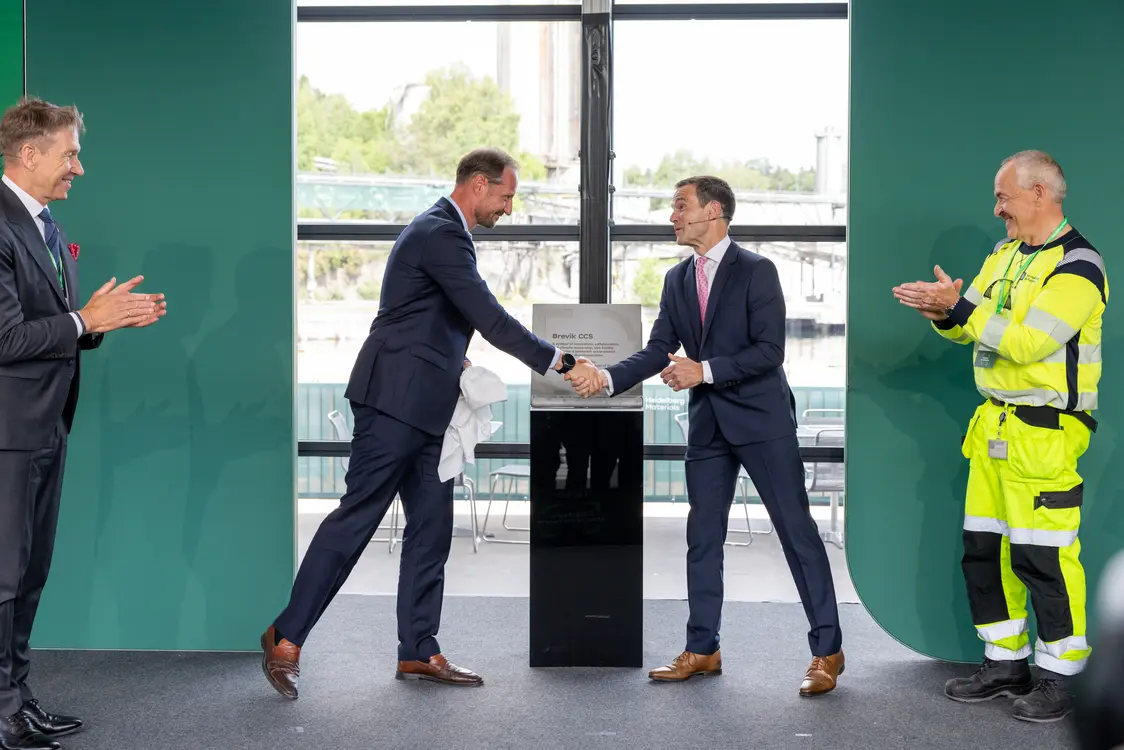
The inauguration of the Brevik Carbon Capture and Storage (CCS) facility in Norway marks a pivotal moment, not merely for industrial decarbonization but for the investment landscape of the global energy sector. This project, capable of capturing 400,000 tonnes of CO2 annually from a cement plant – representing half of its emissions – is a tangible demonstration of what full-scale carbon value chains can achieve. As investors increasingly scrutinize ESG credentials and long-term sustainability, Brevik CCS serves as a powerful signal for the strategic pivot required across hard-to-abate industries, offering a blueprint for future capital allocation in the journey towards net-zero. For oil and gas players diversifying their portfolios, and for institutional funds seeking resilient, future-proof assets, understanding the implications of such pioneering initiatives is paramount.
Decarbonizing Hard-to-Abate Sectors: A New Investment Frontier
The Brevik CCS project, a key component of the Norwegian government’s ambitious Longship program, underscores the growing imperative and commercial viability of decarbonizing sectors historically considered challenging, such as cement production. Heidelberg Materials has successfully integrated carbon capture technology directly into its Brevik plant, ensuring uninterrupted cement output while significantly reducing its carbon footprint. This technological achievement is not just about environmental compliance; it’s about creating new market opportunities, as evidenced by the introduction of ‘evoZero’, the world’s first carbon-captured cement. The project’s structure, involving major energy entities like Equinor, Shell, and TotalEnergies through the Northern Lights initiative for CO2 transport and permanent storage under the North Sea, highlights a collaborative model that de-risks large-scale infrastructure investments. Investors should note this multi-stakeholder approach as a key factor enabling the deployment of such capital-intensive projects, signaling a potential acceleration of similar ventures globally.
Navigating Market Volatility with Strategic ESG Investments
In a market characterized by recent volatility, the strategic importance of projects like Brevik CCS becomes even clearer. As of today, Brent crude trades at $90.38, reflecting a significant 9.07% drop within the day and a steeper 18.5% decline from its $112.78 perch just two weeks ago. WTI crude similarly stands at $82.59, down 9.41%, with gasoline prices also seeing a 5.18% dip to $2.93. This downturn, stemming from a broader market sentiment shift, naturally prompts questions from our investor base, with many asking about the projected price of oil per barrel by the end of 2026. This long-term outlook underscores a fundamental truth: while short-term price swings dictate immediate trading strategies, the structural drivers of the energy transition continue unabated.
For investors like those inquiring about the end-of-year oil price or how specific companies such as Repsol might perform, the Brevik CCS project offers a crucial lens. Companies actively investing in decarbonization technologies and new energy value chains are not just mitigating future carbon liabilities; they are diversifying revenue streams and building resilience against fluctuating fossil fuel demand and prices. The deployment of 30 specially trained employees at Brevik also signals the creation of a new, skilled workforce, an often-overlooked aspect of ESG investment that contributes to local economic stability and long-term operational excellence, making these assets more attractive in volatile market conditions.
Policy Catalysts and Upcoming Market Drivers
The success of Brevik CCS is deeply intertwined with supportive governmental frameworks, epitomized by Norway’s Longship project. This comprehensive national initiative to establish a full-scale carbon capture, transport, and storage value chain serves as a powerful policy catalyst, demonstrating how public-private partnerships can accelerate critical infrastructure development. For investors, understanding the role of such government backing is key to evaluating the scalability and replicability of CCS projects in other jurisdictions. As the industry looks ahead, the upcoming OPEC+ Joint Ministerial Monitoring Committee (JMMC) and full Ministerial meetings on April 18th and 19th, respectively, will inevitably dominate short-term crude market discussions regarding production quotas and supply-side dynamics. However, it is crucial to recognize that while these meetings influence immediate oil prices, they do not diminish the long-term strategic imperative for decarbonization solutions like Brevik CCS. The ongoing need for API and EIA weekly inventory reports, alongside the Baker Hughes Rig Count, will continue to provide tactical market insights, yet the broader energy transition narrative, championed by projects like Brevik, represents the enduring investment thesis.
Scaling the Blueprint: Future Horizons for Carbon Capture Investment
The Brevik facility is not just a standalone success; it is envisioned as a “blueprint” for entire industries, a testament to what “exceptional minds with a shared vision” can achieve. The successful capture, liquefaction, and initial shipments of CO2 to the Northern Lights intermediate storage site in Øygarden in June have already proven the operational chain. This operational validation, coupled with the ability to integrate the facility without disrupting existing cement production, significantly reduces perceived risks for future projects. Investors should consider the scalability potential here. The fact that thousands of people from around the world have already visited Brevik to learn from its experience points to a global demand for such expertise and technology transfer. This suggests a burgeoning market for carbon capture solutions, not just in cement but across heavy industry, metals, chemicals, and refining. The long-term investment horizon extends beyond the initial capture, encompassing the infrastructure for transport, storage, and the development of new carbon-neutral products like evoZero cement, which will create entirely new revenue streams and market advantages for pioneering companies.