Brazil’s Mero-4 Field Unleashes New Production, Bolstering Pre-Salt Investment Thesis
A significant milestone has been achieved in Brazil’s prolific pre-salt Santos Basin, as the Mero field commences oil production from its fourth development phase, Mero-4. This pivotal event, offshore Rio de Janeiro, marks a substantial increase in the country’s deepwater output and signals robust returns for the consortium partners. For investors tracking the global energy landscape, Mero-4’s start-up reinforces the enduring value proposition of Brazil’s pre-salt assets, characterized by high-quality crude and advanced operational efficiencies.
Operated by Brazilian national oil company Petrobras, which holds a 38.6% working interest, the Mero field is a cornerstone asset in the portfolio of several international energy majors. TotalEnergies and Shell Brasil each maintain a significant 19.3% stake, with other consortium members contributing to the project’s substantial capital investment and technical expertise. The successful commissioning of Mero-4 is a testament to the collaborative strength and technological prowess required to unlock resources in one of the world’s most challenging yet rewarding offshore frontiers.
Mero-4: A Deep Dive into Operational Capacity and Design
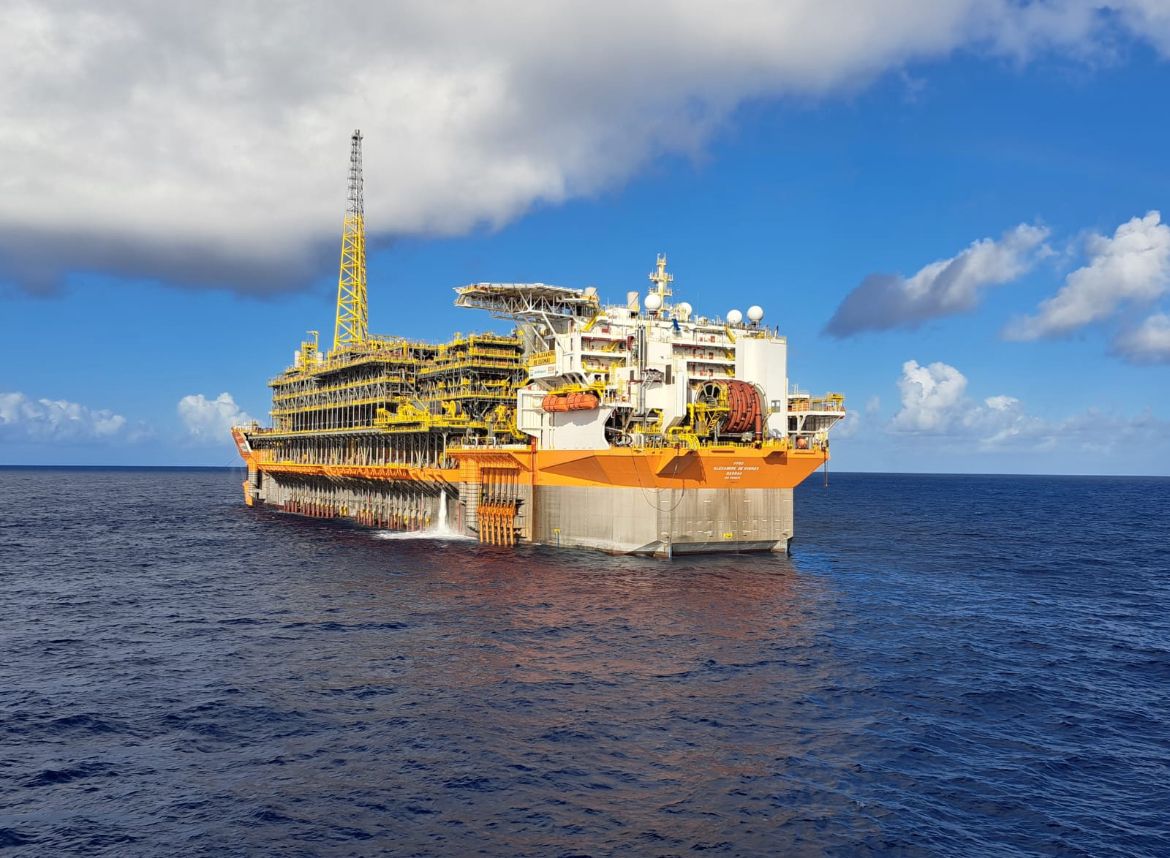
The Mero-4 phase, initially launched in August 2021, is centered around the state-of-the-art Alexandre de Gusmão Floating Production, Storage and Offloading (FPSO) unit. This cutting-edge vessel is designed to process an impressive 180,000 barrels of oil per day (bpd), connecting 12 production and injection wells. The scale of this operation underscores the massive potential of the Mero reservoir and the consortium’s commitment to maximizing its recovery. Investors should note that FPSOs like the Alexandre de Gusmão represent significant long-term capital commitments, often involving multi-billion dollar contracts for construction and lease, indicating the project’s long-term economic viability.
Beyond its sheer production capacity, Mero-4 incorporates advanced environmental design principles aimed at minimizing its carbon footprint. A critical feature is the reinjection of all associated natural gas back into the reservoir. This practice not only enhances oil recovery but also eliminates routine flaring, a major source of greenhouse gas emissions in conventional oil and gas operations. This commitment to reduced emissions positions the Mero project favorably within an increasingly ESG-conscious investment environment, offering a more sustainable production profile compared to many global peers.
Mero Field’s Expanding Production Footprint
With the integration of Mero-4, the Mero field’s total production capacity now reaches an formidable 770,000 bpd, distributed across five dedicated FPSO units. This cumulative capacity solidifies Mero’s status as a world-class deepwater development, contributing significantly to Brazil’s overall oil output. The phased approach to developing the Mero field, progressively bringing online units like the Pioneiro de Libra, Guanabara, Sepetiba, and now Alexandre de Gusmão, showcases a disciplined capital allocation strategy designed to optimize long-term value generation.
Nicolas Terraz, President of Exploration & Production at TotalEnergies, emphasized the strategic importance of this achievement. He remarked that the start-up of Mero-4 signifies the culmination of the field’s development, with four FPSOs commissioned within a span of just three years. This rapid progression transitions the project into a sustained production phase, poised to generate substantial free cash flow for the consortium. Terraz highlighted this as a monumental success for the Libra consortium and a critical milestone for TotalEnergies in Brazil, which remains a key growth region for the French energy giant.
Investment Implications for Key Stakeholders
The commencement of Mero-4 production holds profound implications for each of the primary consortium partners and their respective investors:
Petrobras (PBR): As the operator and majority stakeholder, Mero-4 significantly bolsters Petrobras’s production targets and cash flow. The pre-salt assets are central to Petrobras’s long-term strategy, underpinning its financial strength and enabling continued investment in exploration and development. Increased output from high-margin pre-salt fields like Mero directly translates into enhanced profitability and dividend potential for shareholders.
TotalEnergies (TTE): For TotalEnergies, Mero-4 underscores its strategic expansion in high-return deepwater plays. The robust free cash flow expected from Mero will contribute to the company’s global earnings and support its energy transition initiatives. Brazil remains a vital component of TotalEnergies’ growth trajectory, providing stable, long-term production assets.
Shell Brasil (SHEL): Shell’s substantial stake in Mero-4 reinforces its deepwater portfolio and commitment to lucrative projects in Latin America. The incremental production adds to Shell’s resilient upstream assets, which are crucial for funding its own energy transition strategies and delivering consistent returns to investors.
Other Consortium Members: Beyond the publicly traded giants, other partners like CNPC and CNOOC also benefit from their participation in the Libra consortium. These projects represent strategic international investments, diversifying their global energy portfolios and securing long-term supply.
FPSO Providers (e.g., SBM Offshore): The deployment of the Alexandre de Gusmão FPSO also highlights the integral role of specialized service providers like SBM Offshore, which are instrumental in bringing these complex deepwater projects to fruition. Their expertise in designing, building, and operating these massive floating facilities represents a significant portion of the capital expenditure and ongoing operational costs, securing long-term revenue streams for these specialized firms.
Brazil’s Pre-Salt: A Global Energy Powerhouse
The Mero field is situated within Brazil’s pre-salt layer, a geological marvel characterized by vast hydrocarbon reservoirs trapped beneath thousands of meters of salt and rock. These fields are renowned for their high-quality, light crude oil and exceptional reservoir characteristics, often leading to lower lifting costs once production is established. The consistent success in developing these complex resources has cemented Brazil’s position as a leading global oil producer and a crucial player in the deepwater segment.
For investors, the Mero-4 start-up is more than just an operational update; it’s a reaffirmation of the long-term investment thesis in Brazilian deepwater oil and gas. The predictable, high-volume production from these assets provides a strong foundation for financial performance, even amidst global energy market fluctuations. The commitment to advanced technology and environmental stewardship further enhances the appeal of these projects, offering a blend of profitability and responsible resource development.
Outlook: Sustained Returns and Strategic Growth
With Mero-4 now online and the Mero field effectively fully developed, the focus shifts from capital-intensive construction to sustained, high-volume production. This transition implies a significant increase in free cash flow generation for the consortium members, allowing for potential deleveraging, increased shareholder distributions, or reinvestment in other strategic growth areas. The Mero project exemplifies the resilience and profitability of well-executed deepwater developments, providing a stable revenue stream for decades to come.
The successful commissioning of the Alexandre de Gusmão FPSO and the resulting boost in Mero’s total capacity underscore the continued strength of Brazil’s oil and gas sector. As global energy demand evolves, high-efficiency, lower-emission projects like Mero will remain critical components of the world’s energy mix, offering attractive returns for discerning investors seeking exposure to robust upstream assets.


