BP, a supermajor navigating a complex energy transition, faces a critical juncture in its strategic asset divestment program. Central to this strategy is the proposed sale of Castrol, its iconic lubricants arm. While the company aims to raise at least $20 billion through asset sales by 2027 to reduce debt and revitalize its share price, the Castrol divestment is emerging as a bellwether for investor confidence and the broader market’s valuation of traditional energy infrastructure. Initial indications suggest a significant valuation gap, with potential buyers eyeing figures well below BP’s implicit expectations and analyst projections for a value-accretive deal. This presents a substantial challenge for BP as it seeks to placate activist investors and demonstrate tangible progress on its financial targets.
The Castrol Conundrum: A Disconnect in Valuation Expectations
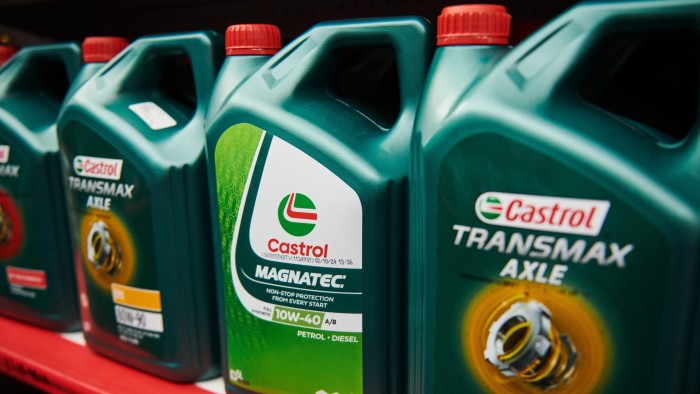
BP initiated the sale of Castrol in February, positioning it as a cornerstone of its ambitious $20 billion divestment target by 2027. This broader strategy is designed to slash net debt from approximately $27 billion to a more manageable $14 billion-$17 billion by the end of 2027, ultimately aiming to boost shareholder value. However, the market’s early reception to Castrol’s offering reveals a stark disconnect. Analysts have previously posited that BP would need to secure an enterprise value of around $12 billion for Castrol to genuinely enhance the company’s free cash flow. Yet, intelligence from the ongoing sale process, managed by Goldman Sachs, indicates that some interested parties are exploring valuations below $8 billion. This gap is not merely a matter of negotiation; it reflects fundamental shifts in the market, particularly the accelerating adoption of electric vehicles which, by their nature, require significantly less traditional lubrication. While BP CEO Murray Auchincloss lauded Castrol in May as an “iconic brand” with a 125-year history, the allure of heritage may not translate directly into the premium valuation BP requires in a rapidly evolving automotive landscape. The initial pool of bidders is diverse, including prominent US private equity firms like Apollo and Lonestar, alongside industry behemoths such as Saudi Aramco and India’s Reliance, and even China’s state-owned investment company Citic, signaling broad interest but perhaps a cautious valuation approach from sophisticated players.
Navigating Current Market Volatility Amidst Strategic Sales
The backdrop for BP’s divestment efforts is a dynamic global energy market, currently showing signs of robust pricing but also underlying volatility. As of today, Brent Crude trades at $96.13 per barrel, marking a 1.41% increase within the day, with a range of $91-$96.36. West Texas Intermediate (WTI) mirrors this strength, trading at $92.36, up 1.18%. This current uptick follows a notable downward trend over the past two weeks, where Brent retreated from $102.22 on March 25 to $93.22 on April 14, highlighting the market’s sensitivity to global supply-demand signals. While Castrol’s revenue stream is not directly correlated to daily crude price fluctuations, a healthy and upward-trending oil market typically fosters a more optimistic investment climate, which can indirectly benefit broader asset sales from integrated energy companies. Stronger oil prices enhance the cash flow of oil and gas assets, potentially making the other components of BP’s $20 billion divestment package—such as older oil and gas fields, equity in its solar business Lightsource, and infrastructure deals—more attractive. The recent sale of a share in a Turkish gas pipeline to Apollo for $1 billion and the planned divestment of its Austrian petrol station network exemplify BP’s commitment to this strategy, but the Castrol sale remains the largest and most scrutinized component, underscoring the importance of achieving a favorable outcome even in a strengthening crude market.
Investor Focus: Addressing Concerns on BP’s Strategic Direction
Our proprietary reader intent data reveals a clear focus among investors on the future trajectory of crude prices and the strategic positioning of major energy companies. Questions like “Build a base-case Brent price forecast for next quarter” and inquiries into the operational status of Chinese teapot refineries underscore a pervasive interest in demand fundamentals and global supply dynamics. For BP, a successful Castrol divestment is not just about the immediate cash injection; it’s about validating its “fundamental reset” strategy announced in February, which was partly a response to pressure from activist hedge fund Elliott, which holds a 5% stake. Investors are keenly watching how BP manages its non-core asset sales to fund its transition and reduce debt. A significant shortfall in Castrol’s valuation could trigger concerns about the company’s ability to meet its debt reduction targets and, by extension, its capacity to generate consistent free cash flow or return capital to shareholders. The perceived success of this key divestment will heavily influence investor confidence in BP’s broader strategic pivot away from traditional hydrocarbon assets towards a more diversified energy portfolio. The challenge for BP is to convince the market that its assets, even those in mature sectors like lubricants, can command a fair price that supports its ambitious financial and strategic objectives, regardless of the fluctuating sentiment around the wider oil and gas sector.
Forward Outlook: Upcoming Catalysts and Potential for Revaluation
The Castrol sale process is still in its early stages, leaving room for potential revaluation. Industry buyers, unlike private equity firms, often possess the strategic advantage of integrating Castrol with existing operations, unlocking synergies that could justify higher bids. This potential for strategic alignment could be a key factor in bridging the current valuation gap. Looking ahead, the broader energy market will see several significant events unfold that could indirectly influence the investment climate for BP and its asset sales. This week, the Baker Hughes Rig Count on April 17 will offer insights into North American production trends. Crucially, the OPEC+ Joint Ministerial Monitoring Committee (JMMC) meeting on April 18, followed by the Full Ministerial meeting on April 20, are pivotal. Decisions from these gatherings on production quotas will directly impact global oil supply and, consequently, the Brent price forecasts that our readers are actively seeking. Such macro developments could either bolster or temper overall investor sentiment towards energy majors. Furthermore, the regular API and EIA Weekly Crude Inventory reports on April 21, 22, 28, and 29 will provide ongoing granular data on US supply and demand. While these events do not directly concern Castrol, a stable or appreciating oil price environment, supported by favorable OPEC+ decisions and inventory data, creates a more buoyant market for all energy-related assets. For BP, a successful Castrol sale, even if it falls short of the ideal $12 billion, is crucial for maintaining momentum on its $20 billion divestment target and demonstrating its commitment to financial discipline and strategic transformation in the face of evolving market dynamics.