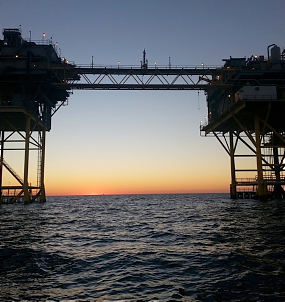
bp’s recent Memorandum of Understanding (MoU) with the Egyptian government, outlining a five-well drilling program in the Mediterranean Sea, represents a significant strategic move for the energy major and offers compelling insights for investors. This commitment to developing Egypt’s national gas reserves, with drilling slated to commence in 2026, reinforces bp’s long-term vision for its gas and low-carbon energy portfolio, particularly amidst evolving global energy dynamics. For investors, this deal is more than just a headline; it’s a window into bp’s capital allocation priorities, its regional growth strategy, and the enduring role of natural gas in the energy transition. Our analysis delves into the strategic underpinnings of this agreement, contextualizes it within current market conditions, and considers its implications alongside upcoming industry events and prevailing investor sentiment.
Strategic Deep Dive into bp’s Mediterranean Expansion
The core of bp’s latest move lies in a five-well drilling program targeting water depths between 300 and 1,500 meters in the Mediterranean. This initiative is explicitly designed to accelerate the development and production of national gas reserves, leveraging and extending existing production facilities within the West Nile Delta. The decision to prioritize this region is not arbitrary; bp has a storied 60-year history in Egypt, recently making two gas discoveries there – Fayoum-5 and El King-2 – as part of a successful exploration campaign in early 2025. This deep-rooted presence and recent success de-risk the new commitment considerably. For investors, this signals bp’s confidence in the geological potential and regulatory stability of Egypt, positioning it as a key pillar in the company’s broader strategy to increase production to 2.3-2.5 million barrels of oil equivalent per day (boed) by 2030, with further capacity out to 2035. The emphasis on gas, rather than oil, also aligns with bp’s strategic pivot towards a lower-carbon energy mix, where natural gas serves as a crucial transition fuel.
Market Realities and the Enduring Value of Gas
In the immediate term, the oil and gas market continues to exhibit volatility, creating a complex backdrop for long-duration capital commitments like bp’s Mediterranean program. As of today, Brent Crude trades at $98.51 per barrel, marking a modest decline of 0.89% within the day’s range of $97.92-$98.58. This current price point is notably lower than the $112.57 observed just three weeks ago on March 27th, representing a 14-day decline of approximately $14, or 12.4%. Similarly, WTI Crude hovers at $90.18, down 1.09%. This recent price softening, driven by a confluence of macroeconomic concerns and supply-demand rebalancing, might lead some to question the timing of large-scale upstream investments. However, bp’s focus on natural gas in Egypt offers a different perspective. Gas markets often operate with distinct fundamentals, driven by regional demand, infrastructure, and long-term contracts. The accelerated production from this program is intended to meet local Egyptian market needs, providing a relatively stable demand base insulated from some of the more extreme global oil price swings. This strategic allocation towards gas development in a high-demand regional market demonstrates a measured approach to long-term value creation, even as crude prices experience short-term fluctuations.
Upcoming Catalysts and Forward-Looking Production Impact
While the full production impact of bp’s five-well program won’t be realized until post-2026, the strategic commitment itself sets the stage for future growth. Investors should monitor upcoming market events that will shape the environment in which these future gas volumes will arrive. The next 14 days alone bring several key data points: The Baker Hughes Rig Count on April 17th and 24th will offer insights into current drilling activity, while the OPEC+ Joint Ministerial Monitoring Committee (JMMC) on April 18th, followed by the full Ministerial Meeting on April 20th, could dictate near-term crude supply policies. More granularly, the API and EIA Weekly Petroleum Status Reports on April 21st, 22nd, 28th, and 29th will provide critical inventory data for both crude and refined products. For bp’s Egyptian gas project, these events, while primarily focused on crude, contribute to the overall sentiment and investment climate. A stable or rising crude price environment, potentially spurred by OPEC+ decisions, would generally bolster investor confidence across the energy sector, indirectly supporting the long-term capital deployment in gas projects. Furthermore, the 2026 drilling start date for the Mediterranean wells suggests that initial production could begin to contribute to bp’s ambitious 2030 production targets, with potential tie-back options offering further upside depending on resource evaluation.
Addressing Investor Questions: Gas Demand and Portfolio Strategy
Our proprietary reader intent data reveals that investors are keenly focused on understanding market fundamentals, particularly around production quotas and current commodity prices, with frequent inquiries about OPEC+ policies and the Brent crude price. These immediate concerns often intersect with broader strategic questions regarding a company’s long-term portfolio. For bp, this Mediterranean gas deal directly addresses how the company is positioning itself within the current energy landscape. While some investors might question the role of fossil fuels in a decarbonizing world, bp’s commitment to developing natural gas in Egypt underscores its belief in gas as a crucial part of the energy mix for decades to come, especially for national energy security and as a cleaner-burning alternative to coal. By focusing on accelerating production for the local market, bp mitigates some of the export market volatility and aligns with governmental priorities. This strategy provides a tangible answer to how bp intends to achieve its production growth targets in a capital-efficient manner, leveraging existing infrastructure and proven regional expertise, rather than solely relying on new, high-risk ventures in less stable regions.
Investment Outlook and Risk Assessment
bp’s latest MoU is a clear signal of its sustained commitment to conventional energy assets, particularly in key strategic regions like Egypt. For investors, this program offers exposure to a long-life asset base with significant growth potential, underpinned by a strong partnership with the Egyptian government. The focus on gas, rather than crude, provides a degree of diversification within bp’s upstream portfolio and aligns with the broader energy transition narrative where gas serves as a bridge fuel. However, like all major capital projects, risks remain. These include geopolitical stability in the region, the typical execution risks associated with deepwater drilling, and potential fluctuations in long-term gas prices. The 2026 start date and subsequent production ramp-up mean that the immediate impact on bp’s financials will be limited, but the long-term value creation potential is substantial. Investors should view this deal as a reinforcement of bp’s “performing while transforming” strategy, balancing current energy needs with future energy solutions, and contributing meaningfully to its ambitious 2030-2035 production targets.