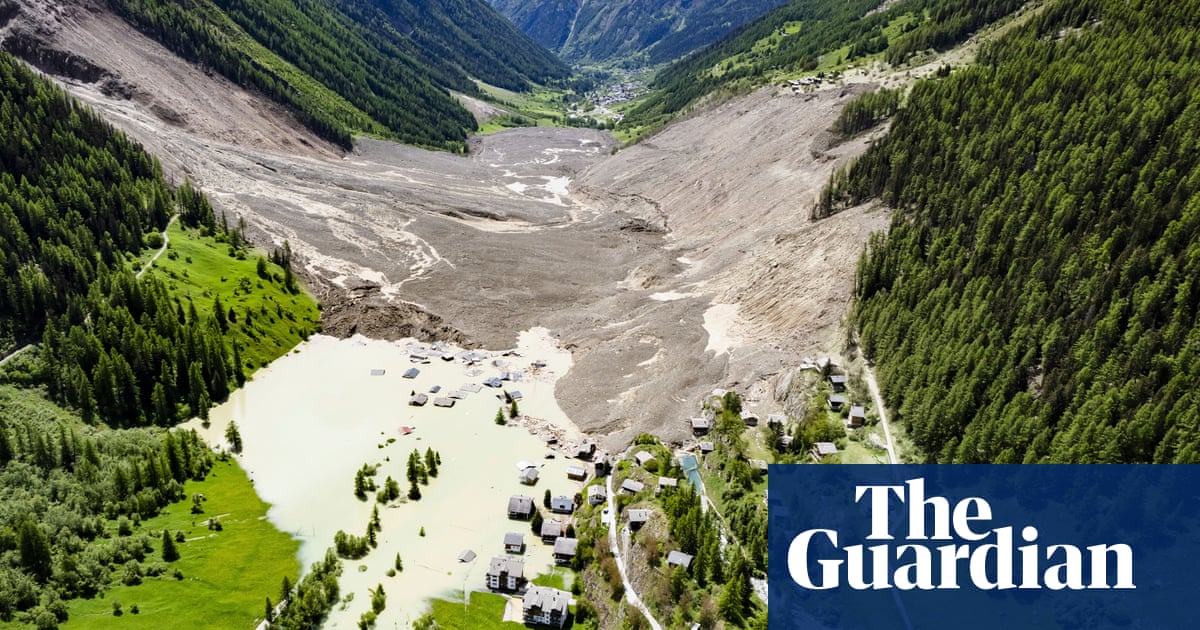
The catastrophic obliteration of Blatten, a Swiss village engulfed by nine million tonnes of rock and ice after a glacier’s sudden collapse, serves as a stark, visceral reminder of escalating operational risks in a rapidly changing global climate. While this specific event occurred far from conventional oil and gas fields, its underlying cause – the destabilization of once-permanent geological structures due to an unusually warm spring and melting permafrost – carries profound implications for energy investors. This incident is not an isolated anomaly; it is a bellwether for the unprecedented challenges facing infrastructure and supply chains across all sectors, including the energy industry, as climate-induced disruptions intensify. For investors navigating the complexities of oil and gas markets, understanding and quantifying these ‘ground zero’ events is becoming as crucial as tracking traditional supply-demand fundamentals.
The New Calculus of Operational Risk: Beyond the Swiss Alps
What unfolded in Blatten, where an 800-year-old settlement was instantaneously erased, illustrates a critical shift in how we must assess operational risk. A chunk of the Kleines Nesthorn mountain, precariously held by a groaning glacier, gave way without warning, sending a two-kilometer-long mass of dirt, ice, and rock into the valley. This extreme event, described by the local mayor as Blatten’s “ground zero,” highlights the vulnerability of established infrastructure to rapidly evolving environmental conditions. For energy investors, this incident underscores a growing global trend: terrain once deemed stable is now unpredictable, whether it’s melting permafrost impacting Arctic drilling operations and pipelines, rising sea levels threatening coastal refineries and LNG terminals, or intensified storm patterns disrupting offshore platforms and shipping lanes. The traditional risk models, often reliant on historical data, are increasingly inadequate in forecasting these high-impact, low-probability events. Investors must now factor in the potential for entire operational hubs or critical supply routes to be rendered inoperable, demanding a more robust and forward-looking approach to asset valuation and portfolio resilience.
Market Dynamics Amidst Mounting Global Uncertainty
Against this backdrop of escalating environmental risk, the immediate energy markets continue their volatile dance. As of today, Brent crude trades at $96.13, marking a 1.41% gain from its daily opening, with a range between $91 and $96.36. WTI crude also saw an uptick, reaching $92.36, up 1.18%. This daily upward momentum contrasts with the broader trend we’ve observed over the past two weeks, where Brent retreated from $102.22 on March 25th to $93.22 just yesterday, representing an 8.8% decline. This volatility reflects a tug-of-war between supply concerns, geopolitical tensions, and persistent questions about global demand. Our proprietary reader intent data reveals a strong focus on price forecasting, with many investors asking for a base-case Brent price forecast for the next quarter and the consensus 2026 outlook. While current prices hover near the upper end of recent ranges, the underlying market sentiment remains cautious. The Blatten incident, while not directly impacting oil supply, subtly reinforces a broader narrative of systemic risk that can, over time, translate into higher risk premiums for energy assets, especially those in geographically vulnerable regions. This necessitates a re-evaluation of long-term investment strategies that traditionally prioritize geopolitical stability and economic growth over environmental resilience.
Navigating Near-Term Catalysts: OPEC+, Inventories, and Rig Counts
The next two weeks are packed with critical energy calendar events that will significantly shape short-term market direction, offering crucial data points for investors grappling with both immediate returns and long-term risks. The upcoming OPEC+ Joint Ministerial Monitoring Committee (JMMC) meeting on April 18th, followed by the Full Ministerial meeting on April 20th, will be paramount. Investors are keenly watching for any signals regarding production quotas. Will the cartel maintain its current output cuts, or will there be adjustments in response to perceived demand strength or weakness? A decision to ease cuts could put downward pressure on prices, while an extension or deepening of cuts could provide support. Concurrent with these decisions, the weekly API and EIA crude inventory reports on April 21st/22nd and April 28th/29th will provide real-time insights into U.S. supply-demand dynamics. With gasoline prices currently at $2.99, up 0.67% today, indicating sustained consumer demand, significant inventory draws could fuel bullish sentiment, while unexpected builds might signal underlying economic softness. Furthermore, the Baker Hughes Rig Count, scheduled for April 17th and April 24th, offers a leading indicator for future U.S. production, influencing investor appetite for upstream E&P companies. These events, while dictating near-term trading strategies, also contribute to the long-term energy security narrative, which now implicitly includes the resilience to unpredictable climate events.
Investor Focus: Resilience, Forecasts, and the Future of Energy Infrastructure
Our proprietary reader intent data shows that beyond immediate price movements, investors are increasingly concerned with the resilience of energy infrastructure and its implications for long-term forecasts. Questions like “What is the consensus 2026 Brent forecast?” and requests for “a base-case Brent price forecast for next quarter” are intertwined with a growing awareness of non-traditional risks. The destruction of Blatten, a community that stood for centuries, highlights the fragility of even robustly built structures against forces of nature amplified by climate change. For the oil and gas sector, this translates into a heightened need for due diligence on assets located in regions susceptible to permafrost melt, increased seismic activity, extreme weather, or coastal erosion. Investors are now evaluating capital expenditure not just on efficiency and returns, but also on climate-proofing and adaptability. This shift will likely drive investment towards companies demonstrating advanced risk mitigation strategies, innovative engineering solutions for vulnerable assets, and diversification into less exposed geographies or energy sources. The long-term forecast for oil and gas, therefore, must increasingly incorporate the cost and impact of mitigating these emerging ‘ground zero’ risks, influencing everything from project financing to insurance premiums and, ultimately, investor confidence in the sector’s sustainable profitability.


