Chandauli, Uttar Pradesh – As global energy markets continue to grapple with supply volatility and escalating costs, a compelling blueprint for decentralized energy independence is emerging from Ekauni village in eastern Uttar Pradesh. This village has successfully pivoted to a self-sufficient biogas model, now powering over 125 households with clean cooking fuel at approximately half the expense of traditional liquefied petroleum gas (LPG), offering a tangible case study for investors eyeing the burgeoning renewable energy sector.
Decentralized Energy: A New Investment Frontier
The Ekauni initiative stands out for its robust financial viability and significant environmental dividends. Amidst nationwide concerns regarding cooking gas accessibility and price stability, this project underscores the immense potential of localized, sustainable energy solutions. A Pune-based clean energy enterprise spearheaded the development of the biogas facility, which currently serves approximately 125 families within a village population estimated between 500 and 600 individuals. This model presents a scalable, de-risked opportunity for capital deployment in India’s vast rural energy landscape.
The Ekauni Economic Model: A Deep Dive
The genesis of this impactful project traces back to local farmer Nagendra Pratap Singh, who, since 1995, has managed a cowshed housing around 200 cattle. The considerable challenge of managing substantial cow dung waste prompted his son, Chandraprakash Singh, an architecture graduate, to seek innovative solutions. Collaborating with the Pune-based clean energy firm, the cowshed underwent a technological upgrade in 2016, integrating a sophisticated biogas plant. This initial installation, costing approximately ₹85 lakh, was entirely financed by the company, laying the groundwork for a sustainable energy supply.
The plant has been fully operational since its 2016 commissioning, delivering biogas to participating households twice daily, with each supply window lasting 2.5 hours in the morning and evening. From an investor’s perspective, the revenue stream is particularly attractive: user households are charged a monthly fee capped at ₹400. This pricing structure positions biogas as a highly competitive alternative, significantly undercutting the cost of LPG connections, which nearly every household in Ekauni also possesses but reserves for backup. The consistent demand and substantial cost savings for consumers highlight the financial attractiveness and market penetration potential of such projects.
Operational Efficiency and Sustainable Growth
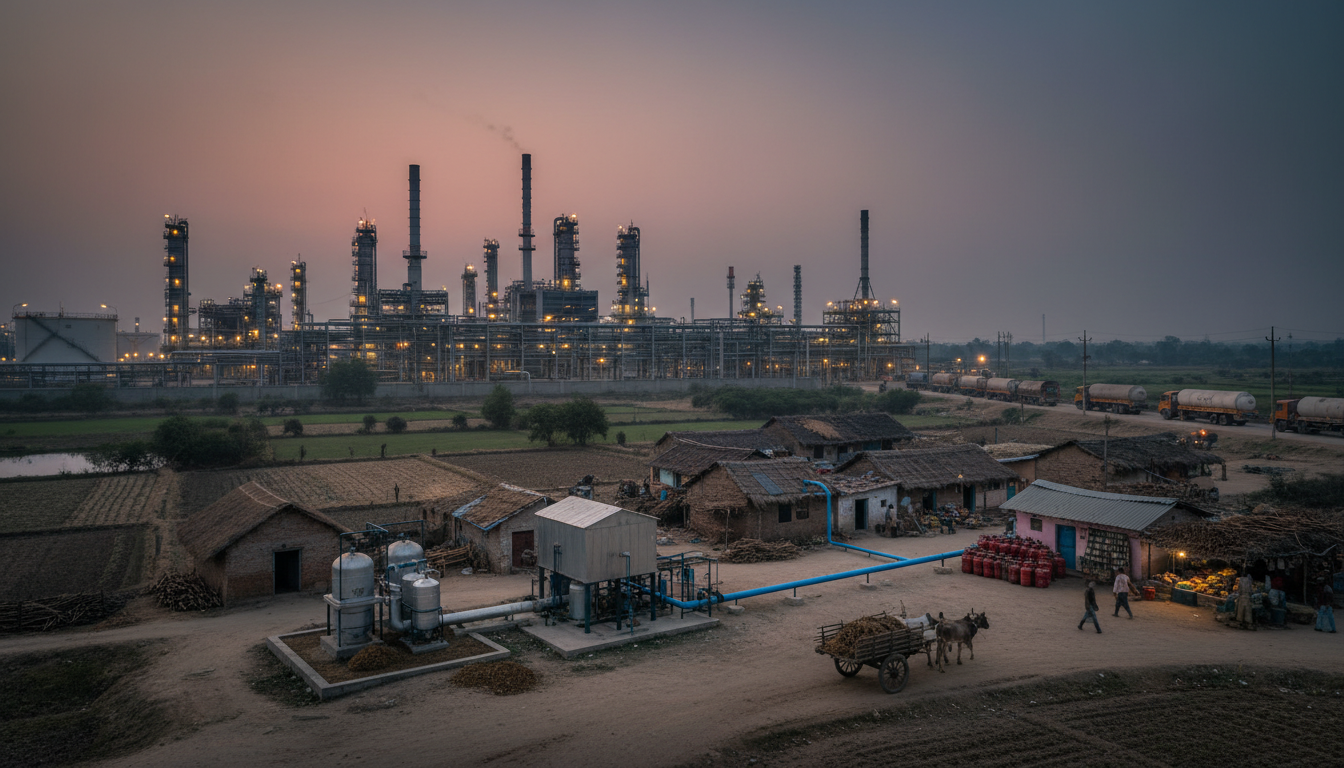
The operational framework of the Ekauni biogas plant exemplifies a circular economy in action. Harshad Kulkarni, co-founder of Sustain Plus Foundation, an entity linked with the Pune-based company, elaborated on the collaborative model. While the plant’s initial operations began in 2016, the formal partnership and investment support from the foundation, coupled with land provision by Chandraprakash’s father, solidified around 2022, ensuring the project’s long-term sustainability and potential for expansion. The company systematically collects approximately 3,000 kg of cow dung daily from the cowshed. This organic waste is then mixed with water in a dedicated tank, initiating the process of methane gas generation. The captured methane is stored and efficiently distributed to homes through an integrated pipeline network that currently extends up to a 4 km radius.
Beyond its primary energy provision, the project has also generated direct employment for two villagers, contributing to local economic empowerment. Connections are metered, ensuring transparent billing based on actual consumption, a practice familiar to urban utility users. Crucially for adoption, essential infrastructure such as pipelines and cooking stoves has been provided to users at no initial cost, significantly lowering the barrier to entry and accelerating market penetration. This comprehensive approach, from resource acquisition to end-user delivery, creates a robust and replicable financial model.
Investor Appeal: ESG, Scalability, and Market Disruption
For discerning investors, the Ekauni model offers multifaceted appeal. Strategically, it addresses energy security concerns by reducing reliance on volatile, centrally supplied fossil fuels, promoting local energy independence. Environmentally, the capture and utilization of methane, a potent greenhouse gas that would otherwise be released into the atmosphere from decomposing cow dung, represents a significant positive impact, aligning with stringent ESG (Environmental, Social, and Governance) mandates increasingly valued by institutional capital.
The social benefits are equally compelling, encompassing cleaner cooking fuel, improved household air quality, reduced health risks associated with traditional biomass, and direct local employment. The project’s scalability is already evident, with approximately 25 additional households from neighboring villages expressing keen interest in obtaining biogas connections. This organic demand underscores the vast addressable market for similar decentralized solutions across India’s rural hinterlands.
Looking ahead, the plant’s eventual handover to the village owner in 2032 signifies a long-term commitment to community empowerment and sustainable asset transfer, a feature that can enhance investor confidence in the project’s enduring legacy. The confluence of reduced dependence on conventional cooking gas, contributions to a cleaner environment, and the promotion of sustainable energy usage positions biogas as a compelling investment category. This micro-level success story in Chandauli serves as a powerful testament to the financial viability and strategic importance of decentralized clean energy infrastructure, signaling a significant investment opportunity within the broader oil and gas transition landscape.