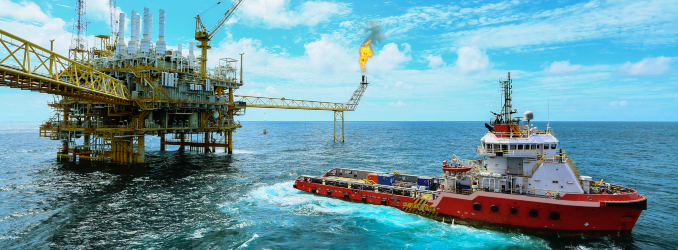
Sèmè Field Redevelopment: A Glimmer of New Production in West Africa
The anticipated late January 2026 startup of oil production at the Sèmè field offshore Benin marks a significant milestone for Akrake Petroleum Benin S.A., an indirect subsidiary of Rex International Holding. This redevelopment project, located in the shallow waters of the Gulf of Guinea near the Nigerian maritime border, signals Benin’s concerted efforts to revitalize its offshore oil sector. As the AK-2H horizontal production well approaches completion in its reservoir section, investors are closely watching how this new crude supply will integrate into a dynamic global energy landscape, particularly given its strategic location in a region ripe with both potential and historical challenges.
Operational Resilience and Phased Development at Sèmè
The Sèmè field holds a unique place in West African oil history, having previously produced in the late 1970s and early 1980s. Its re-entry under Block 1 is a testament to technological advancements and renewed economic incentives. Akrake Petroleum’s current drilling campaign, which included an exploration well targeting deeper reservoirs and two horizontal production wells in the H6 reservoir, has not been without hurdles. The drilling team encountered challenging geomechanical conditions within unstable shale layers above the reservoir, leading to delays due from stuck pipe incidents. However, updated geomechanical data allowed for optimized parameters, successfully overcoming these obstacles and completing the critical overburden section in the AK-2H well.
This operational resilience is a key indicator for investors evaluating the project’s long-term viability. The production facilities, including the mobile offshore production unit (MOPU) Stella Energy 1 and the floating storage and offloading (FSO) vessel Kristina, have undergone extensive upgrades and are now positioned for startup. Following the placement of AK-2H on production, drilling operations on remaining wells will be temporarily suspended as the current jack-up rig contract concludes. Akrake Petroleum has a strategic plan to secure a new drilling rig later in 2026, enabling the completion of additional wells and the evaluation of further production opportunities based on initial output data. This phased approach balances immediate production with prudent capital allocation and ongoing reservoir assessment.
Sèmè Production Enters a Volatile Crude Market
The Sèmè field’s initial production will contribute to global supply at a fascinating juncture for crude markets. As of today, Brent crude trades at $90.67 per barrel, reflecting a modest daily gain of 0.27%, though recent intraday movements saw it fluctuate between $93.87 and $95.69. WTI crude stands at $87.15, experiencing a slight dip of 0.31% today, having traded in a range of $85.5 to $87.73. This current price environment, while robust, follows a notable period of volatility. Our proprietary market data reveals that Brent crude experienced a significant correction over the past two weeks, shedding nearly 20% of its value from $118.35 on March 31st to $94.86 by April 20th. This downturn underscores the market’s sensitivity to evolving supply-demand narratives, geopolitical developments, and shifts in economic sentiment.
Against this backdrop, even smaller-scale new production like Sèmè’s is keenly watched. For a country like Benin, even modest volumes can represent a substantial boost to its economy and energy independence. For global markets, every barrel counts, particularly when investors are actively grappling with questions around market direction. Our reader intent signals show a clear focus on the trajectory of WTI and broader predictions for oil prices by the end of 2026. While Sèmè alone won’t move global benchmarks, its successful startup adds to the mosaic of new supply sources that collectively influence market balance and investor confidence in regional E&P.
Investment Implications for Rex International Holding
For investors tracking Rex International Holding, the Sèmè field’s startup is a material event. Akrake Petroleum, as an indirect subsidiary, represents a direct exposure to this new cash flow stream. The successful redevelopment of a historically producing field mitigates some exploration risk, focusing instead on development and operational execution. The decision to suspend further drilling until a new rig is secured in late 2026 suggests a disciplined capital expenditure strategy, likely aimed at optimizing initial production and cash flow before committing to the next phase of development. This phased approach allows Rex International to gain early revenue and crucial reservoir performance data from AK-2H, which will inform future investment decisions and potentially de-risk subsequent drilling campaigns.
Our proprietary analytics indicate that investors are frequently asking about the performance outlook for oil and gas companies, including how operators like Repsol might conclude the current quarter, and the broader prospects for crude prices by the end of 2026. The Sèmè project offers a microcosm for evaluating the broader West African E&P landscape, a region that continues to attract interest for its proven reserves and developing infrastructure. The successful navigation of drilling challenges at Sèmè speaks to the operational capabilities of Akrake Petroleum and, by extension, Rex International, which could bolster investor confidence in their ability to execute complex offshore projects. This project could serve as a valuable precedent for future redevelopment or frontier exploration efforts in the region.
Navigating Future Headwinds and Tailwinds: Key Events on the Horizon
The Sèmè field’s initial production and subsequent expansion plans will unfold against a backdrop of critical energy market events that investors should monitor closely. In the immediate future, the OPEC+ Joint Ministerial Monitoring Committee (JMMC) Meeting scheduled for April 21st will be pivotal. Any commentary or decisions regarding production quotas or market stability from this influential body could significantly impact crude benchmarks, directly affecting the profitability of new production like Sèmè’s.
Further insights into the demand and supply picture will come from the EIA Weekly Petroleum Status Reports on April 22nd and April 29th, alongside the API Weekly Crude Inventory data on April 28th and May 5th. These reports provide crucial, real-time indicators of U.S. inventory levels, a major driver of WTI prices and overall market sentiment. Furthermore, the Baker Hughes Rig Count, released on April 24th and May 1st, will offer a granular view of drilling activity, which is particularly relevant as Akrake Petroleum plans to secure a new rig in late 2026; rig availability and day rates are critical cost components for such projects. Finally, the EIA Short-Term Energy Outlook on May 2nd will offer official projections that could recalibrate market expectations for end-of-year 2026 oil prices, directly addressing a common query from our readership. The successful integration of Sèmè’s output into the market will depend not only on operational excellence but also on how these broader macro-economic and geopolitical factors play out.


