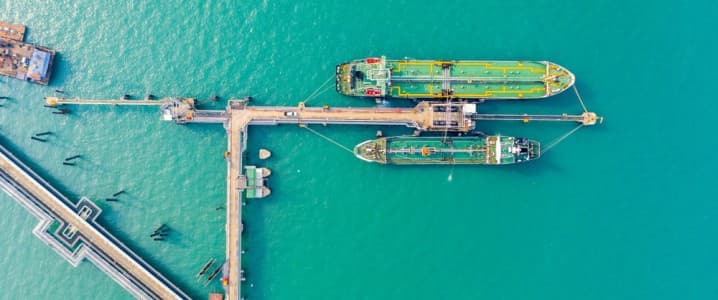
The Vancouver Fraser Port Authority is strategically advancing plans to significantly enhance its oil export capabilities, a move poised to further solidify Canada’s position in global energy markets. The authority is embarking on a critical dredging project within an key inlet, specifically designed to accommodate fully laden Aframax crude oil tankers. This infrastructure upgrade is a direct response to increasing demand for Canadian heavy oil, driven by the recently expanded Trans Mountain pipeline system.
Currently, operational constraints limit Aframax vessels calling at the Vancouver port to approximately 80% capacity due to existing depth restrictions. The planned dredging initiative aims to eliminate these limitations, enabling these standard crude carriers to depart at 100% capacity. For energy investors, this translates directly into higher export volumes per shipment, improved logistical efficiency, and ultimately, greater profitability for producers leveraging this crucial export gateway.
Unlocking Full Export Potential for Canadian Crude
The decision to deepen the port’s channels represents a tangible commitment to optimizing Canada’s west coast export infrastructure. By allowing Aframax tankers to load to their maximum design capacity, the Vancouver Fraser Port Authority is not merely facilitating larger shipments but is actively enhancing the competitiveness of Canadian crude on the international stage. This upgrade directly addresses a long-standing bottleneck, promising to streamline the journey of Western Canadian oil to lucrative markets across Asia and beyond.
This strategic enhancement promises to unlock the full potential of each tanker shipment, significantly boosting the throughput capacity from Canada’s Pacific coast. While the current operational capacity for Aframax vessels stands at an estimated 80% due to depth considerations, the planned dredging will remove this impediment, allowing these critical carriers to load to their complete capacity. This translates into more barrels per vessel, accelerating the pace and volume of oil leaving Canadian shores, a clear win for oil and gas investors focused on export efficiency.
The Trans Mountain Expansion: A Game Changer
The port’s proactive steps are intrinsically linked to the transformative impact of the Trans Mountain pipeline expansion (TMX). The completion of the TMX project has been a monumental achievement for Canadian energy, tripling the pipeline’s original capacity and dramatically increasing the flow of crude oil from Alberta’s landlocked production basins to the Pacific coast. This surge in supply has already manifested in record-breaking performance at the Vancouver port, with petroleum cargo flows experiencing a substantial uptick in the past year.
Canadian media reports earlier this year highlighted that the port recorded an unprecedented volume of goods handled in 2024, a direct consequence of the burgeoning oil export sector. Oil exports alone witnessed an astounding 527% increase, a figure that underscores the immediate and profound impact of the TMX expansion. The port authority’s chief executive emphasized the expansion’s significance, noting it as a “significant milestone for Canada and the port, adding export capacity and opening up new opportunities for Canadian producers.”
The TMX project elevated the pipeline’s throughput capacity from an initial 300,000 barrels per day (bpd) to an impressive 890,000 bpd. This dramatic increase has not only alleviated pipeline constraints but has also opened up crucial access to global markets for Canadian crude, particularly Western Canadian Select (WCS), which historically traded at a discount due to limited export options. The robust performance metrics from the port demonstrate the tangible benefits already being realized by this strategic infrastructure investment.
Navigating Environmental Scrutiny and Operational Risks
While the economic benefits of increased export capacity are clear, the dredging plans and the prospect of fuller tankers have drawn scrutiny from local environmental organizations. Concerns primarily revolve around the potential for oil spills and their subsequent ecological impact. One ocean researcher from the University of British Columbia, Jose Alava, who is the principal investigator for the Ocean Pollution Research Unit, voiced apprehensions that even with additional dredging, fully loaded tankers could still pose a risk of striking the seabed.
Environmental advocates argue that any increase in oil tanker capacity, particularly through dredging, inherently elevates the risk profile for a catastrophic environmental event. The potential for an oil spill, they contend, could have drastic and long-lasting consequences for the sensitive marine ecosystems of the British Columbia coast. For investors, understanding these environmental considerations is crucial, as they can influence regulatory landscapes, project timelines, and public perception, all of which bear on long-term project viability and social license to operate.
Despite these environmental concerns, the port authority and the energy sector remain committed to rigorous safety protocols and environmental stewardship, aiming to mitigate risks while maximizing economic opportunity. The balance between economic development and environmental protection remains a critical aspect of such large-scale infrastructure projects in Canada.
Future Throughput Enhancements for Trans Mountain
Beyond the immediate port enhancements, discussions are already underway regarding further optimizing the Trans Mountain pipeline’s throughput. While no plans exist for constructing an entirely new third pipeline, the industry is exploring innovative operational strategies to boost TMX’s capacity by an additional 300,000 bpd. This prospective increase would be achieved through technological advancements and operational efficiencies rather than new linear infrastructure.
Key strategies under consideration include the deployment of drag-reducing agents (DRAs) and the installation of additional pumping stations along the pipeline route. DRAs are specialized chemical additives that reduce friction within the pipeline, allowing crude oil to flow more easily and at higher volumes without increasing pumping pressure. Coupled with more powerful and strategically placed pumps, these measures could unlock substantial latent capacity within the existing pipeline infrastructure, offering a cost-effective method to further expand export capabilities.
For investors, these future enhancement plans signal a long-term commitment to maximizing the utility and efficiency of critical energy infrastructure. Such incremental capacity additions, achieved through smart technology and operational optimization, represent a lower-risk, higher-return approach compared to entirely new pipeline construction. This forward-looking strategy ensures that Canadian crude can continue to meet growing global energy demand efficiently and reliably.
Investment Outlook: Canada’s Growing Role in Global Energy
The collective efforts to expand and optimize Canada’s west coast oil export capabilities, from port dredging to pipeline enhancements, underscore a strategic pivot towards greater global market integration. These developments are fundamentally reshaping the narrative for Canadian energy producers, offering diversified market access and improved netbacks for Western Canadian Select.
As global energy markets continue to evolve, Canada’s role as a stable and reliable supplier of responsibly produced crude oil becomes increasingly vital. The Vancouver Fraser Port Authority’s dredging project, coupled with the TMX expansion and future operational optimizations, positions Canada to significantly increase its export footprint. For investors tracking the global oil and gas sector, these advancements represent a compelling opportunity to participate in a market that is actively removing bottlenecks and enhancing its value proposition.
The ongoing commitment to infrastructure development and operational efficiency on Canada’s Pacific coast is a clear indicator of the nation’s intent to be a significant and growing player in the international energy landscape for decades to come. Monitoring these developments will be crucial for any investor looking to capitalize on the strategic shifts in global oil trade flows.