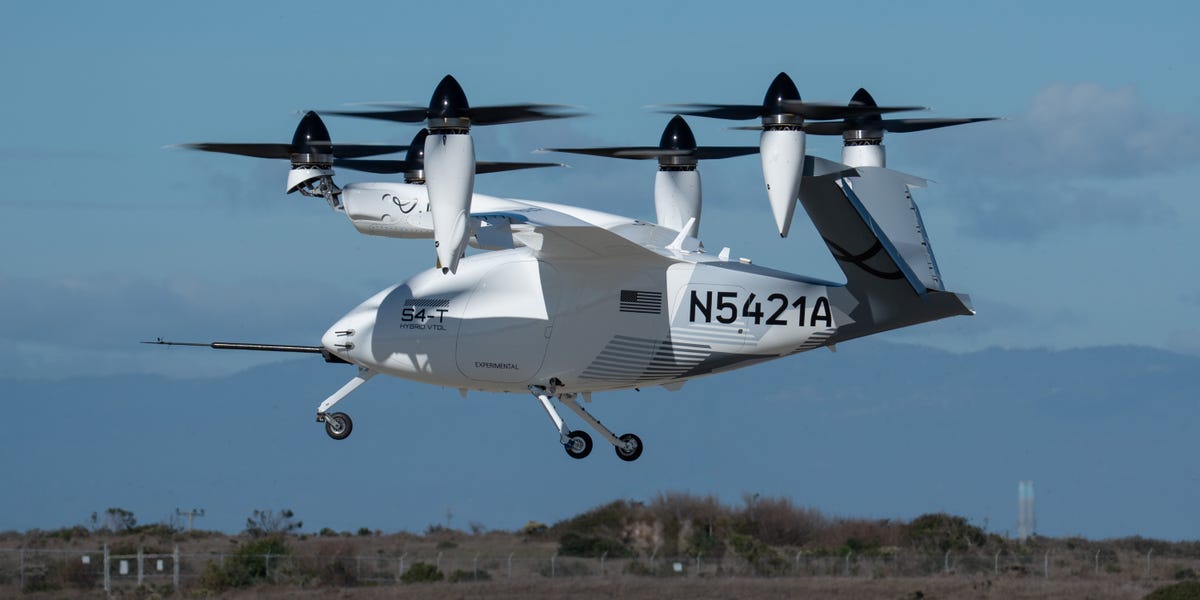
The vision of flying taxis, once confined to science fiction, is rapidly approaching reality. While many associate these Vertical Takeoff and Landing (VTOL) aircraft with commercial short-hop routes, a significant and often overlooked development is their growing application in military contexts. The Pentagon, frustrated with the pace and cost of traditional defense contractors, is now actively channeling billions into tech companies developing hybrid, autonomous air taxis for battlefield use. This dual-use trajectory – civilian electric models versus military hybrid designs – creates a complex analytical challenge for energy investors. The fundamental question for the oil and gas sector isn’t merely if these vehicles will fly, but what their widespread adoption, particularly in defense, means for long-term oil demand and the strategic positioning of energy portfolios.
The Emerging Battlefield VTOL Ecosystem
The technological leap in VTOLs is driven by companies like Archer Aviation, Joby Aviation, and Beta Technologies, which are designing aircraft capable of vertical takeoff and landing like a helicopter, yet flying with the efficiency of an airplane. While commercial aspirations often lean towards fully electric models for urban mobility, military requirements introduce a critical distinction: the need for extended range and greater payload capacity. Executives from Joby and Beta highlight that swapping electric batteries for hybrid engines is essential for these defense applications, enabling aircraft to “go further and faster than a helicopter.” This capability is not just about speed; it’s about providing cheaper, quieter logistics, intelligence, surveillance, and reconnaissance (ISR) options, potentially incorporating autonomous threat detection and avoidance. The Pentagon’s pivot towards these agile tech innovators, seeking solutions that traditional contractors can’t deliver quickly or affordably enough, underscores a significant shift in defense procurement and opens a new avenue for hybrid fuel consumption within military operations, a sector historically reliant on traditional jet fuels.
Hybrid Power and the Nuance of Oil Demand
The distinction between purely electric commercial air taxis and hybrid military VTOLs is paramount for oil and gas investors. A fully electric fleet would represent a clear, albeit gradual, erosion of jet fuel demand. However, the military’s current preference for hybrid systems means these battlefield air taxis will continue to consume traditional fuels. While they may offer greater fuel efficiency for specific missions compared to some conventional helicopters, they are not zero-emission. This creates a nuanced demand scenario: rather than an outright displacement, we might see a shift in the *type* and *volume* of fuel demanded by certain defense segments. Investors must therefore scrutinize the specific propulsion systems being adopted and understand that the “energy transition” in this niche may involve a bridge of hybrid technologies that sustain, rather than eliminate, fossil fuel consumption for decades to come. Monitoring the balance between payload, range, and fuel type in future military contracts will be key to understanding the incremental demand impacts, which could differentiate winners and losers among refining companies and fuel suppliers.
Current Market Volatility and Investor Foresight
In the near term, the nascent impact of VTOLs on global oil demand pales in comparison to the immediate forces shaping crude markets. As of today, Brent crude trades at $91.87 per barrel, marking a significant 7.57% decline from its opening. WTI crude similarly fell by 7.86% to $84 per barrel, reflecting broader market pressures that also saw gasoline prices drop by 4.85% to $2.95. This daily volatility follows a more extended trend, with Brent having shed $14, or 12.4%, from $112.57 on March 27 to $98.57 just yesterday. Such sharp movements naturally lead our readers to ask critical questions, with “what do you predict the price of oil per barrel will be by end of 2026?” being a recurring theme. While today’s price action is driven by macro factors and immediate supply/demand balances, the emergence of hybrid VTOLs introduces a long-tail demand consideration. Investors need to differentiate between the cyclical factors dictating current prices and structural shifts like this, which, while not immediate game-changers, could incrementally reshape the demand curve for specific petroleum products over the next decade. The competitive race with Chinese VTOL developers like EHang also introduces geopolitical factors that could influence the pace of military adoption and thus, future fuel needs.
Navigating Upcoming Catalysts and Long-Term Implications
Looking ahead, the energy market’s immediate focus remains on pivotal supply-side decisions and inventory data. The upcoming OPEC+ Joint Ministerial Monitoring Committee (JMMC) meeting today, April 17, followed by the Full Ministerial Meeting tomorrow, April 18, will be closely watched for any adjustments to production quotas, a key concern for investors asking about OPEC+’s current strategy. These decisions will likely have a far more immediate impact on oil prices than the still-evolving VTOL market. Additionally, the regular cadence of data releases, including the API Weekly Crude Inventory on April 21 and 28, the EIA Weekly Petroleum Status Report on April 22 and 29, and the Baker Hughes Rig Count on April 24 and May 1, will provide crucial insights into the health of the physical market. While these events dictate near-term price action, investors must simultaneously integrate the longer-term implications of technologies like hybrid VTOLs. Although their current fuel consumption is negligible globally, their potential for widespread military adoption, especially in future conflict scenarios, suggests a gradual but persistent demand stream for specialized fuels. This dual perspective – reacting to immediate market signals while strategically positioning for future technological shifts – is essential for robust energy portfolio management in an increasingly complex and evolving landscape.


