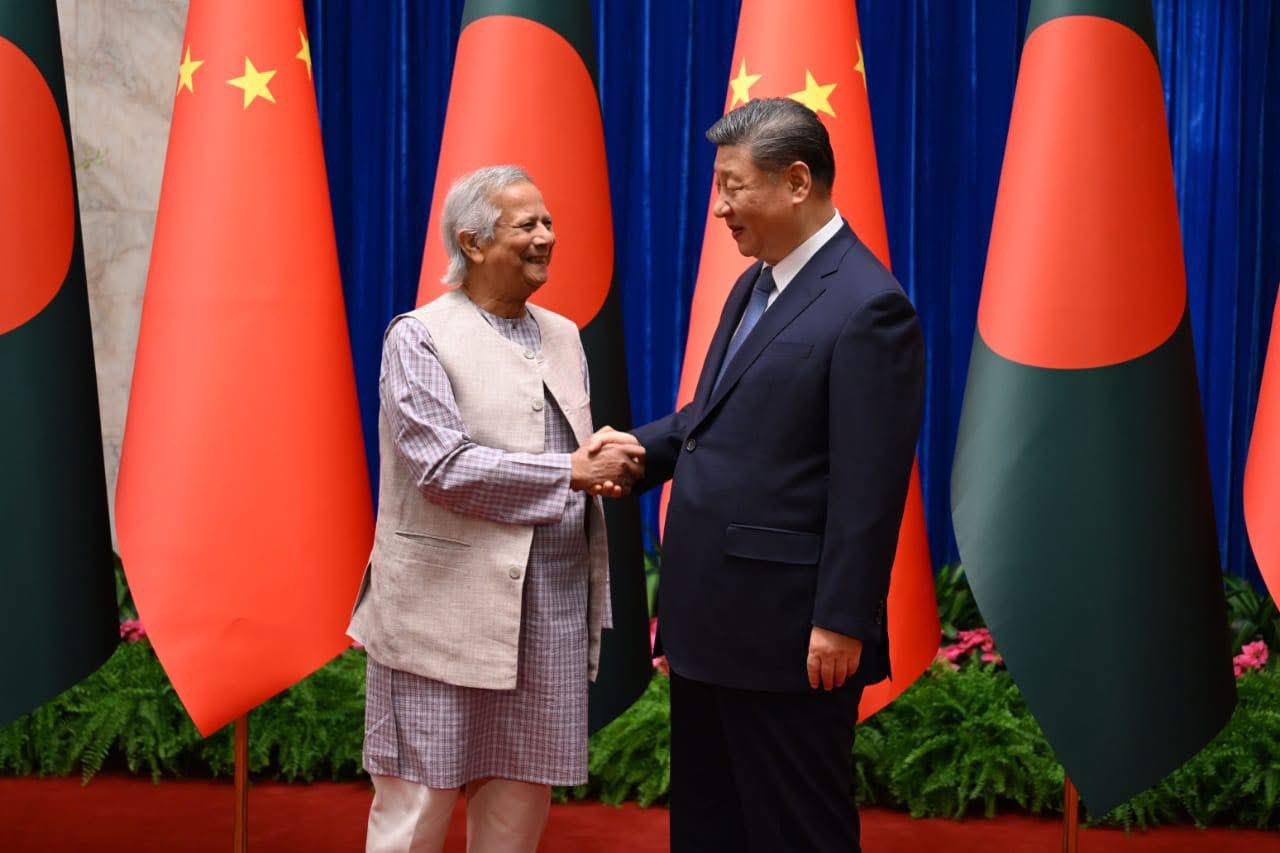
The strategic dynamics across South Asia are undergoing a profound transformation, demanding immediate and rigorous assessment from global energy investors. A pivotal shift materialized in March 2025 with Bangladesh’s interim leader, Muhammad Yunus, visiting Beijing. His subsequent remarks concerning India’s northeastern states being “landlocked” and inherently reliant on Bangladesh for maritime access reverberated across the region, unsettling the delicate geopolitical equilibrium. Market observers widely interpreted these comments as Dhaka’s assertive declaration of a new strategic posture, leveraging its deepening ties with China. This maneuver unfolded even as former premier Sheikh Hasina remained in quiet exile in New Delhi, having been deposed from power in August 2024. This unfolding drama signals a significant realignment, compelling smaller nations throughout South Asia to re-evaluate traditional allegiances and dependencies, directly impacting the risk profile for oil and gas ventures spanning the Bay of Bengal and its adjacent territories.
Dhaka’s Strategic Reorientation and Indo-Bangla Strain
Relations between India and Bangladesh deteriorated almost immediately following Muhammad Yunus’s ascension to leadership. A key point of friction emerged in late 2024 when India dramatically curtailed medical visas for Bangladeshi citizens, reducing daily approvals from nearly 7,000 to fewer than 1,000. While officially attributed to staffing limitations at the Indian High Commission in Dhaka, the underlying message resonated clearly: India’s perceived backing of the ousted Hasina administration had created a significant rift that Yunus’s government was unwilling to overlook. This diplomatic friction introduces considerable uncertainty into a historically crucial regional relationship, potentially disrupting cross-border energy infrastructure projects and existing trade agreements essential for regional stability and energy flows.
Simultaneously, Yunus actively courted Beijing, securing high-profile agreements that immediately raised strategic alarms in New Delhi. Noteworthy among these was China’s commitment to revitalize the Lalmonirhat airfield, a site strategically located in unsettling proximity to India’s sensitive Siliguri Corridor. Further escalating tensions, Yunus even suggested the potential involvement of Pakistan as a subcontractor in these critical infrastructure projects. India’s sharp response followed on April 8, 2025, when it rescinded a vital transit facility that previously permitted Bangladesh to move its exports through Indian territory to landlocked neighbors like Bhutan and Nepal, as well as Myanmar. These tit-for-tat actions underscore a rapidly intensifying geopolitical competition that could introduce considerable volatility for energy supply chains and significantly erode investor confidence in regional stability and project execution.
China’s Deepening Foothold and Energy Ambitions in Bangladesh
Under mounting pressure from India, Bangladesh’s Yunus administration is aggressively diversifying its international partnerships, pivoting eastward. His March 2025 visit to Beijing, strategically timed to coincide with the 50th anniversary of Sino-Bangladesh diplomatic ties, secured substantial pledges. China committed to providing approximately $18 billion in investments, funneling capital into critical infrastructure projects designed to bolster Bangladesh’s economic growth and strategic positioning. Key initiatives include the development of the Matarbari deep seaport, a significant expansion of the Payra power plant, the construction of the Chittagong-Cox’s Bazar rail link, and the ambitious Jamuna River tunnel project. These investments reflect China’s deepening economic and strategic influence, expanding its access to the Bay of Bengal and strengthening its regional presence.
Perhaps most impactful for the energy sector, Beijing is actively championing a proposed Myanmar-Bangladesh gas pipeline. This ambitious project aims to transport natural gas from Myanmar’s prolific offshore fields directly through Bangladesh, potentially supplying its burgeoning energy demands and establishing a new energy corridor. This proposal directly contrasts with the long-dormant India-Myanmar-Bangladesh (IMB) gas pipeline project, which has remained stalled since 2005 due to various geopolitical and logistical challenges. China’s proactive push for this new pipeline signals a strategic move to establish its dominance in regional energy infrastructure, potentially bypassing India’s traditional influence and reshaping future energy supply dynamics in South Asia.
India’s Energy Security Imperative and Regional Counter-Strategies
India, as a rapidly expanding economy, faces significant energy security challenges. The nation currently imports approximately 85% of its crude oil requirements and nearly 50% of its natural gas needs, making diversified and secure supply routes an absolute strategic imperative. To mitigate supply shocks and ensure energy resilience, India has invested heavily in developing strategic oil reserves. This high dependency on energy imports means any geopolitical instability in neighboring regions directly threatens India’s economic growth and national security. The unfolding events in Bangladesh, particularly its alignment with China and the proposed Myanmar-Bangladesh pipeline, represent a direct challenge to India’s long-term energy security aspirations and its efforts to establish regional energy connectivity.
India maintains significant energy interests in Myanmar, a crucial neighbor. ONGC Videsh, the overseas arm of India’s national oil and gas corporation, holds substantial stakes in various upstream projects within Myanmar. These investments are vital for India’s energy diversification strategy and its broader vision of regional energy corridors that could bypass potential chokepoints. The prospect of a Chinese-backed pipeline diverting Myanmar’s gas to Bangladesh, rather than through India, complicates India’s energy planning and potentially limits its access to vital resources. This geopolitical maneuvering underscores the fierce competition for energy resources and transit routes in a region critical for global energy security.
The Bay of Bengal: A Contested Energy Frontier
The Bay of Bengal represents a largely untapped frontier with significant potential hydrocarbon reserves. Its strategic location at the crossroads of South and Southeast Asia makes it a crucial maritime pathway for global trade and energy shipments. China’s extensive infrastructure investments in Bangladesh, including the Matarbari deep seaport, align with its broader “string of pearls” strategy. This strategy aims to establish a network of ports and maritime facilities across the Indian Ocean, enhancing China’s commercial and strategic influence while securing its vital sea lanes of communication, particularly for energy imports from the Middle East and Africa. Bangladesh’s decision to embrace Chinese investment thus carries profound implications for who controls and benefits from the development of the Bay of Bengal’s energy resources.
For investors, the Bay of Bengal’s hydrocarbon potential must now be viewed through an increasingly complex geopolitical lens. The strategic decisions made by nations like Bangladesh directly impact exploration rights, production sharing agreements, and the viability of energy infrastructure projects. The escalating competition between India and China for influence in this region translates into heightened operational risks for energy companies. Access to critical resources, freedom of navigation, and the security of offshore assets become intertwined with the delicate balance of power, demanding meticulous risk assessment and a deep understanding of the evolving regional dynamics.
Investor Outlook: Navigating Heightened Risk in South Asia’s Energy Landscape
The dramatic geopolitical shifts unfolding in South Asia introduce a new layer of complexity and risk for oil and gas investors operating or considering ventures in the region. Heightened political instability within Bangladesh, evidenced by the recent leadership change and subsequent diplomatic realignments, creates significant uncertainty for long-term project viability. Investors must now contend with increased risks of project delays, potential cancellations, or renegotiations of existing contracts due to changing government priorities or external pressures.
Supply chain disruptions represent another critical concern. India’s revocation of transit facilities for Bangladesh underscores the potential for rapid, politically motivated actions to impede the movement of goods and resources, directly impacting the logistics and profitability of energy projects. Furthermore, the intensifying competition between regional and global powers for strategic assets and energy corridors could escalate financing challenges, leading to higher risk premiums and difficulty in securing international capital for major energy infrastructure developments. The specter of escalating regional tensions or even localized conflicts further complicates the operational environment, threatening asset security and personnel safety. Energy companies and financial institutions must conduct exceptionally thorough due diligence, implement robust scenario planning, and maintain continuous, real-time monitoring of diplomatic and strategic developments to navigate this volatile investment landscape successfully.
Conclusion: A New Era for South Asian Energy Investment
South Asia’s energy landscape now operates under a fundamentally altered geopolitical framework. The assertive pivot by Bangladesh towards China, fueled by internal political shifts and external pressures, has ignited a fierce strategic competition with India. This realignment introduces a new era of uncertainty and opportunity for the oil and gas sector. Investors must recognize that regional energy flows, infrastructure development, and resource access will now be profoundly shaped by this evolving Bangladesh-China axis, directly impacting the long-term viability and returns of energy projects from the Bay of Bengal to the wider subcontinent. Vigilance and adaptability will be paramount for those looking to capitalize on, or simply navigate, the complex energy markets of this dynamic region.