Autonomous EV Setback Bolsters Oil Outlook
The highly anticipated revolution in autonomous electric vehicles (EVs) continues to navigate a challenging road, with recent real-world performance tests revealing significant hurdles that could have profound implications for global oil demand and investor portfolios. While the narrative around robotaxis often suggests an imminent disruption, practical evaluations underscore the complex realities of achieving true self-driving capabilities, offering a more bullish outlook for traditional petroleum markets.
Industry giants are locked in an aggressive race to commercialize autonomous ride-hailing services. Tesla is reportedly gearing up for its robotaxi debut in Austin next month, while Alphabet’s Waymo steadily expands its presence across major U.S. urban centers. At the heart of these ventures are sophisticated AI-powered driving systems: Tesla’s Full Self-Driving (FSD) and the Waymo Driver. However, a recent, critical assessment of these technologies in the demanding environment of San Francisco has delivered results that challenge the prevailing optimism, particularly regarding one prominent player.
Real-World Test Exposes Critical Flaws
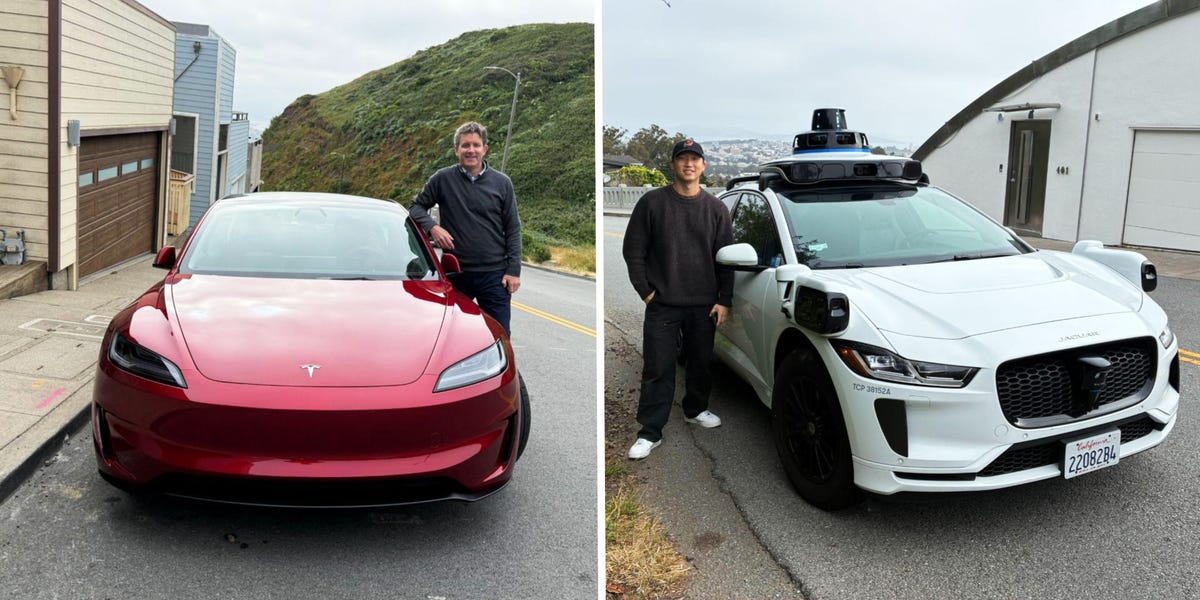
Experts conducted a direct comparison of these two leading autonomous systems, focusing purely on their driving performance rather than the full robotaxi service model. The test involved Waymo’s Jaguar I-PACE SUVs, equipped with the company’s fifth-generation Waymo Driver, and a 2024 Tesla Model 3 featuring Hardware 4 and FSD Supervised software version 13.2.8. The route, spanning approximately 4 to 7 miles, traversed San Francisco’s iconic Twin Peaks viewpoint to the Chase Center, designed to challenge the systems with varied urban terrain and traffic conditions.
The expectation was a close contest, with differences likely boiling down to minor nuances like hesitation frequency or unusual lane changes. Instead, the test concluded with a decisive outcome: Waymo secured a clear victory, primarily due to an “egregious error” committed by the Tesla system. This critical misstep by Tesla’s FSD Supervised highlights that despite years of development and incremental software updates, fundamental challenges in autonomous driving persist, far beyond mere refinement.
Divergent Technological Paths and Their Consequences
The performance disparity can be partly attributed to the distinct technological philosophies underpinning each system. Waymo’s approach heavily relies on a comprehensive sensor suite, integrating five lidar sensors, six radars, and 29 cameras. These components are visibly mounted, providing a robust, multi-modal perception system designed for redundancy and accuracy. This extensive sensor array allows the Waymo Driver to construct a detailed, real-time 3D map of its surroundings, enhancing its ability to detect and react to complex traffic situations.
In contrast, Tesla’s FSD, specifically the version tested, operates on a vision-only paradigm, utilizing eight external cameras positioned around the vehicle’s body. This reliance solely on visual data, while lauded by some for its potential scalability and cost-effectiveness, places immense pressure on its AI to interpret complex visual cues accurately. The software used in the test, FSD Supervised v13.2.8, received a minor update shortly after the evaluation, indicating continuous, albeit incremental, development. It is also crucial to note that this is not the “FSD Unsupervised” system Tesla intends to deploy in its upcoming robotaxi service, which promises operation without human oversight. The observed error in a ‘supervised’ environment raises significant questions about the readiness and safety of an entirely unsupervised version for commercial deployment.
Implications for Mass EV Adoption and Oil Demand
Such glaring performance discrepancies in real-world conditions significantly impact the timeline for widespread autonomous EV adoption. Each reported incident, particularly those involving “egregious errors,” erodes public trust and invites increased regulatory scrutiny. This decelerates the pace at which autonomous technology can transition from niche testing to mainstream transportation solutions.
For oil and gas investors, this protracted development cycle translates directly into sustained demand for petroleum products. The promise of autonomous EVs replacing significant portions of the existing internal combustion engine (ICE) fleet is pushed further into the future. Consumers will continue to rely on traditional vehicles for years to come, ensuring robust demand for gasoline and diesel. Fleet operators, facing safety concerns and regulatory uncertainties, will likely delay large-scale transitions to autonomous electric fleets, preserving existing fuel consumption patterns.
A More Realistic Horizon for Energy Markets
The narrative of an imminent, widespread autonomous EV takeover has often contributed to a bearish sentiment in long-term oil demand forecasts. However, the practical challenges highlighted by this recent test suggest a more realistic, elongated timeline for such a transformation. While Waymo demonstrates a more advanced and reliable capability, the overall industry still grapples with the complexities of achieving consistent, error-free autonomous operation across diverse environments.
This reality check provides a clearer horizon for investors in the energy sector. The continued evolution of autonomous technology, while inevitable, is proving to be a marathon, not a sprint. This extended transition period reinforces the foundational role of crude oil and its derivatives in powering global transportation. As such, investors should view these setbacks in the autonomous EV space not as a minor blip, but as a significant factor bolstering the stability and longevity of demand within the oil and gas industry for the foreseeable future.