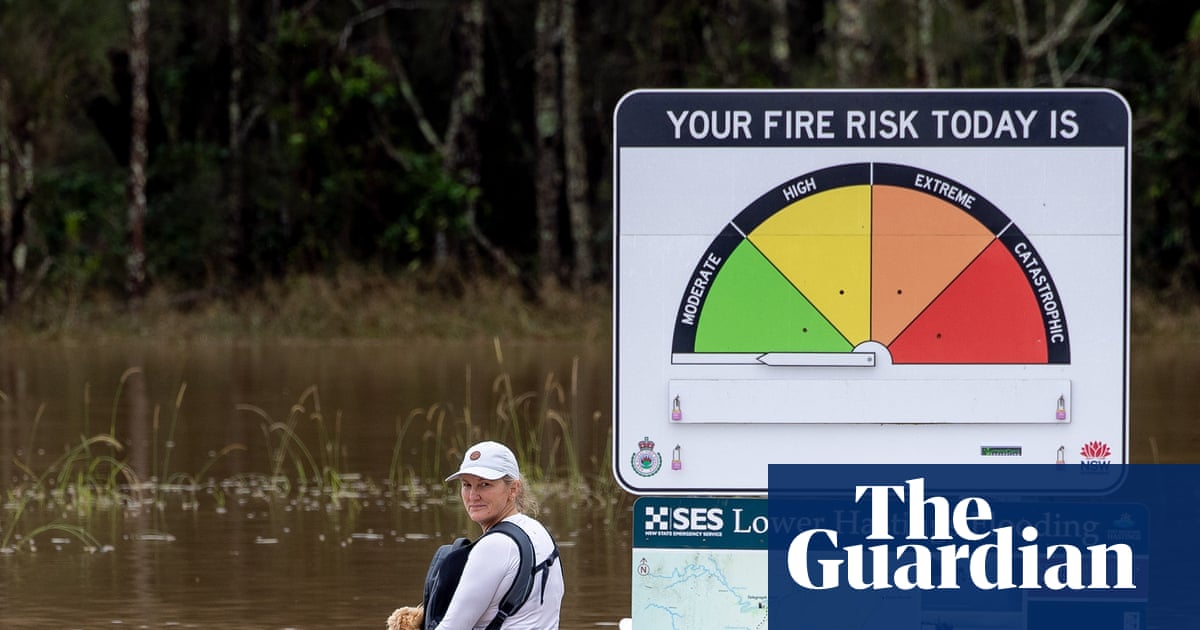
The global energy landscape is undergoing a profound transformation, driven by both immediate market dynamics and long-term systemic shifts. A forthcoming Australian government report, described as “intense and scary” by those familiar with its contents, starkly illuminates the escalating economic and environmental risks posed by climate change. This national climate risk assessment, currently unreleased, provides a potent case study for investors grappling with the complex interplay between traditional energy market volatility and the increasingly tangible costs of a warming planet. For oil and gas investors, understanding these deep-seated risks in a major commodity-producing nation like Australia is crucial for navigating future capital allocation and portfolio resilience.
Australia’s Looming Climate-Driven Economic Disruption
The delayed Australian national climate risk assessment, developed by the Australian Climate Service and the climate change department, outlines a future where climate impacts will affect all Australians in ways not yet fully appreciated in public discourse. Those who have reviewed drafts describe scenarios that are “confronting,” even for seasoned climate experts. The report’s comprehensive analysis spans eight critical systems: defence and national security; the economy, trade and finance; First Nations values and knowledge; health and social support; infrastructure and built environments; the natural environment; primary industries and food; and regional and remote communities. Modelling within the report includes estimates of future climate damage, potential fatalities from worsening heatwaves, and detailed flood risk mapping for urban areas. The implications for the Australian economy are already evident; federal Treasury data indicates extreme weather cost the economy $2.2 billion in the first half of 2025 alone, highlighting the immediate financial burden of climate-related events. For investors, this signals a need to reassess long-term asset valuations and the operational stability of ventures within affected sectors, from agriculture to energy infrastructure, and to consider the potential for increased sovereign risk.
Navigating Market Volatility Amidst Climate Realities
These long-term climate warnings from Australia arrive against a backdrop of persistent volatility in global energy markets. As of today, April 21, 2026, Brent Crude trades at $94.45, reflecting a 1.08% decline within a daily range of $93.98-$95.69. Similarly, WTI Crude is at $86.12, down 1.49%, fluctuating between $85.50 and $86.78. This represents a continuation of a notable downtrend for Brent, which has shed nearly 19.8% from its March 31 peak of $118.35 to $94.86 yesterday. Such significant price swings underscore the ongoing sensitivity of energy markets to geopolitical events, supply-demand fundamentals, and broader economic indicators. For oil and gas investors, this creates a challenging environment where immediate market signals must be balanced against the profound, long-term systemic risks highlighted by reports like Australia’s. The paradox is clear: while climate change necessitates a rapid energy transition, the current market structure continues to rely heavily on fossil fuels, making investment decisions complex and demanding a nuanced understanding of both short-term trade dynamics and long-term environmental imperatives.
Investor Focus: Bridging Short-Term Gains and Long-Term Stability
Our proprietary reader intent data reveals a clear focus among investors on immediate market movements and future price predictions. Questions such as “is wti going up or down?” and “what do you predict the price of oil per barrel will be by end of 2026?” dominate current investor queries. These signals highlight the inherent short-term orientation of many market participants, driven by quarterly earnings and daily trading opportunities. However, the Australian climate risk assessment serves as a stark reminder that neglecting long-term, systemic risks can have catastrophic financial consequences. For investors in Australian energy assets, infrastructure, or even financial services, the report prompts critical questions: How will increased frequency of extreme weather events impact operational costs and insurance premiums for energy projects? What is the potential for stranded assets in regions facing severe flooding or heat stress? The analysis detailing the climate impact on the “economy, trade and finance” sector, as well as “infrastructure and built environments,” directly addresses these concerns. Savvy investors must integrate such long-term climate risk into their fundamental analysis, moving beyond purely speculative price movements to assess the foundational resilience and sustainability of their holdings.
Upcoming Catalysts and Policy Implications for Energy Investors
The Australian government’s anticipated release of this national climate risk assessment, alongside a 2035 emissions reduction target and a climate adaptation plan, represents significant policy catalysts expected within weeks, with the 2035 target due by September. These documents will likely shape Australia’s energy policy, infrastructure planning, and potentially influence future demand for conventional energy sources within the country. Investors must track these developments closely, as they could introduce new regulations, incentivize renewable energy projects, or impose costs on carbon-intensive industries. Concurrently, the global energy market calendar features several key events in the coming days and weeks that demand attention. Today, April 21, the OPEC+ JMMC Meeting could yield supply-side decisions impacting global crude prices. This will be followed by the EIA Weekly Petroleum Status Reports on April 22 and April 29, providing crucial insights into U.S. inventory levels, along with the Baker Hughes Rig Count on April 24 and May 1, indicating drilling activity. Furthermore, the API Weekly Crude Inventory reports on April 28 and May 5 will offer additional data on crude stockpiles, culminating in the EIA Short-Term Energy Outlook on May 2, which will provide updated forecasts for supply, demand, and prices. The challenge for investors is to synthesize these immediate, supply-driven market signals with the longer-term, demand-side and systemic risks highlighted by Australia’s climate report, understanding how policy shifts in a major commodity producer can ripple through global energy markets.


