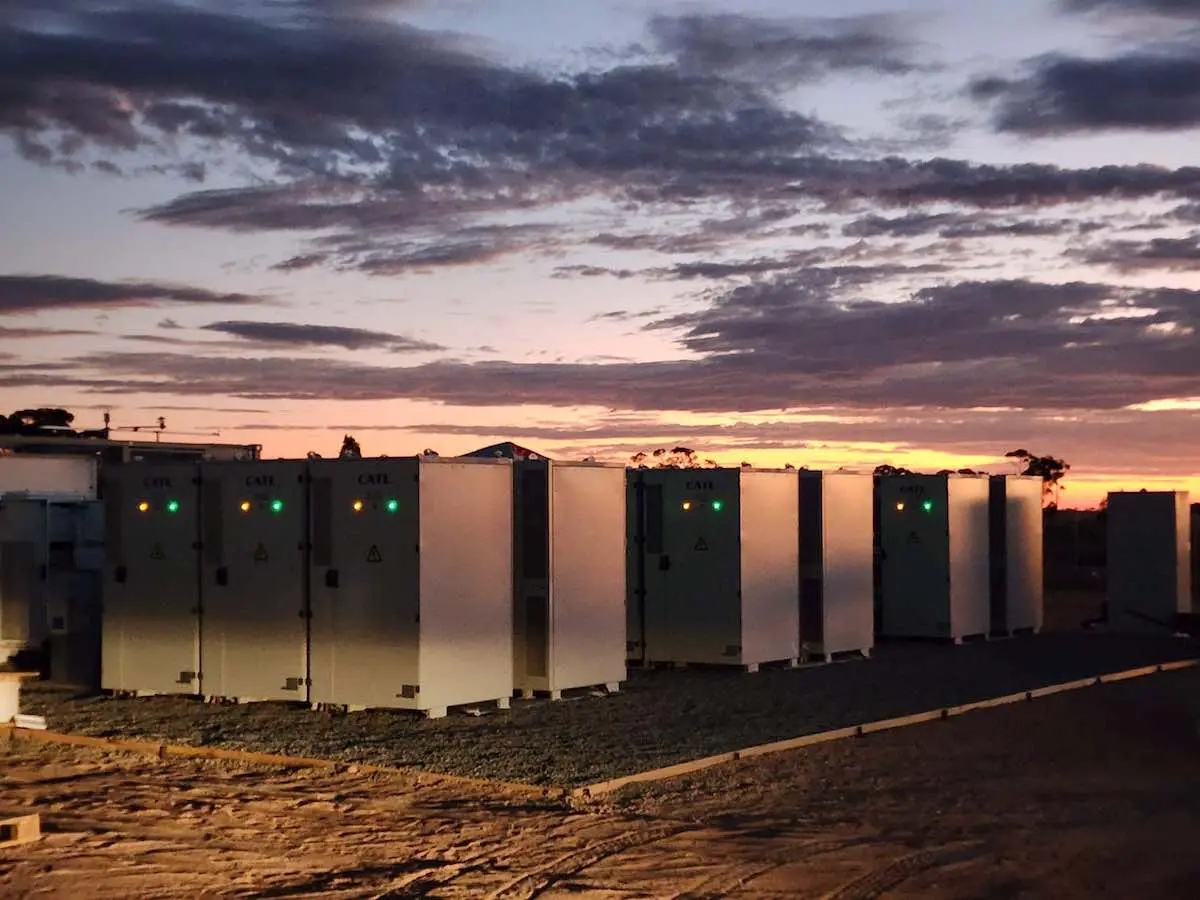
Australia’s clean energy sector has ignited 2025 with an unprecedented surge in grid-scale battery investment, positioning the nation as a premier destination for investors eyeing the global energy transition. The initial quarter witnessed a staggering $2.4 billion committed to large-scale energy storage projects, marking it as the second most robust period on record for this critical infrastructure segment.
This substantial financial injection underscores a profound shift in Australia’s energy landscape, indicating a strong investor appetite for solutions that enhance grid stability and enable greater renewable energy penetration. The latest industry data reveals that six new storage initiatives, collectively boasting 1.5 gigawatts (GW) of capacity, successfully navigated to financial close during the January-March 2025 period. This level of investment activity mirrors the record-setting pace observed in the final quarter of 2023, which saw an all-time high of $2.8 billion flow into the sector.
Battery Storage Leads the Investment Charge
A standout among these newly funded projects is the massive 350-megawatt (MW) Wooreen battery system in Victoria. Designed for a four-hour discharge duration, this pivotal infrastructure piece received crucial backing from the federal government’s Capacity Investment Scheme, a clear signal of policy support for large-scale storage solutions. Beyond Wooreen, the first quarter also saw three significant battery systems in South Australia, one in Queensland, and another in New South Wales secure financial commitments, demonstrating a broad geographical distribution of investment across key energy markets.
While battery storage investment soared, the initial months of 2025 presented a more moderate pace for renewable generation projects. Two solar farms, totaling 386 MW in capacity and representing $410 million in investment, reached financial close. Industry observers note that a quieter first quarter for generation assets is a typical seasonal pattern, with investment historically accelerating as the year progresses. Over the past five years, average new investment commitments in the first quarter have typically hovered around 427 MW, a stark contrast to the significantly higher average of 1,153 MW recorded in fourth quarters during the same timeframe.
Despite this early-year seasonality for generation, the overall pipeline remains robust. By the close of March, Australia boasted an impressive portfolio of 82 renewable energy projects, encompassing both generation and storage, that had either achieved financial commitment or were actively under construction. This represents a substantial 12 GW of capacity poised to integrate into the national grid.
Australia’s Record-Breaking Clean Energy Trajectory
The stellar performance of energy storage in Q1 2025 builds directly on Australia’s monumental achievements in clean energy throughout 2024. Last year emerged as the nation’s most significant period for clean energy investment to date, propelled by several key factors. Rooftop solar installations on residential and commercial properties raced past the 4-million mark, demonstrating widespread public and business adoption of distributed generation.
Crucially, large-scale renewable energy projects attracted an astounding $9 billion in investment during 2024, marking an exponential 500% increase compared to the previous year. When combined with the substantial capital deployed into energy storage, Australia’s total clean energy investment reached an unprecedented $12.7 billion. This record figure firmly establishes the country as a global leader in the clean energy transition, offering compelling opportunities for savvy investors.
Policy Certainty and Investor Confidence Fuel Growth
Industry leaders attribute these “eye-watering” levels of private sector investment to a foundation of political certainty and a supportive policy environment. With recent elections concluded and a period of relative stability, coupled with easing inflationary pressures, the stage is set for continued capital deployment. Robust industry engagement with the federal government’s Capacity Investment Scheme is playing a pivotal role in de-risking projects and attracting the necessary private capital to meet Australia’s ambitious targets.
Australia aims for an 82% renewable energy share in its electricity supply by 2030. While this target is undeniably ambitious, it is deemed achievable given the current trajectory and the strong participation from the private sector. Early indicators suggest a sustained upward trend in private investment across both renewable power generation and crucial battery storage projects as the year unfolds.
Meeting the 2030 Challenge: Capacity and Infrastructure Needs
In 2024, renewable sources contributed a significant 40% of Australia’s total electricity generation, an increase from 39.4% in 2023. However, to achieve the ambitious 2030 target and effectively replace retiring coal-fired power stations, the nation must add an additional 6 GW of wind and solar capacity annually. This monumental task necessitates not only continued investment in generation and storage but also a critical focus on enabling infrastructure.
The willingness and capability to drive Australia’s energy transition are clearly evident within the market. Yet, sustained progress is not guaranteed without ongoing commitment and strategic action. A key bottleneck and an area ripe for further investment is the expansion and modernization of new transmission lines. These vital arteries are indispensable for connecting geographically dispersed renewable energy projects to demand centers, ensuring the stability and reliability of a rapidly evolving national power grid. For investors, understanding these infrastructure needs provides a clearer picture of the interconnected opportunities within Australia’s decarbonization journey.


