Queensland Poised for Major Renewable Capital Deployment with Tumuruu Project Approval
Brisbane, Australia – The Australian energy market is set to witness a substantial infusion of capital into large-scale renewable infrastructure, as Australian Solar Enterprises (ASE) secures a critical federal environmental clearance for its ambitious Tumuruu solar and battery energy storage initiative in Queensland. This move signals a significant progression for a project poised to deliver 400 megawatts of solar generation capacity coupled with a formidable 2,000 megawatt-hours of battery storage, impacting the grid’s operational dynamics and future investment landscape.
The federal government’s Environment Protection and Biodiversity Conservation (EPBC) Act approval marks a pivotal de-risking event for the Tumuruu project. The Department of Climate Change, Energy, the Environment, and Water (DCCEEW) formally declared the integrated solar hybrid development as “not a controlled action,” a regulatory pronouncement that effectively streamlines the path forward. This decision significantly reduces environmental compliance uncertainties, clearing a major hurdle for investors eyeing Australia’s rapidly evolving energy sector.
Strategic Location and Advanced Technology Drive Project Value
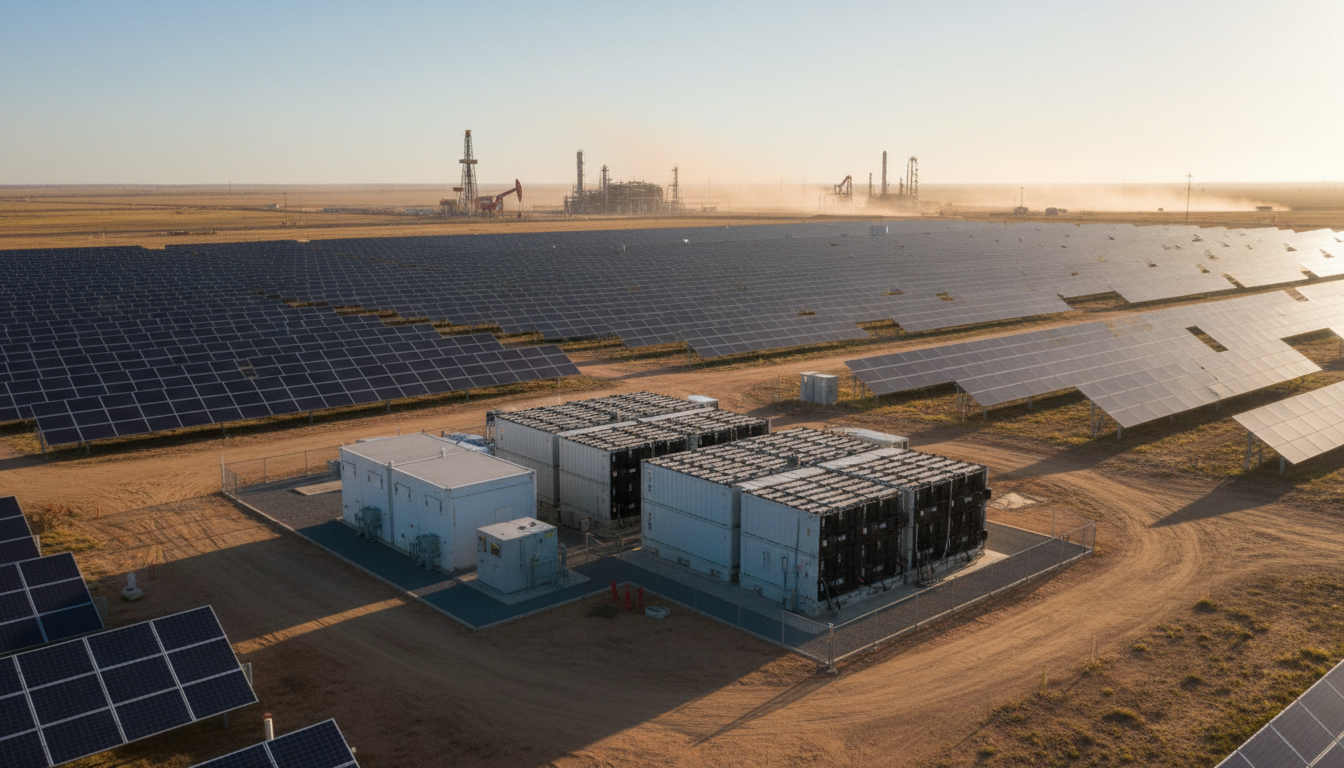
Situated on a 673-hectare site just north of Blackbutt in Queensland’s South Burnett region, approximately 160 kilometers from Brisbane, the Tumuruu project holds strategic importance for bolstering energy supply and grid stability in the state. The proposed facility integrates a 400 MW solar photovoltaic array with a colossal 2,000 MWh (2 GWh) battery energy storage system. Crucially, the battery component will feature advanced grid-forming inverters, a technology vital for enhancing grid resilience and providing essential system strength, historically a domain dominated by synchronous fossil fuel generators.
ASE’s development strategy for Tumuruu emphasizes innovative design and environmental stewardship. The solar panels will be mounted on lightweight steel rods and plates, positioned less than a meter above the ground. This deliberate choice aims to minimize ground disturbance, preserving the agricultural utility of the land while still achieving utility-scale power generation. This approach not only garnered favor with environmental regulators but also exemplifies a development model that seeks to integrate large-scale energy production with existing land uses, potentially setting a precedent for future projects.
“From the outset, our guiding principle at ASE has been to design projects that harmoniously integrate with the existing landscape, rather than imposing upon it,” a company spokesperson commented. “When a project’s fundamental design respects environmental considerations, the federal approval process becomes far more straightforward. It’s about presenting a solution that inherently aligns with regulatory expectations, rather than seeking concessions.” This philosophy underscores a trend towards more integrated and environmentally conscious project development, which can accelerate timelines and reduce capital expenditure risks.
Investment Horizon and Market Impact
With federal environmental clearance secured, ASE is now poised to accelerate the grid connection process, bringing the project closer to its final investment decision (FID). The developer is targeting FID later this year, with construction slated to commence shortly thereafter. Operational readiness for the Tumuruu solar and battery system is anticipated by 2028, adding substantial firming capacity to the Queensland grid and contributing significantly to Australia’s broader energy transition objectives.
The scale of this undertaking—400 MW of solar capacity combined with 2 GWh of battery storage—represents a considerable capital commitment and a major step in diversifying Australia’s energy mix. For traditional energy investors, the accelerating deployment of such large-scale, technologically advanced renewable assets warrants close observation. Projects like Tumuruu underscore the competitive pressures on conventional baseload power generation and highlight the evolving requirements for grid support services. The integration of grid-forming inverters, in particular, demonstrates how renewables are moving beyond simple energy generation to actively support grid stability, a function historically provided by thermal power plants.
The successful navigation of the EPBC approval process, particularly for a project of this magnitude and technological sophistication, provides a valuable blueprint for future renewable energy developments across Australia. It demonstrates that careful site selection, innovative design, and a proactive approach to environmental considerations can significantly de-risk large infrastructure investments. As capital continues to flow into the Australian energy sector, the Tumuruu project stands as a testament to the increasing viability and strategic importance of hybrid renewable energy systems.
For investors focused on the broader energy market, the timely progression of projects like Tumuruu signals a maturing renewable energy investment landscape where regulatory certainty, technological innovation, and sustainable development practices are becoming key differentiators. The 2028 operational target for this significant energy asset will introduce substantial new supply and flexibility into the Queensland electricity market, influencing pricing dynamics and competitive strategies across the entire energy value chain.