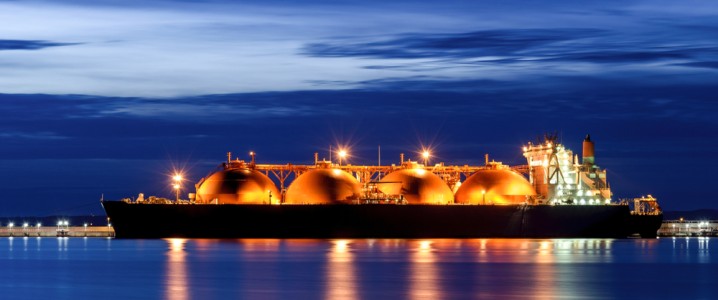
Australia’s recent decision to mandate a domestic gas reservation policy for its liquefied natural gas (LNG) producers marks a significant intervention in a critical global energy market. The government plans to require LNG exporters to set aside between 15% and 25% of their output for local consumption starting in 2027. This move, building on the 2017 Australian Domestic Gas Security Mechanism (ADGSM), aims to avert potential domestic shortages and ensure more affordable energy for Australian users. For investors tracking the volatile global energy landscape, this policy introduces a new layer of complexity and risk, particularly for companies with significant Australian LNG exposure. While framed as a measure for national energy security and economic support, the industry’s immediate reaction and the broader market implications warrant close scrutiny.
Australian Policy Intervention: Mitigating Domestic Risk, Creating Investment Uncertainty
The Australian government’s rationale for this domestic reservation policy stems from genuine concerns over energy security. Southern Australian states, heavily reliant on gas from the east, have pressed for such measures, especially after the country’s competition regulator warned of a potential market deficit by the end of this year. Although an immediate shortage has been averted, the government’s resolve to implement these curbs, as articulated by Climate Change Minister Chris Bowen, underscores the persistent tension between export ambitions and domestic needs. The government emphasizes that these mandates will apply only to new LNG export contracts, leaving existing international commitments unaffected. This nuance is crucial for assessing the immediate impact on global supply chains, but it doesn’t diminish the long-term implications for future supply growth.
However, this policy comes with strong industry opposition. Major oil and gas players have already warned that such mandates could significantly discourage future investment in Australia’s gas sector. This is not an idle threat; producers have reportedly already begun curbing investments in production expansion, signaling their apprehension. For investors, this creates a dilemma: while securing domestic supply might stabilize local energy prices, it simultaneously jeopardizes the very investment necessary to boost overall supply for the future. As of today, the broader energy market is already navigating considerable volatility. Brent Crude, a key global benchmark, trades at $91.87, marking a sharp 7.57% decline for the day, with its range fluctuating between $86.08 and $98.97. Similarly, WTI Crude has fallen by 7.86% to $84, highlighting an environment where additional policy-induced uncertainty could weigh heavily on investor sentiment towards specific regional projects.
Investor Questions: Navigating Future Price and Supply Dynamics
Our proprietary reader intent data shows a strong focus among investors on future market trajectories, with a frequently asked question being: “What do you predict the price of oil per barrel will be by end of 2026?” This long-term outlook naturally extends to LNG prices and supply, which are inextricably linked to crude dynamics. The Australian mandate, set to take effect in 2027, directly impacts this forward-looking analysis. By potentially constricting new export volumes from one of the world’s third-largest LNG exporters, it adds an unpredictable variable to global supply forecasts. While the policy targets new contracts, the mere prospect of reduced future export capacity can influence global LNG price discovery and the strategic decisions of major buyers.
Another common query from our readership revolves around OPEC+ production quotas, indicating a broad concern for global supply management. While Australia’s LNG policy is distinct from OPEC+’s crude oil decisions, both speak to governmental and intergovernmental interventions in energy markets. The Australian move signals a growing trend among resource-rich nations to prioritize domestic needs, potentially at the expense of unconstrained export growth. This trend, if it propagates, could fundamentally alter global energy trade flows and investment patterns, pushing investors to re-evaluate geopolitical risks and energy security premiums in their portfolio construction.
Forward-Looking Analysis: Upcoming Events and LNG’s Evolving Role
The timing of Australia’s mandate decision is particularly pertinent given the upcoming calendar of critical energy events. This weekend, on April 18th, the OPEC+ Ministerial Meeting will convene, where the world will be watching for signals on crude oil production policy. While OPEC+ primarily influences crude, its decisions have ripple effects across the entire energy complex, including gas markets. Any significant shifts in OPEC+’s strategy could amplify or mitigate the impact of Australia’s domestic LNG focus on overall energy supply stability.
Looking ahead, the next two weeks bring a series of crucial data releases: API Weekly Crude Inventory reports on April 21st and 28th, followed by the EIA Weekly Petroleum Status Reports on April 22nd and 29th, and the Baker Hughes Rig Counts on April 24th and May 1st. These data points provide a real-time pulse on crude supply, demand, and drilling activity in the U.S., a major global energy player. Against this backdrop of weekly market adjustments, Australia’s long-term policy intervention forces investors to consider how nationalistic energy policies will intersect with global market fundamentals. The cumulative effect of these granular reports, combined with high-level policy shifts like Australia’s, will shape the investment thesis for LNG producers and energy infrastructure companies well into the latter half of the decade.
The Investment Outlook: Navigating a Shifting Landscape
For investors, the Australian LNG export curbs represent a clear signal that national energy security and domestic affordability are rising on the policy agenda globally. While the climate change minister’s comments emphasize support for the Australian economy and its energy transition, the immediate effect on investment sentiment for new gas projects is undeniably negative. The fact that producers are already curbing expansion investments, even before the 2027 implementation date, underscores the chilling effect of such policies on capital allocation.
Australia’s ambition to remain a “reliable energy partner” while imposing export restrictions creates a delicate balancing act. The “new contracts only” clause provides some buffer, but it inherently limits the potential for future export growth, which is a core driver for LNG project economics. Investors holding positions in Australian LNG producers or considering new ones must now factor in a higher regulatory risk premium and potentially lower growth forecasts for new capacity. The overarching trend observed over the past 14 days, where Brent crude prices have fallen significantly from $112.78 on March 30th to today’s $91.87, an 18.5% decline, highlights the broader market’s sensitivity to supply-demand imbalances and geopolitical developments. Australia’s policy, while domestically focused, will inevitably contribute to the intricate global energy puzzle, demanding a nuanced and forward-thinking approach from discerning energy investors.


