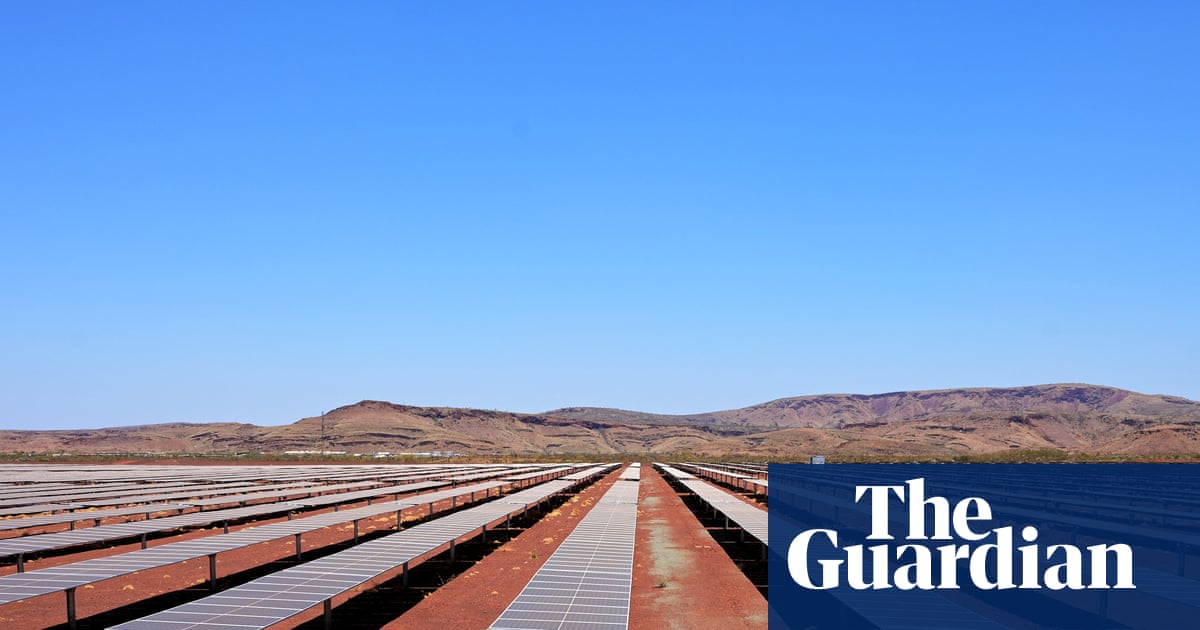
The global energy landscape is undergoing a profound transformation, marked by a fascinating dichotomy: a vocal political pushback against green finance in some major economies, juxtaposed against a relentless surge in sustainable investments elsewhere. Our latest market intelligence reveals Australia as a compelling case study, where an undeniable appetite for pro-environment projects is not only overcoming perceived international headwinds but setting new records for capital deployment. This dynamic creates both challenges and unique opportunities for oil and gas investors grappling with volatility in traditional markets and the long-term imperative of the energy transition.
Australia’s Unstoppable Green Investment Momentum
Despite a narrative of skepticism, particularly from a US political stance favoring increased fossil fuel production, Australia’s commitment to green and sustainable finance continues its robust ascent. Our proprietary data, drawing from recent industry research, highlights a staggering growth trajectory: green, sustainable, and social investments have ballooned from $20 billion to $157 billion over the past five years. A dominant $137 billion of this capital directly backs projects with clear environmental benefits, ranging from large-scale renewable energy infrastructure to crucial water management initiatives like the Murray-Darling Basin purchases and state-led light rail upgrades.
This upward trend shows no signs of abating. The first half of 2025 alone saw $25 billion committed to these projects, putting the year on track to comfortably surpass 2024’s near-$40 billion record. This sustained growth contradicts the notion of a universal pullback, underscoring a deep-seated domestic demand and commercial viability. Dedicated impact investment funds, which managed less than $3 billion in 2020, now collectively oversee $12.5 billion. Major institutional players are actively participating, exemplified by the country’s second-largest superannuation fund, Australian Retirement Trust, allocating nearly $1 billion to a Macquarie Bank green energy fund and committing a further $1 billion to impact investments by 2030. Furthermore, the market for green, social, and sustainable bonds has soared to $145 billion, a dramatic increase from $17 billion in 2020, poised for a third consecutive annual record in 2025. This consistent capital flow is driven by the demonstrable financial returns these projects now offer, with state-issued green bonds frequently matching or exceeding the yields of their market competitors.
Navigating Volatility: Green Capital vs. Crude Market Dynamics
While green investments in Australia demonstrate remarkable stability and growth, the traditional oil and gas sector continues to grapple with significant price volatility. As of today, Brent crude is trading around $89.11 per barrel, marking a sharp 10.34% decline within a single day. Similarly, WTI crude has seen a comparable drop, settling at $81.73 per barrel, while gasoline prices have fallen by 5.82% to $2.91. This single-day downturn is part of a broader trend; over the past 14 days, Brent crude has shed over 12%, falling from $112.57 on March 27th to $98.57 just yesterday, before today’s further slide. This inherent unpredictability in crude prices highlights a core challenge for oil and gas investors.
Our investor intent data reveals that a top concern for many readers this week revolves around future oil price predictions, with questions like “what do you predict the price of oil per barrel will be by end of 2026?” dominating queries. Investors are also keen to understand the performance outlook for specific companies, such as Repsol, and integrated majors operating in this turbulent environment. The stark contrast between the steady, multi-year growth of Australian green investments and the often-dramatic swings in crude oil prices presents a compelling case for diversification. For investors seeking both capital appreciation and risk mitigation, the burgeoning green sector offers a valuable counterbalance to the cyclical nature of traditional fossil fuels, demonstrating that entrepreneurial ventures addressing environmental challenges are not just impactful but increasingly profitable.
The Forward View: Geopolitical Tensions, Supply Signals, and ESG Momentum
The coming weeks are poised to deliver critical data points that will further shape the global energy market, directly impacting the valuations and strategies of oil and gas companies. Investors are keenly awaiting the OPEC+ Joint Ministerial Monitoring Committee (JMMC) meeting tomorrow, April 17th, followed by the full Ministerial Meeting on April 18th. These gatherings are pivotal, as our readers frequently ask about “OPEC+ current production quotas” and their potential adjustments. Any decisions on production levels will directly influence supply dynamics and, consequently, crude oil prices.
Beyond OPEC+, market participants will closely monitor the API and EIA Weekly Petroleum Status Reports on April 21st, 22nd, 28th, and 29th, providing crucial insights into inventory levels and demand trends. The Baker Hughes Rig Count, scheduled for April 24th and May 1st, will offer a near-term gauge of drilling activity and future supply capacity in North America. While these events predominantly influence the traditional oil and gas sector, their outcomes can indirectly affect the competitive landscape for green investments by altering the relative attractiveness of fossil fuel projects. Despite this ongoing volatility in the conventional energy market, the underlying momentum for green investment, particularly from younger Australian investors focused on “doing well and doing good,” indicates a structural, long-term shift. This sustained investor demand for ESG-aligned portfolios will continue to fuel capital flow into renewable energy and impact projects, regardless of short-term crude price fluctuations.
Strategic Implications for Oil & Gas Investors
The divergence highlighted by Australia’s green investment surge offers several strategic implications for sophisticated oil and gas investors. Firstly, the traditional “drill, baby, drill” mantra, while politically appealing in some quarters, faces a growing wall of capital seeking sustainable returns. Oil and gas companies, particularly integrated majors, must articulate clear, credible pathways for energy transition and decarbonization to remain competitive for long-term capital, especially from institutional investors and younger demographics who increasingly prioritize environmental and social impact alongside financial performance.
Secondly, the demonstrated profitability and scale of green projects in Australia, from renewable energy expansion to social bonds, indicate that these are no longer niche investments but mainstream asset classes offering attractive risk-adjusted returns. The Reserve Bank’s finding that green bonds now offer comparable or superior returns to their market competitors validates this shift. For oil and gas investors, this presents an opportunity for strategic diversification into green energy funds, clean technology ventures, or green bond offerings, either directly or through integrated energy companies that are actively building out their renewable portfolios. The $110 million tonnes of CO2-equivalent emissions abated, 1.3 million tonnes of landfill avoided, and 3 million trees planted through these Australian investments are not just environmental wins; they represent tangible, measurable outcomes that resonate with a growing segment of the investment community, ensuring continued capital flow even amidst the inevitable turbulence of crude oil markets.


