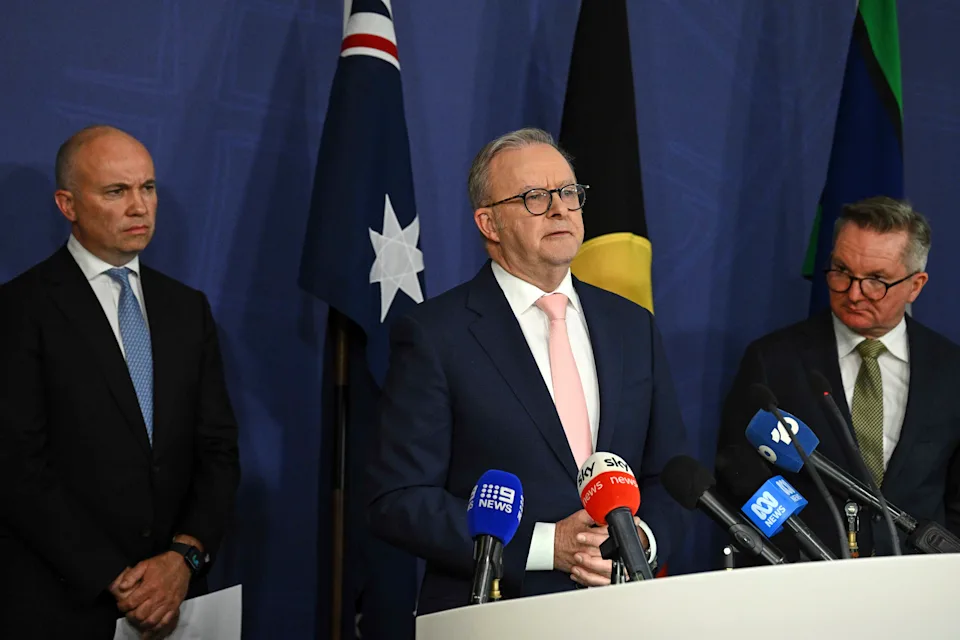
Australia has significantly elevated its climate commitments, pledging to slash emissions by 62-70% below 2005 levels by 2035, a substantial acceleration from its prior 43% by 2030 target. This ambitious new goal, announced by Prime Minister Anthony Albanese and supported by the Climate Change Authority, marks a pivotal moment for the nation’s energy landscape. For oil and gas investors, this development is not merely a political statement; it’s a direct signal for fundamental shifts in capital allocation, operational strategies, and long-term asset valuations within one of the world’s major resource exporters. As the global energy transition gains unprecedented momentum, Australia’s enhanced pledge underscores a critical need for investors to re-evaluate their exposure and opportunities in the region’s hydrocarbon sector, balancing evolving policy risks against ongoing energy demand.
Australia’s Accelerated Decarbonization and New Financial Backing
The Australian government’s commitment to a 62-70% emissions reduction by 2035 represents a steep climb in ambition. This target is designed to firmly align Australia with the Paris Climate Agreement’s trajectory, where nations are expected to regularly submit increasingly stringent commitments. Crucially, this policy shift is not without financial muscle. Canberra has unveiled a robust $7 billion in new climate finance, a move designed to catalyze the energy transition and bolster industrial competitiveness. This includes a $5 billion Net Zero Fund, earmarked for industrial decarbonization efforts, and an additional $2 billion injection into the Clean Energy Finance Corporation (CEFC) to advance renewable energy projects and mitigate power costs. This financial support signals a dual strategy: to incentivize a transition away from high-carbon activities while simultaneously fostering new green industries. For oil and gas companies with Australian assets, this translates into a heightened imperative to develop and implement decarbonization pathways, explore carbon capture technologies, or pivot towards cleaner energy ventures. The economic necessity and strategic opportunity articulated by Climate Change Minister Chris Bowen highlight a government intent on shaping the future energy mix, not just reacting to global pressures. Investors must recognize that this significant capital deployment will funnel resources away from traditional fossil fuel developments, creating both headwinds for legacy assets and opportunities for innovative, lower-carbon solutions within the sector.
Global Oil Market Dynamics Amidst Domestic Policy Shifts
Australia’s deepening commitment to decarbonization unfolds against a backdrop of fluctuating global energy markets, a reality keenly observed by investors asking about current crude prices and underlying market models. As of today, Brent crude trades at $98.13 per barrel, registering a modest daily decline of 1.27% within a range of $97.92 to $98.67. Similarly, WTI crude is priced at $89.72, down 1.59% for the day. This current market snapshot reveals a sector still navigating volatility. In fact, our proprietary data indicates a more significant trend over the past two weeks, with Brent crude having fallen from $112.57 on March 27th to $98.57 just yesterday, marking a substantial 12.4% decrease. This downward trend in crude prices complicates the investment calculus for Australian oil and gas projects. While lower prices might theoretically reduce the economic viability of new high-cost fossil fuel developments, they also intensify the pressure on existing producers to optimize operations and reduce emissions to remain competitive and socially acceptable. The convergence of a softening global crude market with aggressive domestic climate policy creates a complex risk-reward profile for Australian oil and gas investments. Investors are increasingly evaluating how these macro price signals impact the attractiveness and long-term sustainability of Australian upstream and midstream assets, particularly those without a clear decarbonization strategy or access to the new green funding mechanisms.
Navigating Upcoming Events and Their Impact on Australian O&G
The coming weeks are poised to deliver a series of significant events that will further shape the investment landscape for Australian oil and gas. Prime Minister Albanese is slated to formally present Australia’s ambitious new target to the UN General Assembly in New York later this month. This presentation will undoubtedly amplify international scrutiny on Australia’s resource sector, potentially influencing export markets and access to global capital for projects perceived as misaligned with climate goals. Concurrently, the global supply-demand narrative will be heavily influenced by upcoming OPEC+ meetings. The Joint Ministerial Monitoring Committee (JMMC) convenes tomorrow, April 17th, followed by the Full Ministerial meeting on April 18th. For investors tracking global supply, questions about OPEC+’s current production quotas are paramount. Any decisions from these meetings regarding production levels could significantly impact crude prices, either bolstering or further dampening the economic rationale for Australian exploration and production. Beyond OPEC+, weekly data releases will provide crucial insights into market fundamentals. The API Weekly Crude Inventory reports on April 21st and April 28th, alongside the EIA Weekly Petroleum Status Reports on April 22nd and April 29th, will offer granular views on U.S. supply, demand, and storage. These will be complemented by the Baker Hughes Rig Count on April 24th and May 1st, indicating future drilling activity. Collectively, these events will provide a dynamic backdrop against which Australia’s climate policy will be judged, influencing investor confidence in the long-term viability and profitability of its oil and gas sector. Investors must closely monitor these global signals to anticipate shifts in market sentiment and their potential ripple effects on Australian energy assets.
Investor Sentiment and the Future Pathways for Australian Energy
The heightened climate ambition in Australia forces a critical re-evaluation for oil and gas investors, many of whom are actively seeking robust analytical tools and transparent data sources to navigate this evolving landscape. The observed investor interest in platforms like EnerGPT and the underlying data feeds powering market responses highlights a significant demand for sophisticated insights into complex market dynamics. The Climate Change Authority, which recommended the 62-70% target, described it as “ambitious, but absolutely feasible,” emphasizing the need to halve emissions within a decade across all sectors, including energy. This feasibility, however, comes with a stark warning: Australia’s first national climate risk assessment projected potential property losses of A$611 billion (approximately $406 billion USD) if emissions are not rapidly reduced. This dual pressure – policy-driven decarbonization and climate-related financial risk – means that traditional investment theses for Australian oil and gas are increasingly untenable without a clear transition strategy. Companies that can articulate credible pathways to reduce operational emissions, invest in carbon capture and storage, or pivot towards hydrogen and other clean fuels are likely to attract patient capital. Conversely, projects with high carbon intensity and long payback periods will face escalating scrutiny and divestment pressure. Investors are no longer just asking about reserves and production; they are demanding clarity on ESG performance, decarbonization roadmaps, and resilience to climate risks. The era of purely extractive O&G investment in Australia is drawing to a close, replaced by a mandate for innovation, sustainability, and a demonstrable commitment to the nation’s ambitious net-zero future.


