Australia Targets Critical Minerals Supremacy with Smelter Transformation
In a powerful strategic maneuver poised to reshape global supply chains and directly challenge China’s formidable dominance in essential industrial inputs, the Australian government, in close collaboration with its South Australian and Tasmanian state counterparts, has unveiled a substantial financial injection. This initiative aims to revitalize two key domestic smelters, transforming them into advanced facilities capable of producing critical minerals crucial for the global energy transition and high-tech industries. For astute investors monitoring the evolving landscape of global commodities and the accelerating push towards decarbonization, this represents a pivotal development with far-reaching implications for material sourcing and market stability.
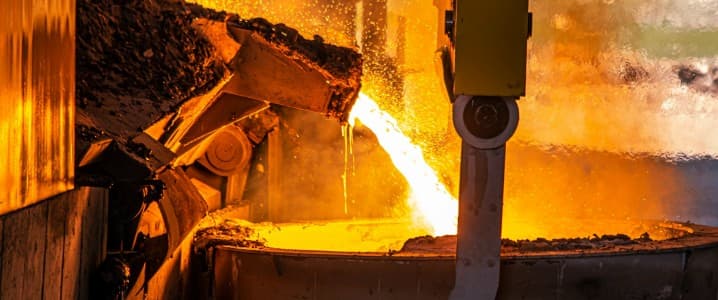
The joint government funding package totals US$87 million (AUD$135 million), directly supporting the ambitious metamorphosis of the Port Pirie and Hobart smelters. These facilities, currently operated by Nyrstar, a subsidiary of the global commodity trading behemoth Trafigura, are slated for a comprehensive overhaul. The objective is unequivocally clear: pivot these established, yet struggling, industrial assets towards the high-value production of strategically vital metals, thereby positioning Australia as a formidable and reliable alternative in the critical minerals market. Tim Ayres, the Australian Minister for Industry, Innovation, and Science, highlighted the program’s intent to modernize these sites for future-proof production, securing Australia’s role in the next generation of industrial capabilities.
Strategic Investment in Core Infrastructure for Future Growth
The Port Pirie smelter, uniquely Australia’s sole lead processing facility, currently yields commodity-grade lead, copper matte, silver dore, and sulphuric acid. Its planned evolution includes the critical capability for producing antimony and bismuth, both highly sought-after critical minerals with diverse industrial applications. An immediate focal point of this government-backed initiative is the deployment of an Antimony Pilot Plant at Port Pirie. Should this pilot prove successful, it would establish Port Pirie as Australia’s sole producer of antimony metal and one of only a handful globally, significantly enhancing the nation’s strategic industrial capabilities and offering a secure source for these essential materials.
Similarly, the Hobart facility, Australia’s largest zinc smelter with an impressive production capacity of up to 280,000 tons of zinc, is earmarked for a strategic upgrade. This transformation envisions the potential production of germanium and indium, metals vital for advanced electronics, solar cells, and fiber optics. The government’s financial commitment, combined with Nyrstar’s own substantial investment, is explicitly designed to stabilize current operations while accelerating detailed engineering plans for a potential complete rebuild and modernization of both smelters. Concurrently, fast-tracked feasibility studies into world-leading critical metals production will proceed, laying the groundwork for Australia’s enhanced and diversified role in these crucial supply chains, thereby attracting significant investor interest in future growth.
Fortifying Western Supply Chains Against Geopolitical Risks
This aggressive push into critical mineral processing is explicitly framed within a broader geopolitical context of economic security and supply chain resilience. Peter Malinauskas, the Premier of South Australia, underscored the imperative of this investment during the announcement, stating that allowing major global powers to consolidate the world’s smelting capacity for critical minerals presents an unacceptable strategic risk. His comments reflect a growing global apprehension about over-reliance on single-source suppliers, particularly in the current volatile geostrategic environment. For investors, this signals a robust governmental commitment to de-risk critical material sourcing, potentially leading to more diversified, transparent, and resilient supply chains that can withstand future disruptions.
The Australian government’s comprehensive strategy extends beyond these smelter transformations, encompassing a commitment to establish a critical minerals strategic reserve. This broader policy framework aims to ensure national supply security and to cement Australia’s position as a reliable and significant global player in the critical minerals sector. Such initiatives are invaluable for fostering long-term stability in commodity markets and offer a strong foundational environment for future investment in Australian mining and processing assets. This directly impacts the valuations of companies involved in these strategic materials, presenting compelling opportunities for capital growth driven by national strategic priorities.
The Indispensable Role of Critical Minerals in the Energy Transition
The minerals targeted for enhanced production—antimony, bismuth, germanium, and indium—are not merely industrial commodities; they are foundational to the clean energy revolution and the digital economy. Antimony, for instance, is vital for fire retardants, specific lead-acid batteries, and certain semiconductor applications. Bismuth finds use in low-melting alloys, advanced medical applications, and as an environmentally friendly substitute for lead. Germanium is crucial for fiber optics, high-efficiency solar cells, and infrared optics, while indium is essential for touchscreens, LCDs, and advanced semiconductor technologies. The ability to produce these domestically mitigates critical supply risks for global industries reliant on them, from electric vehicle manufacturing to large-scale renewable energy infrastructure development.
For investors focused on the energy sector, understanding the intricate link between critical minerals and the broader energy transition is paramount. The rapid electrification of transport, the massive expansion of renewable energy grids, and the proliferation of advanced digital technologies all depend heavily on a secure and diverse supply of these sophisticated materials. Australia’s proactive investment not only supports its domestic industry but also contributes significantly to the global efforts to build a sustainable and secure energy future. This strategic pivot ensures that Australia remains relevant and indispensable in the evolving global economy, offering new avenues for capital deployment in resource-rich sectors that are directly contributing to the decarbonization agenda.
Investment Outlook: Opportunities in Australia’s Critical Minerals Sector
This substantial government backing for Nyrstar’s smelters signals a robust and long-term commitment to developing Australia’s critical minerals processing capabilities. For investors, this translates into potential opportunities within the mining, processing, and related technology sectors in Australia. The enhanced ability to process raw materials domestically adds significant value to Australia’s vast mineral reserves, shifting the nation’s economic profile from primarily an exporter of raw ore to a sophisticated producer of high-value critical mineral products. This shift promises higher margins and greater economic resilience, making Australian critical mineral assets increasingly attractive.
The initiative also highlights the increasing importance of environmental, social, and governance (ESG) factors in contemporary investment decisions. By establishing secure, ethically sourced, and technologically advanced production facilities, Australia is creating a compelling proposition for investors seeking to align their portfolios with sustainable and responsible supply chains. As the global demand for electric vehicles, renewable energy infrastructure, and advanced electronics continues to surge, Australia’s strategic investments in critical minerals processing are set to yield significant economic dividends and solidify its position as a key player in the next generation of global commodity markets. This development should be closely watched by those looking to capitalize on the transformative shifts underway in the global energy and materials landscape, providing a crucial hedge and growth opportunity in a volatile market.