The recent federal government approval for JinkoSolar’s subsidiary, Jinko Power, to develop a gargantuan 134 MW solar farm coupled with an impressive 360 MW/1.44 GWh battery energy storage system (BESS) in Australia’s New England region marks a pivotal moment for energy investors. This isn’t just another renewable project; it’s a significant indicator of the accelerating energy transition and the strategic shift in capital allocation within the global energy landscape. For oil and gas investors, understanding the implications of such large-scale greenlit projects is crucial for navigating future market dynamics and diversifying portfolios in an increasingly complex energy future.
Garoo Project: A New Benchmark in Grid-Scale Storage
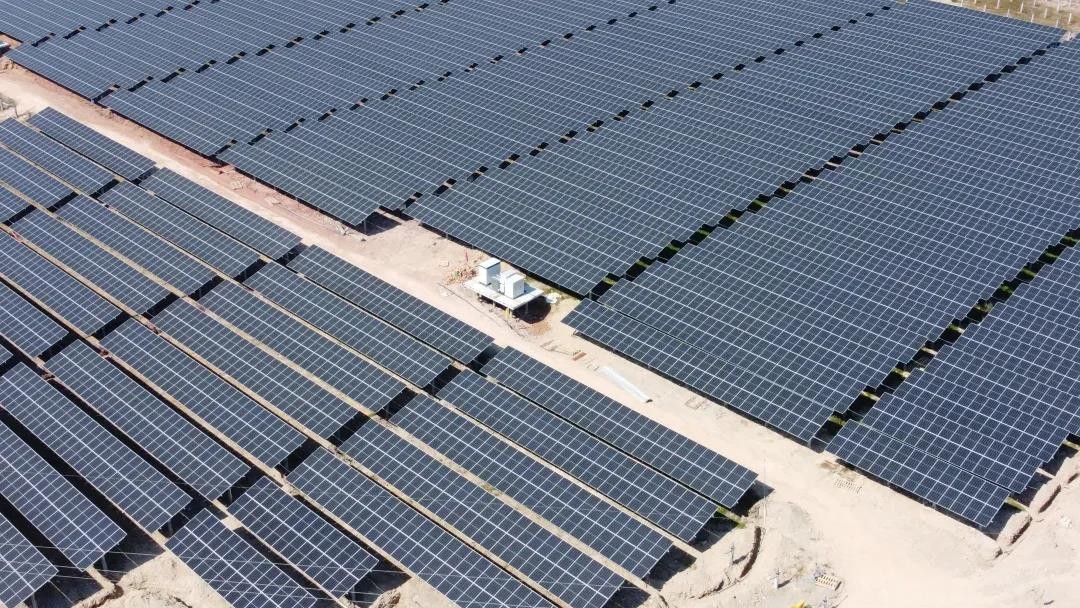
The Garoo Solar Farm and BESS, a collaborative effort between Jinko Power and Sydney-headquartered Bright Path Renewables, represents a substantial investment in Australia’s renewable energy infrastructure. Comprising approximately 234,000 solar panels, the 134 MW solar array is designed to generate around 380 GWh of clean energy annually. However, the true game-changer here is the accompanying 1.44 GWh battery energy storage system. This colossal storage capacity is critical for stabilizing the National Electricity Market (NEM) by regulating energy supply and enhancing grid reliability, directly addressing the intermittency challenges often associated with renewable sources.
Strategically located on a 306-hectare site primarily cleared for agriculture near Tamworth, the project leverages existing infrastructure with a direct connection to a 330 kV overhead transmission line. The federal environment regulator’s determination that it is “not a controlled action” under the Environment Protection and Biodiversity Conservation (EPBC) Act streamlines its path forward, a significant de-risking factor for investors. While final approval from the NSW government is still pending, developers are targeting a late 2026 construction start, with an estimated 18-month completion timeline. This project underscores Australia’s aggressive pivot away from coal-fired generation and highlights the increasing viability and necessity of large-scale renewable energy solutions.
Navigating Volatility: The Renewable Hedge in a Turbulent Market
The approval of a project of Garoo’s magnitude comes at a time when traditional energy markets are experiencing significant turbulence. As of today, Brent Crude trades at $90.38 per barrel, a sharp 9.07% decline from yesterday’s close, with a day range between $86.08 and $98.97. Similarly, WTI Crude stands at $82.59, down 9.41%, having fluctuated between $78.97 and $90.34. This recent drop extends a broader trend, with Brent having fallen by $20.91, or 18.5%, from $112.78 on March 30th to $91.87 just yesterday. Gasoline prices have also seen a downturn, currently at $2.93, down 5.18%.
This palpable volatility in crude and refined product prices underscores the inherent risks in a portfolio solely concentrated on fossil fuels. For shrewd oil and gas investors, the strategic imperative is clear: diversification. Projects like Garoo, with their long-term, predictable revenue streams backed by national energy transition mandates, offer a compelling hedge against the unpredictable swings of the commodity markets. The stability offered by grid-scale renewable infrastructure, designed to meet burgeoning electricity demand and enhance energy security, presents a stark contrast to the short-term price discovery in the oil complex.
Investor Questions and Future Catalysts
Our proprietary reader intent data reveals a consistent theme among investors: a desire to understand long-term market trajectories and portfolio resilience. Many are asking, “What do you predict the price of oil per barrel will be by end of 2026?” While direct price predictions are speculative, the structural shifts exemplified by projects like Garoo provide critical context. The increasing deployment of gigawatt-hour scale battery storage directly supports greater renewable penetration, which, over the long term, will influence demand patterns for conventional fuels, albeit not directly impacting short-term crude prices.
Looking ahead, the next 14 days are packed with critical events for the oil market. We anticipate significant market reactions from the upcoming OPEC+ Joint Ministerial Monitoring Committee (JMMC) meeting on April 18th, followed by the Full Ministerial meeting on April 19th. Any decisions regarding production quotas will directly influence short-term price stability. Furthermore, the API Weekly Crude Inventory (April 21st, April 28th) and the EIA Weekly Petroleum Status Report (April 22nd, April 29th) will provide crucial insights into immediate supply and demand dynamics, while the Baker Hughes Rig Count (April 24th, May 1st) will signal upstream activity. While these events are focused on traditional hydrocarbons, their outcomes indirectly amplify the attractiveness of stable, long-term renewable infrastructure investments. Continued volatility or supply tightness in crude could accelerate the transition, making projects like Garoo more attractive as nations seek energy independence and price stability, rather than being subject to geopolitical forces and OPEC+ decisions.
Australia’s New Energy Frontier: Regional Investment Opportunities
The Garoo project is not an isolated development but rather a cornerstone of a burgeoning renewable energy hub in the New England region. This area’s robust transmission lines and existing electricity substations have made it a magnet for significant investment. Within a 60 km radius of the Garoo site, several other large-scale projects are rapidly progressing, signaling a coordinated regional transformation.
These include TotalEnergies’ 320 MW Middlebrook solar farm with a substantial 320 MW/780 MWh BESS, and Venn Energy’s 300 MW Lambruk Solar Farm paired with a 300 MW/1.2 GWh battery project. Beyond hybrid facilities, standalone battery projects are also gaining traction, such as Equis Australia’s 250 MW/500 MWh Calala battery, Iberdola’s 50 MW/1 GWh Kingswood battery project, and Maoneng’s 200 MW Tamworth battery. The cumulative effect of these developments is creating a robust, interconnected network of renewable generation and storage capacity. For investors, this regional concentration of projects points to potential opportunities not just in direct project financing, but also in supporting infrastructure, grid modernization, and technology providers essential for managing such a complex and decentralized energy system. This systematic build-out in New England illustrates the profound capital reallocation underway in the global energy sector, moving decisively towards a future powered by diversified, resilient, and increasingly green solutions.