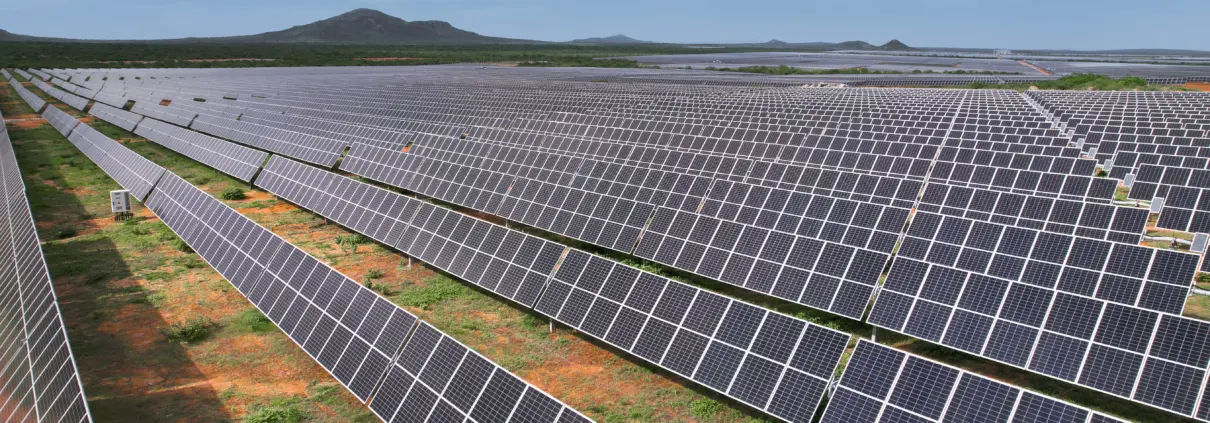
The Latin American clean energy sector has received a significant boost with Atlas Renewable Energy securing a landmark $3 billion corporate refinancing. This monumental transaction, structured across 11 jurisdictions and backed by a powerful syndicate of global financial institutions including BNP Paribas, Crédit Agricole, Goldman Sachs, Morgan Stanley, MUFG, Natixis CIB, and Santander CIB, stands as the largest corporate refinancing for non-conventional renewables in the region. For investors tracking the global energy transition and seeking robust, long-term plays, this deal signals a profound maturation of the renewable asset class in emerging markets, offering a compelling counter-narrative to the short-term volatility often observed in traditional energy commodities.
De-Risking the LatAm Renewable Landscape
This $3 billion refinancing is far more than just a balance sheet optimization; it’s a powerful statement of institutional confidence in Latin America’s renewable energy potential and Atlas’s operational prowess. By consolidating its diverse portfolio of solar and storage assets, primarily concentrated in Chile with additional exposure in Brazil and Mexico, Atlas has repositioned itself to lower financing costs and extend debt maturities. This move significantly de-risks the company’s operations and provides a blueprint for other developers seeking to tap into large-scale, competitively priced capital. In an environment where global capital is increasingly scrutinizing emerging market risk, the successful execution of such a complex, multi-jurisdictional deal underscores the growing appetite for well-structured, high-performing clean energy assets in the region. It validates the long-term power purchase agreements (PPAs) that underpin these projects and the evolving regulatory frameworks in these key markets, fostering an environment ripe for further investment and expansion.
Market Dynamics and Investor Sentiment in a Shifting Energy Landscape
The timing of this refinancing is particularly pertinent, occurring amidst a period of fluctuating traditional energy markets. As of today, Brent Crude trades at $93.52, showing a modest 0.3% increase for the day. However, this follows a substantial 19.8% decline over the past 14 days, with prices falling from $118.35 to $94.86. Such pronounced volatility in crude prices inevitably leads investors to question the broader energy outlook; indeed, a common query among our readership this week revolves around the future trajectory of oil prices and the performance of oil & gas majors like Repsol. In this context, the stability offered by contracted renewable assets, backed by significant institutional capital, presents a compelling alternative. This deal highlights a strategic pivot in investment towards long-term, predictable cash flows, insulated from the immediate swings of the crude market. It demonstrates that financial heavyweights are willing to commit substantial capital to clean energy, even as the traditional energy sector grapples with price uncertainty and geopolitical pressures. The focus on markets like Chile, known for its advanced renewable infrastructure, and the growth potential in Brazil and Mexico, further solidifies the investment thesis for regional clean energy deployment.
Upcoming Events and the Long-Term Energy Outlook
Looking ahead, the energy calendar is packed with events that will shape both traditional and renewable energy markets, albeit with varying degrees of direct impact on the clean energy sector. The upcoming OPEC+ JMMC Meeting on April 21st will be closely watched for signals on crude production policy, potentially influencing global oil supply and prices. Similarly, the EIA Weekly Petroleum Status Reports on April 22nd and April 29th, alongside the Baker Hughes Rig Count on April 24th and May 1st, will offer snapshots of supply, demand, and drilling activity in the oil and gas sector. While these events provide crucial context for the broader energy investment landscape, the Atlas refinancing underscores a distinct investment pathway. The predictability of revenue streams from renewable assets, often secured through long-term PPAs, offers a degree of insulation from the immediate market reactions to such announcements. The EIA’s Short-Term Energy Outlook, due on May 2nd, will also provide projections for various energy sources, and we anticipate it will continue to highlight the accelerated growth of renewables, reinforcing the investment rationale behind deals of this magnitude. This divergence in investment drivers — short-term commodity speculation versus long-term infrastructure development — is a critical theme for investors navigating the energy transition.
Catalyzing Future Clean Energy Investment in Latin America
The implications of this $3 billion refinancing extend far beyond Atlas Renewable Energy’s balance sheet. It serves as a powerful proof point for other independent power producers and clean energy developers in Latin America, demonstrating that large-scale, sophisticated capital is available for well-managed projects. The participation of Global Infrastructure Partners as a sponsor, alongside a robust syndicate of international lenders, sends a clear signal to the market that the region’s clean energy sector is mature enough for significant institutional backing. This influx of capital facilitates the “next phase of growth” for Atlas and, by extension, for the broader Latin American energy transition. It helps bridge the gap between ambitious renewable energy targets and the practical financial mechanisms required to achieve them. For investors, this transaction validates the long-term investment thesis in renewable energy infrastructure, particularly in markets with strong solar resources and growing demand for storage. It positions Latin America as a critical frontier for sustainable energy investment, catalyzing further capital deployment and accelerating the region’s shift away from fossil fuels, while offering attractive, stable returns for discerning global investors.